

Improving railway safety through automated monitoring and control systems
Authors
Anatolii Yatsiuk

Share
Annotation
This article examines how automated monitoring and control systems can improve railway safety. It analyzes the main challenges in ensuring the safety of rail transport and the use of modern diagnostic systems and automatic train protection. International experience with ERTMS, ETCS, and PTC is reviewed, together with remote monitoring of the technical condition of railway infrastructure. The article focuses in particular on the operational and economic effectiveness of automation, the technical constraints on its deployment, and the prospects for improving train control systems. It identifies the key conditions under which automated technologies can effectively prevent accidents and reduce operational risks.
Keywords
Authors
Anatolii Yatsiuk
Share
Introduction
Ensuring railway safety is one of the top priorities in developing a transport system, since the safety of passengers, the integrity of freight, and the continuity of rail service depend on the reliability of railway infrastructure, the technical condition of rolling stock, and the effectiveness of traffic management. Although inspection technology has improved, faults still have to be detected in time and emergencies prevented.
An important way to improve railway safety is to introduce automated monitoring and control systems that continuously track the technical condition of assets, process diagnostic data quickly, and detect potentially hazardous deviations in good time. Such technologies make it possible to reduce operational risks, increase equipment reliability, and improve the management of transport operations.
The study is therefore motivated by the need to develop automated means of monitoring and controlling railway traffic and to assess their potential for preventing accidents and improving the safety of rail transport.
Objective
This study aims to analyze how automated monitoring and control systems can improve railway safety and to assess their technical and economic effectiveness based on international experience.
Materials and Methods
The study draws on official reports by the European Union Agency for Railways (ERA), the European Commission, the US Federal Railroad Administration (FRA), the European Court of Auditors, and the British infrastructure manager Network Rail. The interpretation of these data draws on theoretical work on system safety and human-automation interaction.
The methods used include analysis and synthesis of scientific and technical information, comparative analysis of international experience, examination of statistical data, and evaluation of the performance indicators of automated systems. The study focuses in particular on comparing the technical capabilities of monitoring and control systems, the outcomes of their deployment, and the economic constraints on their use.
Results
Preventing train collisions, derailments, and level crossing accidents remains one of the main challenges in railway safety. According to the 2022 ERA report, 1,331 significant railway accidents were recorded in the European Union in 2020, resulting in 687 fatalities and 469 serious injuries. Although the total number of accidents declined, train collisions increased by 7% compared with 2019 (European Union Agency for Railways [ERA], 2022).
Table 1 shows railway safety indicators in the EU for 2018–2020.
Table 1
Railway safety indicators in the EU, 2018–2020
|
Indicator |
2018 |
2019 |
2020 |
|
Significant accidents |
1,671 |
1,515 |
1,331 |
|
Fatalities |
855 |
802 |
687 |
|
Seriously injured |
750 |
613 |
469 |
Source: ERA (2022).
The decline in accidents in 2020 should be interpreted with caution, since it partly reflects reduced transport activity during the COVID-19 pandemic. A lower absolute number of accidents therefore cannot by itself be taken as evidence that the technical safety of the railway system has improved.
Level crossings pose a significant risk, particularly those without active warning devices. According to ERA, the EU had more than 97,000 level crossings in 2020, over 42% of which were passive, marked by signs only. About 18% were equipped with full protection on both the road side and the rail side. Inadequate protection at level crossings makes it difficult to prevent collisions between trains and road vehicles (ERA, 2022).
Another problem is the uneven deployment of automatic train protection across rail networks. According to ERA, by the end of 2021 ERTMS covered more than 30% of the national network length only in Belgium, Luxembourg, and Slovenia; on the other networks considered, its deployment remained limited. The continued use of legacy protection systems with differing functionality makes it harder to establish common requirements for automatic speed supervision and for protection against trains approaching one another too closely.
Further difficulties arise from incomplete information on the condition of railway infrastructure and from differences in how safety indicators are recorded. The ERA report notes limitations in the reliability of some data on train protection systems and infrastructure assets. This complicates comparisons between railway networks and the objective assessment of existing risks. Improving the completeness and reliability of the diagnostic information used in decisions on safe railway operation therefore remains a key task.
Automated systems used in rail transport differ in their functions. Diagnostic systems collect and analyze data on the condition of technical assets; signaling and interlocking systems check that the conditions for safe train movement are met; and automatic train protection devices monitor compliance with the prescribed limits. Used together, they combine technical monitoring with traffic control based on information from trackside and onboard equipment.
Remote Condition Monitoring (RCM) of infrastructure holds an important place among technical diagnostic systems. It uses sensors to record the operating parameters of switches, track circuits, power supply equipment, and other assets. Software processes the collected data to detect changes in technical characteristics and to determine when an inspection or repair is needed. According to Network Rail, remote monitoring is used to move from fixing faults after they occur to predicting and preventing them (Network Rail, 2018).
Track inspection also relies on mobile measurement systems equipped with ultrasonic testing and machine vision. For example, Plain Line Pattern Recognition (PLPR), used by Network Rail, is designed to analyze track images automatically and detect missing clips, ballast defects, and faulty rail fastenings. According to Network Rail's 2019 materials, the technology was in use on five inspection trains. Automated image processing makes it possible to flag track sections that require further inspection by specialists (Figure 1).
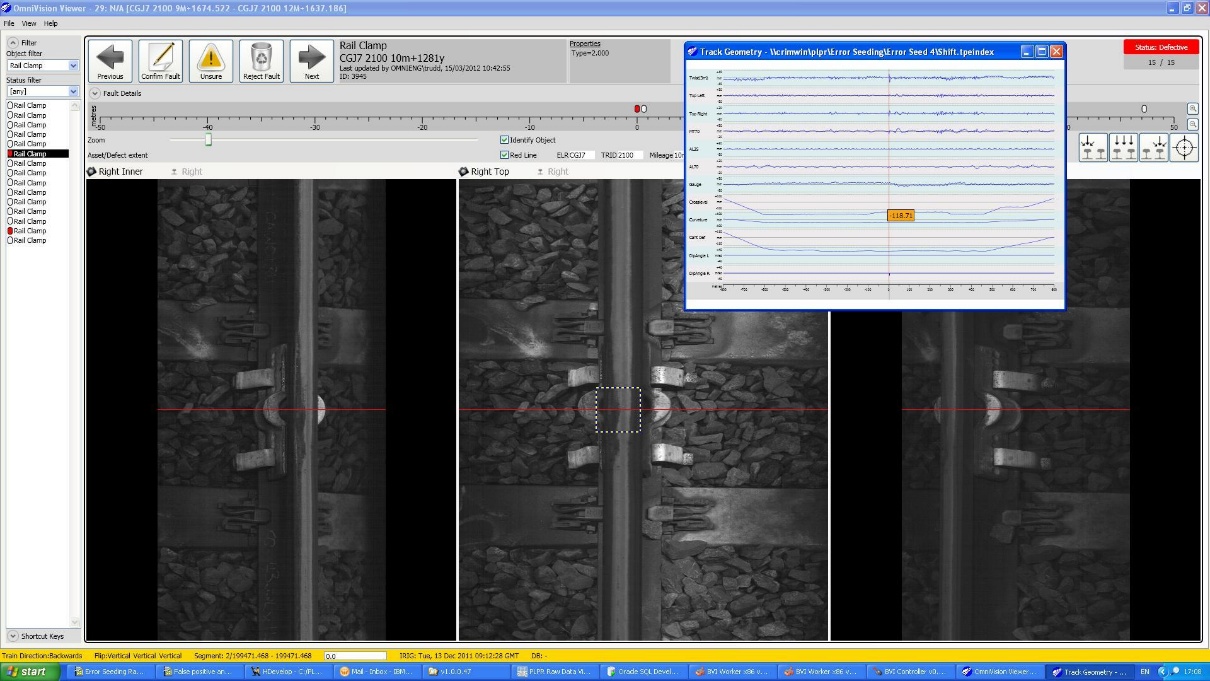
Figure 1. Use of automated track inspection equipment (Network Rail, 2018)
In traffic control, one of the most mature technologies is the European Rail Traffic Management System (ERTMS). Its key component is the European Train Control System (ETCS), which automatically supervises train speed and compliance with the limits of the movement authority. The onboard equipment calculates the permitted speed based on the route data received and the train's braking characteristics. If the permitted limits are exceeded, the system triggers automatic braking (Ruete, 2020).
The way information is transmitted between trackside and onboard equipment is fundamental (Figure 2). In ETCS Level 1, data are transmitted by Eurobalise trackside transponders as the train passes over them, while the onboard system supervises speed continuously. In ETCS Level 2, GSM-R radio provides data exchange between the train and the Radio Block Centre (RBC). The RBC communicates with the interlocking, receives information on route status, and issues movement authorities. This arrangement allows the information needed to supervise train movement to be updated without waiting for the train to pass the next balise.
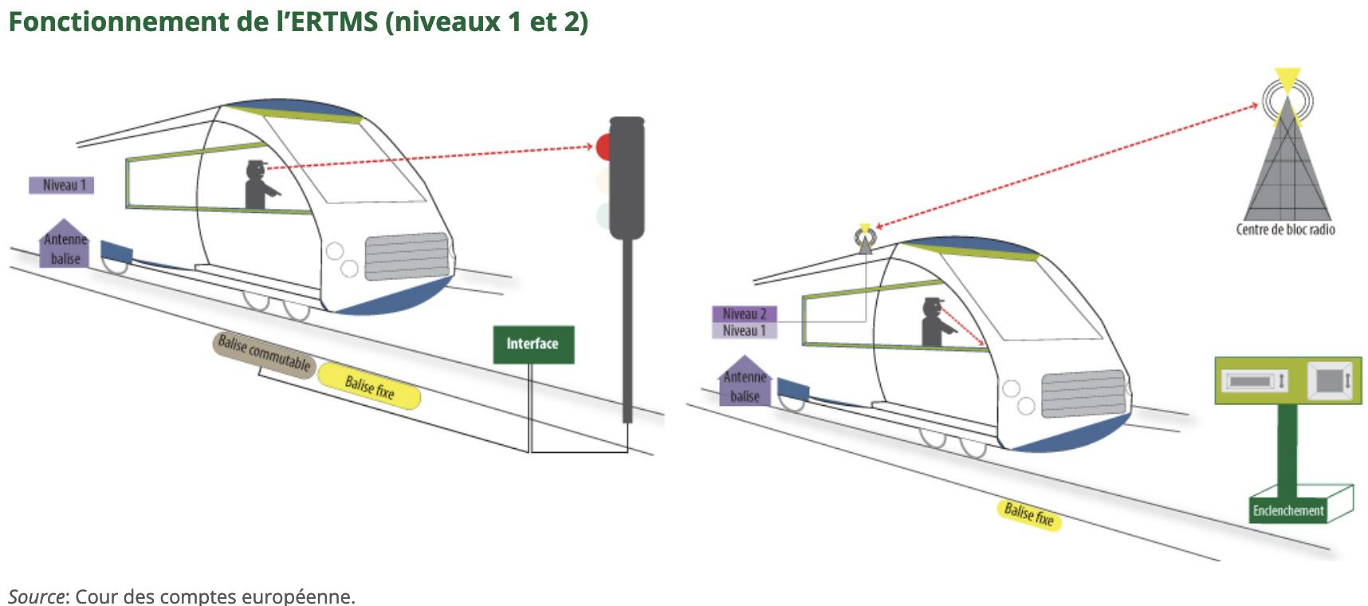
Figure 2. Principles of data transmission in ETCS Level 1 and Level 2 (Ruete, 2020)
Automatic train protection must be integrated with electrical interlocking so that movement authorities match the actual state of the infrastructure. The interlocking controls the position of switches and the occupancy of track sections, whereas ETCS supervises compliance with the issued authorities through the onboard equipment. When these subsystems work together, the conditions for train movement are checked both on the infrastructure side and on board the train.
This division of functions is consistent with the systems-theoretic view of safety developed by Leveson (2012). In her STAMP model, accidents result not only from component failures but from inadequate control, that is, from safety constraints that are not enforced on the behavior of the system as a whole. From this perspective, the interlocking and ETCS act as controllers that enforce constraints such as “do not set a route over an occupied section” and “do not exceed the permitted speed.” Each controller, however, is only as effective as its model of the controlled process: if information on track occupancy, switch position, or asset condition is incomplete or delayed, correct control actions become impossible. This is why the reliability of diagnostic data, discussed above, is a safety issue and not merely a technical one.
Further development of automated monitoring involves predictive diagnostics. In December 2023, Network Rail presented its Insight system, which combines data from track recording trains, track images, and remote condition monitoring. Using artificial intelligence, the system predicts potential faults and helps schedule maintenance. According to the developer, warnings can be generated 28 or 90 days, and in some cases up to a year, before the expected equipment failure. These lead times describe the system's forecasting capability and do not mean that every fault is guaranteed to be detected (Network Rail, 2023).
Automated technologies thus address two interrelated tasks: detecting technical deviations at an early stage and supervising compliance with the conditions for safe train movement. The greatest practical value lies in the combined use of diagnostic information, track occupancy data, and automatic train protection, which enables timely technical and operational decisions.
Evaluating the effectiveness of automated railway systems involves weighing the results achieved against the costs of installing and operating the equipment. The extent of deployment must be distinguished from actual safety gains: an increase in the length of equipped lines reflects the scale of modernization but does not in itself demonstrate a reduction in accidents.
Positive Train Control (PTC) in the United States is a telling example of large-scale deployment of automatic train protection. According to the FRA, by December 2020 the system was in operation on all 57,536 route miles subject to the mandatory installation requirement. The program covered 41 railroads. Interoperability was also confirmed for the equipment of railroads operating over shared infrastructure (Federal Railroad Administration [FRA], 2020a).
Table 2 presents the results of PTC implementation on US railroads in 2020.
Table 2
PTC implementation on US railroads, 2020
|
Period |
Share of equipped lines, % |
Length, miles |
|
Q1 |
98.0 |
56,541 |
|
Q2 |
98.8 |
56,846 |
|
Q3 |
99.6 |
57,314 |
|
Q4 |
100.0 |
57,536 |
Source: FRA (2020a, 2020b, 2020c, 2020d).
The operational effectiveness of PTC lies in its ability to prevent specific categories of accidents, including train-to-train collisions, overspeed derailments, and unauthorized incursions into work zones. At the same time, the FRA emphasizes that automatic protection complements the work of operating personnel and does not replace existing safety procedures. An assessment of the system's performance should therefore consider the number of hazardous events prevented and changes in the frequency of the relevant accident categories, not just equipment coverage.
The FRA position reflects a well-established finding in human factors research. Bainbridge (1983) described the “ironies of automation”: the more routine work automation takes over, the more the operator is left with monitoring and with handling rare abnormal situations, while the skills those situations require are practiced less and less. For train protection, this means that automation changes the role of drivers and dispatchers rather than removing it. Training and operating procedures therefore need to prepare staff for degraded and fallback modes of operation, when automatic protection may be unavailable or restricted.
Figure 3 shows how the PTC automatic train protection system operates.
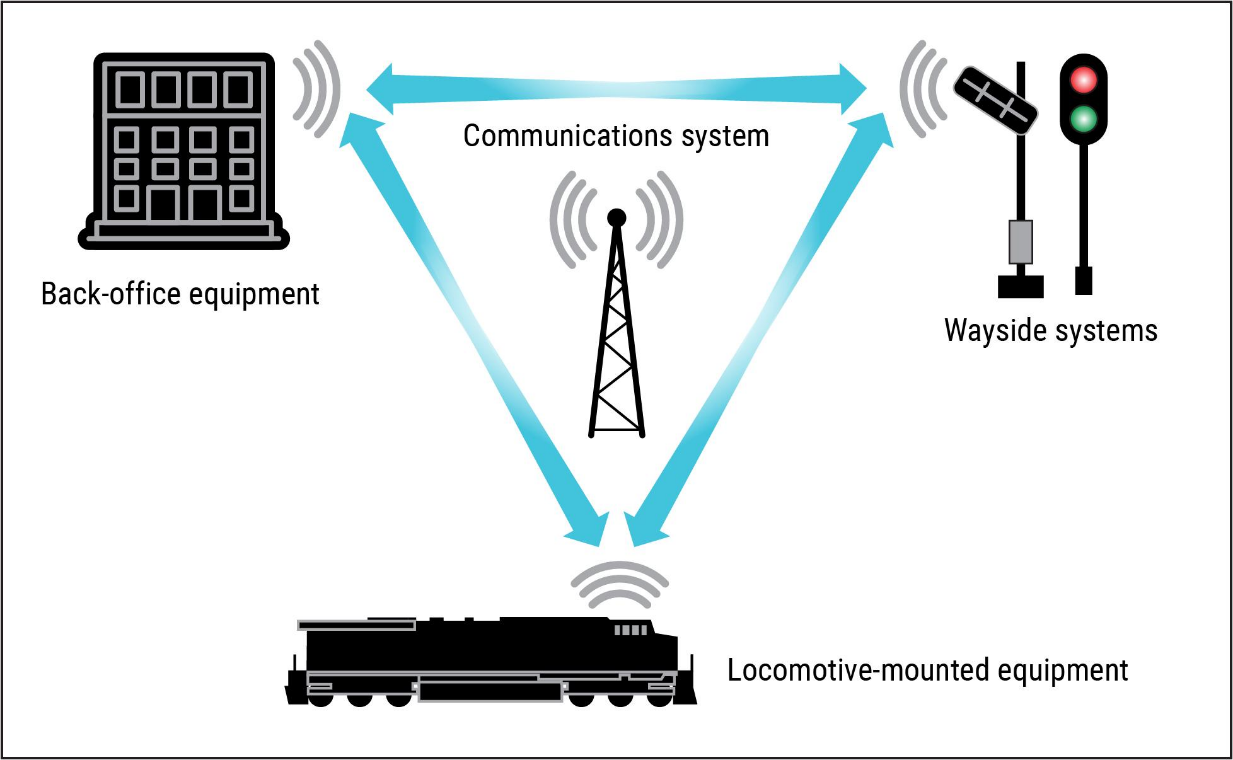
Figure 3. Operating principle of the PTC automatic train protection system (Regional Transportation Authority, 2018)
Such projects are capital-intensive because they require upgrading interlockings, renewing onboard equipment, testing, and staff training. In Special Report No 13/2017, the European Court of Auditors found that the high cost of migration and the lack of sufficient economic incentives for individual infrastructure managers are significant barriers to ERTMS deployment. Running national signaling systems in parallel with ERTMS can also increase maintenance costs (European Court of Auditors, 2017).
An objective evaluation of automation outcomes should rely on several groups of indicators: accident rates per comparable traffic volume, the number of technical equipment failures, the duration of delays due to technical causes, equipment recovery time, and total operating costs. Comparing these indicators before and after deployment reveals changes in the performance of the railway system. Traffic density, infrastructure condition, and any other safety measures implemented at the same time must also be taken into account.
Further development of automated systems will depend primarily on greater equipment interoperability, lower maintenance costs, and better data exchange between infrastructure managers and train operators. When planning modernization, it is especially important to phase the deployment, ensure technical compatibility between new and existing equipment, and assess economic feasibility for specific sections of the network.
Conclusions
The study has shown that introducing automated monitoring and control systems is an important means of improving railway safety. International experience with ERTMS, ETCS, and PTC confirms that automatic train protection can be deployed on a large scale, while remote condition monitoring enables the timely detection of technical faults and better infrastructure maintenance. At the same time, the high cost of upgrading equipment, the need to ensure compatibility between technical systems, and the difficulty of integration with existing systems slow the pace of automation. The study found that the effectiveness of automation should be assessed by changes in accident rates, equipment reliability, and operating costs rather than by the scale of equipment deployment alone. Further improvements in rail transport safety depend on the integrated development of diagnostic technologies, automatic train protection, and traffic control, provided that the technical decisions taken are economically justified.
References:
Bainbridge, L. (1983). Ironies of automation. Automatica, 19(6), 775–779. https://doi.org/10.1016/0005-1098(83)90046-8
European Court of Auditors. (2017). A single European rail traffic management system: Will the political choice ever become reality? (Special Report No. 13/2017). Publications Office of the European Union. https://op.europa.eu/webpub/eca/special-reports/ertms-rail-13-2017/en/
European Union Agency for Railways. (2022). Report on railway safety and interoperability in the EU 2022. Publications Office of the European Union. https://doi.org/10.2821/28376
Federal Railroad Administration. (2020a, December 29). Federal Railroad Administration announces landmark achievement with full implementation of positive train control [Press release]. https://railroads.dot.gov/newsroom/press-releases/federal-railroad-administration-announces-landmark-achievement-full
Federal Railroad Administration. (2020b, May 15). Federal Railroad Administration publishes railroads’ first quarter 2020 positive train control implementation status updates [Press release]. https://railroads.fra.dot.gov/newsroom/press-releases/federal-railroad-administration-publishes-railroads-first-quarter-2020
Federal Railroad Administration. (2020c, August 12). Federal Railroad Administration publishes railroads’ second quarter 2020 positive train control implementation status updates [Press release]. https://railroads.dot.gov/newsroom/press-releases/federal-railroad-administration-publishes-railroads-second-quarter-2020-0
Federal Railroad Administration. (2020d, November 18). Federal Railroad Administration publishes railroads’ third quarter 2020 positive train control implementation status updates [Press release]. https://railroads.dot.gov/newsroom/press-releases/federal-railroad-administration-publishes-railroads-third-quarter-2020-0
Leveson, N. G. (2012). Engineering a safer world: Systems thinking applied to safety. MIT Press. https://doi.org/10.7551/mitpress/8179.001.0001
Network Rail. (2018). How structural inspections improve asset management. https://www.networkrail.co.uk/stories/how-structural-inspections-improve-asset-management/
Network Rail. (2023, December 22). Using artificial intelligence to create a better railway. https://www.networkrail.co.uk/stories/using-artificial-intelligence-to-create-a-better-railway/
Regional Transportation Authority. (2018, May 29). Invest in transit’s priority projects: Metra. https://nita.illinois.gov/blog/2018/05/29/invest-in-transits-priority-projects-metra
Ruete, M. (2020). Work plan 2020 of the European Coordinator for ERTMS. European Commission, Directorate-General for Mobility and Transport. https://transport.ec.europa.eu/system/files/2022-09/work_plan_ertms_2020.pdf
Other articles of the issue