

The role of cash flow management in ensuring the financial stability of small businesses
Authors
Nematulla Gulshat

Share
Annotation
The article explores the crucial role of cash flow management in ensuring the financial stability of small businesses during periods of macroeconomic uncertainty. The importance of this topic is underscored by the fact that, for small businesses with limited access to external financing and limited risk diversification, the balance between incoming and outgoing cash flows is crucial for survival and growth. The paper provides a comprehensive analysis of the theoretical and practical aspects of cash flow management, examining the mechanisms that underpin its formation in operational, investment, and financing activities. It also emphasizes the relationship between effective cash management and key financial stability indicators, such as current liquidity, solvency, and financial independence. The author emphasizes the practical significance of implementing operational and strategic financial planning instruments, such as the preparation of a payment calendar, cash flow budgeting, and working capital management, to prevent cash shortfalls. The findings of the study indicate that a systematic approach to optimizing cash flows not only minimizes the risk of insolvency but also frees up internal resources for reinvestment, leading to increased overall profitability and competitiveness for small businesses. In conclusion, the author argues for the adoption of flexible, digitized cash flow management models that are becoming a standard for ensuring the long-term financial security and sustainable growth of small enterprises.
Keywords
Authors
Nematulla Gulshat
Share
Relevance of the study. The relevance of this study stems from the critical dependence of small businesses on the effective management of their internal financial resources in today's turbulent macroeconomic environment, characterized by fluctuating inflation, changing key interest rates, and unstable supply chains.
For small businesses, which usually face limited access to long-term loans and high costs of borrowed capital, cash flow management has become an essential strategic tool for their survival and growth [2]. The lack of balance between incoming and outgoing funds can lead to cash gaps and loss of solvency, which will eventually lead to bankruptcy, even if there is a formal accounting profit.
In this regard, a thorough examination of the methods for optimizing cash flows becomes of particular scientific and practical importance, as it provides a solid foundation for financial stability. This ensures the independence of a company from external shocks and guarantees its long-term success in a highly competitive market.
The purpose of the study. The aim of this study is to provide a theoretical basis for and develop a practical approach to cash flow management in order to strengthen the financial stability of small businesses. We will also identify the most effective tools and techniques to prevent liquidity crises, minimize financial risks, and maximize the market value of enterprises.
Materials and research methods. To achieve this goal, the research employs a range of general scientific and specialized research methods. The theoretical foundation is based on the fundamental and applied works of both domestic and international scholars in the fields of corporate finance, financial management, and crisis management. The empirical basis for the study is formed through the analysis of financial statements, including cash flow statements, of a selection of small businesses in various economic sectors over the period from 2021 to 2025.
In the course of the work, methods of financial analysis, coefficient analysis of indicators of liquidity, solvency, and financial autonomy, as well as methods of direct and indirect calculation of operational, investment, and financial cash flows, were used. Additionally, operational and strategic budgeting tools were used, such as the preparation of a payment calendar and a cash flow budget (CFB) [6], scenario modeling methods to assess the impact of various macroeconomic factors on liquidity, as well as statistical data processing methods to identify stable correlations between the effectiveness of cash management and integral indicators of the financial stability of a small business entity.
The results of the study. Today, statistical data clearly show that cash flow management is a crucial factor in the survival and financial stability of small businesses. According to international research, 82% of small businesses fail due to the inability of owners to manage cash flow. The US Bureau of Labor Statistics reports that about 20.4% of newly established businesses close in their first year of operation, with this figure increasing to 49.4% by the fifth year. At the same time, only 48% of small business owners report having sufficient financing to ensure stable operations.
In Russia, the issue of liquidity shortage is equally significant. According to large-scale surveys, 96% of small businesses have experienced cash shortages at least once. The latest data for 2025 shows that 27% of Russian companies and sole traders faced cash shortages for the first time or after a long period and another 26% described such situations as frequent (Table 1).
Table 1 – Small business viability statistics
|
Statistical indicator |
USA |
Russia |
Kazakhstan |
|
The sector's share in GDP |
45-56% |
20–22% |
~33–37% |
|
Share of employment |
~52% |
~27% |
High (dominates trading) |
|
Survival rate: 1 year |
~80% |
65–75% |
Massive initial rotation |
|
Survival rate: 5 years |
50% |
~29% (only a third) |
About 18% |
|
Survival rate: 10 years |
35% |
Only 12% |
Extremely low |
|
Sector structure |
82-86% without employees |
The growth of individual entrepreneurs with the reduction of legal entities |
The dominance of micro businesses |
|
The main barrier |
Access to capital and competition |
Staff shortages and taxes |
Unavailability of financing |
Statistics clearly show that the financial stability of small businesses depends not so much on sales volume or the availability of profit in reports, but rather on the quality of managing real cash flows. The use of digital technologies is essential for preventing bankruptcy in the end (Figure 1).
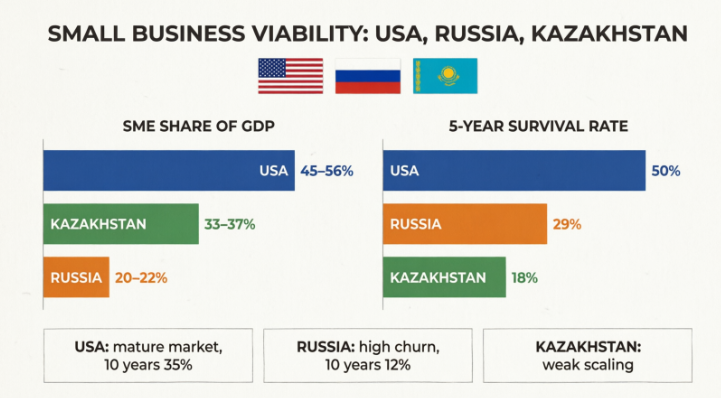
Figure 1 – Viability of small business (USA, Russia, Kazakhstan)
The introduction of modern digital technologies has revolutionized approaches to cash flow management in small businesses. This process has gone from being a routine accounting task to a high-tech system of strategic forecasting and control. This has directly contributed to strengthening the financial stability of these enterprises.
The main driver of these changes is the widespread use of digital technologies and the transition to cloud-based platforms, which provide access to financial information in real time. Modern cloud accounting systems allow small businesses to integrate their bank accounts, cash registers, and POS terminals into a unified digital environment, giving managers the ability to monitor actual cash balances second-by-second, instantly identify cash shortfalls, and quickly reallocate resources [1].
A striking example of the practical application of these technologies is the use of automatic synchronization systems by small trading companies for sales data, inventory accounting, and payment calendars. This allows them to generate payment requests to suppliers only on days when maximum sales revenue is expected, thus eliminating cash gaps.
Artificial intelligence and machine learning have revolutionized cash management, and now even small businesses can benefit from specialized financial technology solutions [5].
The introduction of artificial intelligence (AI) and machine learning (ML) technologies is fundamentally transforming the way small businesses manage their finances. Previously, only large corporations had access to complex data analysis and forecasting tools, but now, specialized financial technology (fintech) solutions make these tools readily available to small and medium-sized enterprises (SMEs).
Global technology adaptation is accelerating: the use of artificial intelligence in business has increased from 55% to 72% over the past year. In Russia, one in three small and medium-sized businesses (SMEs) already uses AI in their daily operations. Entrepreneurs appreciate the effectiveness of these tools: 78% of those who have implemented neural networks note real benefits for their businesses.
Time is of particular value, as AI tools save small business owners an average of 13 hours per week. 67% of SME owners note a significant release of resources for strategic tasks thanks to AI.
The financial sector is a leader in the implementation of neural networks, with 91% of companies either using AI in production or actively testing its potential, according to NVIDIA. Small businesses, fintech startups, and banks are creating cloud-based solutions that use AI to automate routine tasks. Machine learning algorithms are used by SMEs to automate accounting, credit scoring, and fraud detection, and to provide personalized financial recommendations.
In addition, 67% of Russian businesses utilize neural networks to automate routine tasks, and 37% of small and SME representatives have directly confirmed that AI assists them in optimizing their company's budget.
AI demonstrates the greatest efficiency in forecasting cash flows, directly influencing financial stability. Machine learning algorithms automate the analysis of vast amounts of data and continuously improve forecasts, ensuring much higher accuracy in predicting cash shortfalls compared to traditional methods.
The AI market in the banking, financial, and insurance sectors (BFSI) is estimated to be worth $26.2 billion in 2024 and is projected to grow at an annual average rate of 22% until 2034. This technology pays off in many ways, with an average return on investment (ROI) for AI projects in Russian companies ranging from 220% to 250%. Machine learning algorithms analyze historical financial data, seasonal fluctuations, macroeconomic indicators, and customer behavior to accurately forecast future cash flows.
For example, a small manufacturing company could use AI modules integrated into modern ERP systems for predictive analytics. The system would automatically calculate optimal payment dates for accounts receivable and recommend favorable dates for fulfilling creditors, minimizing the cost of borrowing funds [7].
An equally important aspect is the development of open banking technologies and API software interfaces, which ensure seamless integration of small businesses' corporate information systems with banking services. These APIs automate the process of billing, collection, and settlement reconciliation, making it easier for businesses to manage their finances.
As a practical example, let's look at the work of small IT companies and agencies that use CRM systems integrated with banking APIs. When a project is completed, the system automatically creates and sends an invoice to the client with a payment link. When the money is received, the cash flow report is updated and the client's card is closed, significantly reducing the time it takes to convert accounts receivable into actual money [3, 4].
In addition, modern financial technology platforms have significantly changed liquidity management tools by providing automated factoring and online lending services for small businesses. Previously, factoring was only available to large corporations, but now small businesses can transfer their shipping claims to a factoring company with just a few clicks on the bank's mobile app. They instantly receive up to ninety percent of the debt amount, ensuring uninterrupted financing for their working capital [9].
Another promising area that is gradually gaining traction in the small business sector is the use of smart contracts for automated settlements with counterparties. These contracts can be programmed to transfer funds automatically upon the occurrence of certain conditions, such as confirmation of goods receipt through an electronic document management system. This eliminates the risk of payment delays and human error, ensuring a smoother and more efficient process for both parties.
The automation of routine tasks using robotic data processing frees up financial specialists' time to focus on strategic initiatives, such as stress testing the financial model and identifying growth opportunities.
The combination of cloud computing, predictive analytics based on artificial intelligence, open banking, and automated financial services creates a new concept of cash flow management. This concept opens up unprecedented opportunities for small businesses to increase transparency, flexibility, and speed of financial decision-making. And this, in turn, becomes the key to their financial stability and long-term competitive advantage in the digital economy (Table 2).
Table 2 – Modern methods of enterprise cash flow management [8, 10]
|
Modern Method / Tool |
The essence and mechanism of action |
Impact on financial stability and benefits |
|
Automated Budgeting (CFB) |
The formation of planned indicators for income and cash flow using cloud-based ERP systems in different periods. |
It provides transparency of plans, allows you to identify cash gaps in advance and synchronize operational goals with financial resources. |
|
Payment calendar with API integration |
An operational tool for daily payment planning that automatically retrieves data from bank statements and accounting systems. |
Ensures that payments are prioritized, eliminates overdue accounts payable, and optimizes the daily account balance. |
|
Factoring and Supply Chain Finance |
Assignment of claims for accounts receivable to a factoring company or the use of supply chain financing programs to receive funds ahead of schedule. |
It allows you to convert shipments into liquidity without classical loans, accelerates capital turnover and reduces the risks of non-payments. |
|
Predictive analytics based on AI |
The use of machine learning algorithms to predict future financial flows based on historical data, seasonal fluctuations and market trends. |
Improves the accuracy of financial forecasts, allows you to automatically generate recommendations for optimizing payment deadlines and minimizing the cost of borrowed funds. |
|
Open Banking (Open Banking API) |
Seamless integration of corporate accounting systems with banking services for automatic data exchange and payment initiation. |
Eliminates manual data entry, reduces the risk of errors, speeds up the process of collection and reconciliation of settlements with counterparties. |
|
Dynamic discounting |
Offering suppliers early payment of their bills in exchange for a flexible discount, the amount of which depends on the actual day of payment. |
It allows the company to profitably invest free liquidity, increasing overall profitability, and for suppliers to improve their own cash flow. |
|
Hedging financial risks |
The use of derivatives (forwards, options, swaps) to fix exchange rates or interest rates on future payments and loans. |
Protects cash flows from the negative effects of macroeconomic volatility, ensuring the predictability of financial results. |
|
Cash pooling (centralization of liquidity) |
Pooling of cash balances in a single head account (or virtual pool) to manage the liquidity of a group of companies or divisions. |
It allows you to minimize external borrowings, maximize the profitability of available balances and optimize banking costs. |
It should be noted that, despite the critical importance of effective cash management, managing cash flow in small businesses involves a number of complex systemic, organizational, and economic challenges that significantly undermine the financial stability of enterprises and often lead to their bankruptcy.
One of the main problems is the common misconception among small business owners and managers, which is the substitution of the concepts of profit and actual cash flow. Because of their focus on maximizing accounting profits, business owners often lose sight of their actual liquidity. This can lead to a situation where a company that is formally profitable is on the verge of bankruptcy because it lacks the necessary funds to fulfill its current obligations.
This conceptual error is exacerbated by a chronic lack of operational and strategic financial planning. Most small businesses fail to compile payment calendars and cash flow budgets, instead relying on intuition or reacting to cash shortfalls after the fact. By the time they realize the need for action, it's often too late to make any meaningful changes.
The most significant challenge to financial stability for small businesses is the ineffective management of working capital. This is because small businesses often find themselves in a precarious position in the payment chain. On the one hand, larger businesses may impose strict terms for deferred payment, leading to funds being frozen in accounts receivables. On the other hand, suppliers may require advance payment, creating an imbalance in cash flow cycles. This inevitably leads to critical cash shortages, which are exacerbated by excessive inventory levels. A significant portion of working capital becomes trapped in illiquid assets, such as excess inventory (Figure 2).
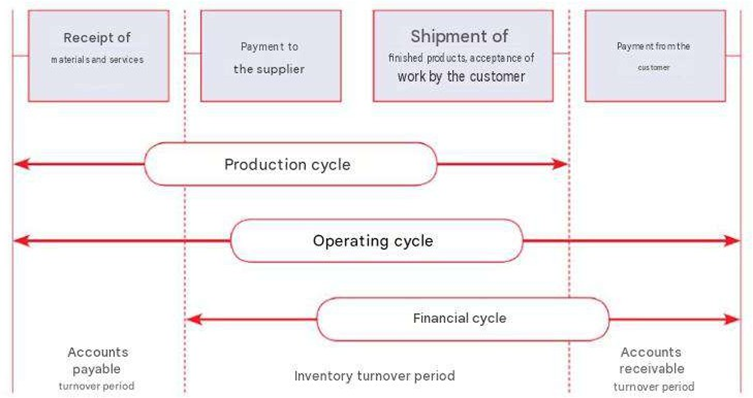
Figure 2 – The relationship between financial and operational cycles
The situation is complicated by the high dependence of small businesses on market factors and limited access to cheap financial resources. In conditions of macroeconomic volatility, delayed payments from even one large client can paralyze a company's operations. Attempts to cover liquidity deficits from external sources are faced with barriers such as high interest rates, strict collateral requirements from banks, and difficulties obtaining factoring. This makes it economically unfeasible for small businesses to take out loans and leads them into debt.
At the micro-level of management, a significant challenge remains the lack of distinction between personal and corporate finances. This is particularly common in microbusinesses, as mixing personal expenses with operational needs makes it difficult to conduct accurate financial analysis and distorts the true picture of cash flow. In addition, many small businesses struggle with technological lag, still using cumbersome spreadsheets or outdated programs that don't integrate with banking systems. This prevents them from tracking funds in real-time, increasing the risk of errors and delaying management reports.
The combination of these problems, including lack of financial literacy, an imbalance of accounts receivable and payables, high costs of external financing and weak digitalization, forms a vicious circle in which small businesses are constantly forced to struggle for survival, patching holes in liquidity, instead of directing the released cash flows to investments and strategic development, which ultimately makes its financial stability is extremely fragile and dependent on any external shocks.
Conclusions. To summarize, effective cash flow management is not simply a technical aspect of financial accounting. It is a fundamental strategic necessity that determines the success of small businesses in times of market volatility.
The key conclusion is that the financial stability of a business is not based on the amount of nominal accounting profits, but rather on the ability to generate sufficient liquidity to cover current obligations and finance operations without interruption. To overcome common issues such as cash shortages, working capital imbalances, and inaccurate forecasting, businesses need to shift from a reactive approach to proactive management through strict budgeting and the use of modern digital tools.
The introduction of financial technology solutions, predictive analytics powered by artificial intelligence, and automated calculations allow small businesses to minimize financial risks, optimize their cash conversion cycles, and free up internal resources for reinvestment.
Thus, a well-designed cash management system transforms from an anti-crisis survival tool into a key driver of competitiveness for small businesses. It not only provides short-term financial stability, but also lays a solid foundation for long-term economic security and sustainable growth in the digital economy
References:
- Abbasov S.A. Effective cash flow management as a key lever of financial management // Russian Entrepreneurship. – 2013. – No. 14 (236). – pp. 84-90.
- Kondrashova N.G. Cash flow management: practical aspects // Modern Economy Success. – 2020. – No. 4. – pp. 233-239.
- Lisitskaya T.S., Andreeva V.V. Cash flow management system under conditions of risk // Vector of Economy. – 2020. – No. 11. – p. 57-57.
- Luppian M.N., Shmulevich T.V. On the role of cash flow management in modern conditions // Economic Development of Society in Modern Conditions. – 2017. – p. 155.
- Mikhailov B.A., Klyukovkin G.K. Building a high-load microservice architecture handling millions of requests per second // Bulletin of Science and Creativity. – 2019. – No. 6. – pp. 8-15.
- Nurieva R.I. The role of accounting and control in cash flow management within an agro-industrial complex organization. – 2023.
- Smelova S.E. Financial and management accounting as the basis for effective cash flow management // Scientific Almanac of the France-Kazakhstan Association. – 2019. – No. 2. – pp. 113-116.
- Egwu E.M., Orugun F.I., Adelakun A. Exploration of cash flow management for enterprise’s business performance // Asian Journal of Economics, Business and Accounting. – 2021. – Vol. 21. – No. 10. – pp. 97-105.
- Karaaslan O. Analysis Based on the Importance of Cash Flow Management in Business Management // Journal of Humanities, Arts and Social Science. – 2023. – Vol. 7. – No. 9.
- Oriekhova K.V., Golovko O.H. Cash flow management strategy // Economics and law. – 2022. – No. 1 (64). – pp. 89-97.
Other articles of the issue