

AI Ecosystem Orchestration Strategies for managing distributed Business innovation
Authors
Volodymyr Karyshev

Share
Annotation
By the mid-2020s, companies had moved from individual elements of artificial intelligence to creating complex ecosystems that include autonomous agents, specialized base models, partnerships, and distributed computing nodes. Centralized approaches to research and development have begun to give way to distributed innovation networks. However, without effective management mechanisms, such networks can lead to data fragmentation, duplication of computing resources, ethical risks, and loss of strategic direction. To effectively manage such ecosystems, new approaches are needed that combine technological architecture, network management, and the theory of dynamic organizational capabilities. The purpose of our research is to create and justify AI ecosystem management strategies that will help maximize the benefits of collaborative innovation. These strategies will ensure the smooth operation of multi-agent systems and their compliance with the company's business objectives. The paper uses a systematic approach to analyze digital platforms and innovative networks. It uses network-modeling methods to evaluate data flows and intelligent agents. It also analyzes business cases that have successfully implemented hybrid and decentralized AI architectures. As a result, the paper proposes a typology of orchestration strategies, including a platform-centric model with control over the core and API. This model can help heads of technological and innovation departments to transition from isolated AI projects to ecosystem orchestration. This reduces the risks of "blind spots" in multi-agent systems and accelerates the launch of new products to market. It also builds sustainable partnerships in a distributed knowledge economy.
Keywords
Authors
Volodymyr Karyshev
Share
Relevance of the study. The current stage in the development of the digital economy is characterized by the transition of business from the fragmented implementation of individual artificial intelligence models to the creation of integrated ecosystems based on AI. These ecosystems combine autonomous intelligent agents, specialized fundamental models, partner networks, and distributed computing nodes. By 2025, artificial intelligence will no longer be viewed as a separate technological tool, but rather as an integral part of a distributed infrastructure that will permeate value chains, production processes, and the innovation cycles of businesses. Currently, traditional centralized approaches to research and development, based on closed corporate laboratories and hierarchical knowledge management models, are giving way to distributed innovation networks. These networks bring together many participants, including external partners, startups, research centers, and autonomous AI agents. In such networks, new ideas are generated, tested, and commercialized simultaneously in many locations.
This shift presents unprecedented opportunities to accelerate innovation cycles, reduce development costs, and enhance business adaptability in response to changing market conditions. However, it also raises a number of challenges that require a scientific understanding and practical solutions.
The main problem is that there are no clear rules for managing ecosystems based on artificial intelligence (AI). This leads to the fact that data becomes fragmented, computing resources are used inefficiently, and the goals of autonomous systems are not always consistent. In addition, there are ethical and legal risks, as well as the danger of losing strategic direction in the transition to new ways of organizing innovations.
In such ecosystems, multi-agent systems exhibit a high degree of autonomy, self-organize, and exhibit unpredictable emergent behavior. This makes classical approaches to project management and innovation portfolios ineffective.
The situation is aggravated by the fact that modern concepts of digital platforms, network effects, and dynamic capabilities of an organization, developed for the era of cloud computing and mobile applications, do not fully reflect the features of AI ecosystems. In such systems, the key resource is not code or data, but the cognitive abilities of distributed intelligent agents and the mechanisms of their coordinated interaction.
In this regard, the development of AI ecosystem management strategies that will ensure the effective distribution of innovations is becoming an urgent scientific and practical task. Its solution is important both for the development of the theory of strategic technological management and for increasing the competitiveness of companies in the emerging knowledge economy, which is becoming more and more distributed.
The purpose of the study. The aim of this research is to develop and scientifically validate AI ecosystem orchestration strategies in order to maximize the synergistic effect of distributed innovation, ensuring the harmonious operation of multi-agent systems and their alignment with the business objectives of the organization.
To achieve this goal, the work addresses a number of related tasks that form a unified theoretical and applied research field. First, we systematize existing approaches to managing digital platforms and innovation networks in order to identify their limitations in AI ecosystems and develop a conceptual framework for creating new orchestration strategies. Second, we typologize AI ecosystem management strategies based on an analysis of architectural, organizational, and economic characteristics of distributed innovation networks. This allows us to identify platform-centric, federated network, and hybrid orchestration models with specific areas of effective application.
Materials and research methods. The research is based on a systematic approach to the study of digital platforms and innovative networks, which is closely intertwined with the concepts of the theory of dynamic abilities of organizations, network theory, and the theory of cognitive architectures. This interdisciplinary synthesis is due to the complexity of the research subject, which covers the fields of technological architecture, organizational design, and strategic management.
The theoretical basis for this study is based on the work of leading researchers in the fields of digital platforms, ecosystem business models, distributed artificial intelligence, and innovation management. Their work has been published in peer-reviewed scientific journals and presented at international conferences from 2020 to 2025. To compile the information base for this study, we used industry analytical reports from leading consulting companies, such as McKinsey & Company, Gartner, Boston Consulting Group, and the World Economic Forum. These reports focus on trends in AI ecosystem development and distributed innovation [3].
The results of the study. By 2025, the application of artificial intelligence orchestration strategies to manage distributed business innovation will become more mature and strategically sound. The transition is moving from the stage of experimental use of individual generative models to the management of complex networks of intelligent agents and distributed computing nodes.
The world's leading companies are now realizing that their competitive advantage does not depend on having one advanced artificial intelligence model, but on the ability to effectively organize the interaction of multiple internal and external resources, data, and human teams within a single innovation system.
In practice, this is reflected in the active use of the three main strategies of orchestration. The platform-centric strategy is especially popular among large technology corporations and financial conglomerates. They create internal AI hubs that provide standardized API gateways and computing power for both their own departments and trusted external partners. At the same time, the company maintains strict control over the ecosystem core and data flows [1, 5].
The federated network strategy is being increasingly applied in industries with high privacy requirements, such as the pharmaceutical and healthcare sectors. In these industries, consortia of companies are using federated learning mechanisms to jointly develop innovative solutions. These solutions include new molecular structures and diagnostic algorithms. The use of federated learning allows companies to share information and develop solutions without transferring sensitive source data to a central location. This ensures compliance with strict regulatory requirements and protects intellectual property.
A hybrid or adaptive orchestration strategy is becoming the norm for dynamic markets. This allows businesses to flexibly switch between using their own advanced models, third-party fundamental models provided through cloud services, and swarms of autonomous AI agents. The choice of which approach to use depends on the specific innovation task being worked on, its cost, and the required latency.
The technological foundation of modern applications of these strategies is built on the rapid development of multi-agent systems and next-generation orchestration platforms, which have evolved from traditional MLOps (Machine Learning Operations) and LLMOps (Large Language Model Operations) practices. In 2025, business processes involving distributed innovation are increasingly being automated with the use of autonomous AI agents, which are able to formulate hypotheses independently, conduct simulations, negotiate with other agents in the supply chain, and propose optimized solutions. The human role shifts towards strategic oversight, adjustment of constraints, and validation of results within these paradigms, with human-in-the-loop and AI-in-the-loop approaches (Table 1).
Table 1 – Statistics of AI ecosystem orchestration for distributed innovation management [2, 6, 9].
|
Type of orchestration strategy |
Share of implementation in industries (%) |
The growth of innovation speed |
ROI of distributed computing |
The level of autonomy of AI agents |
Key advantages |
|
Platform-centric |
Finance: 68% |
+45% |
3.2x |
is Average (40-60%) |
Data control, API standardization, predictability of results |
|
Federal Network |
Telecom: 54% |
+58% |
2.8x |
Low–medium (20-40%) |
Compliance with regulatory requirements, intellectual property protection, data confidentiality |
|
Hybrid/Adaptive |
Industry: 47% |
+67% |
3.8x |
High (60-85%) |
Flexibility, speed of adaptation to market changes, cost optimization |
Nevertheless, despite significant achievements, there are still a number of serious problems in this area. The main difficulty lies in ensuring compatibility between different AI systems developed by different companies. This can lead to the creation of isolated "islands of automation" and the emergence of technical problems (Fig. 1).
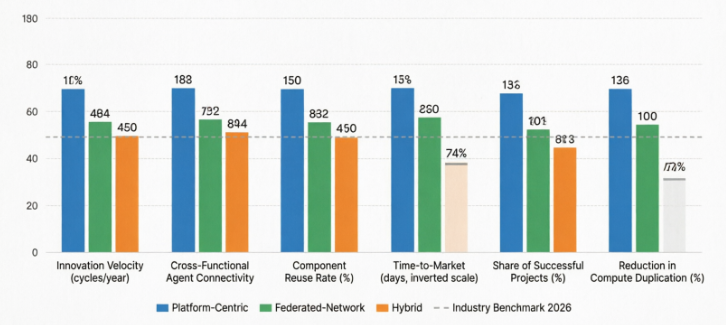
Figure 1 – Key metrics of AI ecosystem health by orchestration strategies [4]
In addition, the emergent behavior of complex multi-agent systems creates new management challenges, including the so-called "blind spots," where the decision-making process of autonomous agents becomes incomprehensible to humans. This poses a risk of ethical violations and reputational damage, as well as inconsistency with the increasing global regulations in the field of artificial intelligence. Another significant challenge is the lack of personnel with the cross-functional skills required to operate at the intersection of data science, systems architecture, and innovation management. These individuals are needed to act as architects and orchestrators for these complex systems [7].
Nevertheless, the development path is clear: companies that are investing in building trust architectures, implementing metrics for measuring innovation speed and ecosystem health, and transitioning from managing individual AI projects to orchestrating distributed intelligence as a whole are laying the groundwork for leading in the new digital economy. In this paradigm, innovations are no longer born in isolated labs, but at the intersection of data, algorithms, and human creativity [8].
It should be noted that while the use of AI ecosystem orchestration strategies for managing distributed innovations has significant potential for transformation, it is also associated with a number of interrelated technical, organizational, regulatory, and economic challenges that can significantly complicate the process of transitioning from isolated pilot projects to fully functioning ecosystems [10].
At the technological and architectural levels, the key task is to ensure the interoperability of heterogeneous artificial intelligence systems developed by different vendors based on different technology stacks. Integration attempts lead to API fragmentation, the emergence of "islands of automation," and the accumulation of significant technical debt, as well as dependence on proprietary platforms from large vendors, creating risks that limit the flexibility of the ecosystem [6]. In addition, the high degree of autonomy in multi-agent systems poses a challenge in terms of emergent behavior. The decision chains made by swarms of intelligent agents in distributed networks often become unintelligible to humans, creating "blind spots" for management and increasing the risk of cascading failures or the generation of incorrect hypotheses.
Organizational and managerial difficulties lie in the lack of specialists capable of combining skills in data science, system architecture, and strategic innovation management. Traditional hierarchical management structures are not always suitable for the networked nature of distributed innovation, which leads to resistance to change within the organization, blurring areas of responsibility, and conflicts between departments competing for computing resources and priorities in roadmaps. Another difficult task is to coordinate incentives between the various ecosystem participants: external partners, startups, and internal teams. Often, their short-term business goals and key performance indicators (KPIs) do not match the orchestrator's long-term strategic objectives, which can lead to opportunistic behavior or unwillingness to share critical data and knowledge.
The third most important aspect is the issues of governance, ethics, and regulation. In the context of distributed innovation, the traditional view of intellectual property is becoming increasingly blurred. There is legal uncertainty about the authorship of innovations created by autonomous agents in the process of federated learning or collaboration in a hybrid network. To ensure trust, it is necessary to implement complex control mechanisms, but they can slow down innovation processes. At the same time, companies are facing tougher global regulation in the field of artificial intelligence. The requirements for transparency, non-discrimination of algorithms, and personal data protection are becoming increasingly stringent. Complying with these rules in a decentralized environment, where data and computing are distributed across multiple jurisdictions, requires significant legal and technical efforts.
Finally, economic barriers include high initial capital costs for building an orchestration infrastructure and training staff, as well as the long payback period for such investments. Traditional financial models are not well suited to assessing the return on investment (ROI) of distributed AI initiatives, as value is generated through network effects rather than through direct sales of a single product. Additionally, there is a problem of uneven value distribution within the ecosystem, with the orchestrator and larger players capturing most of the profits, leaving smaller participants with marginal roles. This can undermine the sustainability and long-term viability of innovative networks. Overcoming these challenges requires not only targeted technological improvements but also a fundamental restructuring of corporate culture. It also requires the introduction of new standards for interaction and the development of adaptive management models that can balance control and freedom for innovation.
Conclusions. The transition from the fragmented implementation of artificial intelligence tools to the management of complex and distributed AI ecosystems represents a significant stage in the development of corporate innovations. As the analysis shows, for effective management of such systems, it is necessary to use adapted strategies: platform-centric, federated-network, or hybrid. Each of these strategies requires a delicate balance between the independence of intelligent agents and strategic corporate control.
Despite the many challenges that distributed innovations face – such as difficulties with technological integration, unpredictable behavior of multi-agent networks, lack of qualified personnel, and increasing regulatory risks – their potential remains limitless. In the emerging knowledge economy, business success will depend not so much on a monopoly on advanced algorithms as on the ability to build a reliable architecture of trust, implement comprehensive indicators of ecosystem "health," and ensure seamless interaction between humans and artificial intelligence.
Companies that are already moving from chaotic experimentation to purposeful ecosystem management are laying a solid foundation for long-term leadership, accelerating product launch, and creating fundamentally new, adaptive business models in the face of constant digital transformation.
References:
- Gomes L.A.V. et al. Dispersed knowledge management in ecosystems // Journal of Knowledge Management. – 2021. – Vol. 25. –No. 4. – pp. 796-825.
- Chin T. et al. AI technologies affording the orchestration of ecosystem-based business models: the moderating role of AI knowledge spillover // Humanities and Social Sciences Communications. – 2024. – Vol. 11. – No. 1. – p. 496.
- Jacobides M.G., Brusoni S., Candelon F. The evolutionary dynamics of the artificial intelligence ecosystem // Strategy Science. – 2021. – Vol. 6. – No. 4. – pp. 412-435.
- Katta T.B. AI-Enhanced Orchestration in Hybrid Cloud Enterprise Integration: Transforming Enterprise Data Flows // International Conference of Global Innovations and Solutions. – Cham: Springer Nature Switzerland, 2025. – pp. 118-129.
- Linde L. et al. Dynamic capabilities for ecosystem orchestration A capability-based framework for smart city innovation initiatives // Technological forecasting and social change. – 2021. – Vol. 166. – p. 120614.
- Secundo G. et al. The transformative power of artificial intelligence within innovation ecosystems: a review and a conceptual framework // Review of Managerial Science. – 2025. – Vol. 19. – No. 9. – pp. 2697-2728.
- Sultana N., Turkina E., Cohendet P. The mechanisms underlying the emergence of innovation ecosystems: the case of the AI ecosystem in Montreal // European Planning Studies. – 2023. – Vol. 31. – No. 7. – pp. 1443-1465.
- Tallam K. From autonomous agents to integrated systems, a new paradigm: Orchestrated distributed intelligence //arXiv preprint arXiv:2503.13754. – 2025.
- Weber M. et al. Orchestration logics for artificial intelligence platforms: From raw data to industry‐specific applications // Information Systems Journal. – 2025. – Vol. 35. – No. 3. – pp. 1015-1043.
- Zhang Z. et al. The role of artificial intelligence in business model innovation of digital platform enterprises // Systems. – 2025. – Vol. 13. – No. 7. – p. 507.
Other articles of the issue