

Robotic systems for fiber-optic cable installation: implementation experience
Authors
Bekirov Remzi

Share
Annotation
The article discusses the pressing issue of automating the process of constructing and upgrading telecommunications infrastructure, particularly in relation to the implementation of robotic systems for installing fiber-optic communication lines. With the exponential increase in data consumption, there is a need for large-scale expansion of access networks, especially within the context of smart city initiatives and 5G/6G standards. Traditional excavation and installation techniques face significant time, cost, and security challenges. The technical details and principles of operation of autonomous earthmoving complexes, robotic cable operators that can penetrate existing sewer systems, and specialized unmanned aerial vehicles that install overhead lines are also considered. Special attention is paid to the practical aspects of implementing these technologies, including assessing economic efficiency, minimizing negative impacts on the urban environment, and reducing the risk of damage to existing underground infrastructure. Based on the analysis of case studies, key obstacles to the widespread adoption of these technologies have been identified, such as the high initial cost of equipment, the need to adapt regulations, and the lack of qualified personnel to service robotic systems. It is concluded that the transition to automated cabling is an inevitable step in the development of telecommunications construction, requiring the development of industry standards, a review of the regulatory framework, and specialized training programs for operators.
Keywords
Authors
Bekirov Remzi
Share
Relevance of the study. The relevance of this study is due to the rapid growth of global data traffic and the need for large-scale deployment of broadband access networks, especially within the context of smart city initiatives and the development of fifth- and sixth-generation mobile communication standards.
Traditional methods of laying fiber-optic communication lines, such as the open trench method and classical aerial installation, are facing serious limitations. These include the high cost of excavation, lengthy approval processes, significant disruption to urban infrastructure, and a critical shortage of skilled workers. In modern conditions, automation and robotization of construction processes have become not only a tool for optimizing operational activities, but also an urgent necessity for the rapid development of the telecommunications industry. The introduction of robotic systems makes it possible to significantly increase the speed and accuracy of work, minimize the risks of damage to existing underground utilities, and ensure the highest level of occupational safety [4].
Despite the obvious technological benefits, several technological, economic, and regulatory obstacles have hindered the widespread adoption of these innovations. Therefore, a thorough analysis of practical experiences with their implementation is crucial for addressing these issues and making progress.
The purpose of the study. The purpose of this study is to comprehensively analyze the current state and practical experience of using robotic systems for laying fiber-optic communication lines, as well as to evaluate the possibilities of their integration into standard telecommunication construction processes.
To achieve this goal, several interrelated tasks are consistently considered in the work. In particular, a detailed analysis of the technical characteristics of autonomous earthmoving machines, trenchless robots, and specialized drones designed for the installation of overhead lines is carried out. In addition, the real economic efficiency and operational advantages of using robotics in comparison with traditional methods are evaluated. The key barriers preventing the scaling of these solutions are also identified.
As a result of the research, practical recommendations have been developed that will help optimize the implementation of robotic complexes, adapt estimated standards, and form new industry standards. These recommendations will help accelerate and reduce the cost of digitalization of the communications infrastructure.
Materials and research methods. Leading manufacturers of special equipment base the research on an extensive database that includes technical specifications and operational documentation of modern robotic cable-laying systems presented on the market. Statistical reports and the results of the implementation of pilot and commercial projects to automate the construction of fiber-optic communication lines in various climatic and urban conditions were also studied.
In addition, current regulatory legal acts, building codes, and regulations governing excavation and installation of telecommunications networks, as well as analytical reviews from the world's leading telecommunications agencies, were used.
The methodological basis of the research was the system analysis and synthesis of scientific and technical information, which allowed us to streamline knowledge about modern robotic solutions. To assess the effectiveness of the implementation, a comparative analysis method was used, in which the technical and economic indicators of traditional and robotic methods for laying fiber-optic communication lines were compared.
The results of the study. In the modern world of telecommunications construction, there is a rapid transition from traditional mechanized methods to fully autonomous and robotic technologies. This is due to the increasing density of urban development and the growing demands on environmental safety.
One of the most promising and actively implemented areas is the robotic micro-trenching gasket. Within the framework of this technology, autonomous milling complexes equipped with satellite navigation systems (GNSS) and integrated ground-penetrating radars are used. These robots can independently form narrow trenches up to 30 centimeters deep, while simultaneously laying micro cables and sealing them with polymer compounds [1].
Practical examples of the use of such systems in megacities show that the use of autonomous micro-transmitters avoids the need for large-scale excavation of the road surface, which, in turn, contributes to the preservation of road infrastructure and reducing social tension [8]. In the field of trenchless technologies, revolutionary changes have been achieved through the automation of horizontal directional drilling (HDD) installations.
Modern robotic complexes for horizontal directional drilling are equipped with automatic rod feeding and connection systems, as well as algorithms that analyze inclinometer data in real time for predictive control of the drilling trajectory. This allows the robot to independently adjust the angle of inclination and avoid collisions with existing underground utilities, the maps of which are uploaded to its on-board computer thanks to information modeling (BIM) technologies (Table 1).
Table 1 – Modern robotic directional drilling systems [3, 5]
|
The model of the complex |
Traction/reverse force, tf |
Max. puncture length, m |
Automation level |
Key features and applications |
|
Grundodrill 4X |
40 |
up to 300 |
Semi-automatic (automatic rod feeding, automatic trajectory monitoring) |
Compact urban complex; ideal for laying cable sewers and cable duct covers in cramped building conditions; low vibration level |
|
JT20/24 Navigator |
9.5 |
up to 200 |
Automated (AutoThrust system, intelligent drilling head control) |
Lightweight class for urban access networks; built-in DigiTrak Falcon F5 locator with feedback; minimal work area |
|
D24x40 S3 Navigator |
11.3 |
up to 250 |
Robotic (automatic rod loading, CECE system) |
Intelligent rod load control system; optimization of drilling fluid flow; high productivity on medium-sized projects |
|
XZ360E |
36 |
up to 450 |
Semi-automatic (electric drive, automatic angle monitoring system) |
Fully electric drive with zero emissions – optimal for environmentally sensitive areas and enclosed areas; low noise level |
|
AVN-200/250 |
200–250 |
up to 500 |
Fully automated (microtunnel shield with remote control) |
Microtunneling with clay or rock; continuous laying of reinforced concrete or steel castings for main overhead lines; positioning accuracy ±20 mm |
|
UNB-600 "Vityaz" |
60 |
up to 350 |
Semi-automatic (automated rod feeding system, digital inclinometer) |
Domestic development for medium and mainline crossings; adaptation to frozen and rocky soils; high maintainability |
|
Goodeng DR30-200 |
30 |
up to 300 |
Robotic (automatic rod manipulator, telemetry system) |
Low-cost solution for telecom operators; high speed of installation/disassembly; integration with mobile applications for process monitoring |
Introscopic cable robots, designed for laying fiber-optic cables in existing underground utilities, deserve special attention [10]. These devices are compact tracked or wheeled platforms equipped with manipulators, machine vision systems, and lidars. They are capable of performing pre-cleaning of collectors, performing flaw detection of their walls, and pushing through the cable, adapting the traction force depending on the coefficient of friction (Fig. 1).
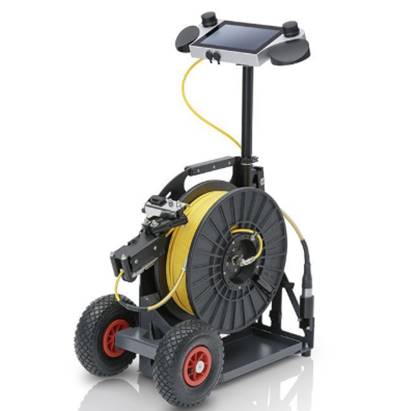
Fig. 1 – Mobile tele-inspection robotic system
Heavy cargo unmanned aerial vehicles (UAVs) are successfully used in difficult, mountainous, and swampy areas, as well as when overcoming wide water barriers. These drones are capable of not only winding the pilot cable but also mounting self-supporting optical cables (ACS) directly onto the supports, using computer vision to precisely position the fasteners. Statistical data collected during pilot and commercial projects on the robotization of fiber-optic cable construction from 2023 to 2025 demonstrate the high efficiency of these technologies [2].
Analysis of production indicators shows that using autonomous microtransmission systems increases cable laying speed from 50-80 m per shift to 300-500 m per shift in urban environments, providing a 4-6 fold increase in labor productivity. The cost of subsequent asphalt or tile restoration is reduced by 60-75% due to the minimum opening area.
Statistics show that using HDD reduces the risk of damage to existing underground utilities by 85% compared to manual control. In addition, reducing the number of maintenance crews from 4-5 to 1-2 operators makes it possible to reduce the wage fund at a particular facility by 40%.
The use of introscopic robots in the process of working in existing sewer systems has significantly increased the average span length between wells. Without the use of additional winches, this figure increased by 300%. In addition, the number of incidents related to optical fiber breakage or critical bending decreased by 92%.
The use of heavy unmanned aerial vehicles (UAVs) during the construction of overhead lines in difficult geographical conditions significantly reduced the time required for the construction of transitional spans through rivers and ravines by 5-7 times. At the same time, the risks of high-altitude injuries are completely eliminated, which traditionally account for up to 15% of the total number of accidents during linear construction. According to aggregate macroeconomic indicators, the global market of robotic equipment for telecommunications construction demonstrates a stable average annual growth rate (CAGR) of 16-18% [6].
Economic modeling demonstrates that, despite significant initial capital expenditures (CAPEX) for the acquisition of robotic complexes, their payback period during intensive operation ranges from 18 to 30 months. The integration of robotics with digital counterparts of communication facilities makes it possible to reduce the overall design and construction time of access networks by 35-40%. In addition, the general industrial injury rate (LTIFR) at facilities where autonomous systems are used is reduced by 95%. This proves not only the economic, but also the high social feasibility of a mass transition to robotic methods of laying fiber-optic communication lines.
The author believes that, despite the high efficiency and strategic importance of robotic systems for laying fiber-optic communication lines, their mass implementation faces a number of systemic problems. Industry monitoring and statistical analysis data confirm these problems.
At the technical and technological level, the main obstacle is the high degree of uncertainty of the real urban and natural environment. Analysis of telemetry collected from autonomous micro-transmission complexes and trenchless robots from 2023 to 2025 shows that in dense urban areas, the so-called "urban canyons," critical failures in satellite navigation systems (GNSS) occur on average in 35-40% of cases. This forces switching to manual or semi-automatic control and reduces the claimed productivity by 25-30%.
In addition, machine vision and laser scanning systems are highly sensitive to adverse weather conditions. The statistics of industrial incidents show that during periods of heavy precipitation, dust storms, or thick fog, the probability of false alarms of emergency stop systems increases by 45-60%, which leads to unplanned downtime of equipment [9]. Difficult geological conditions, such as the presence of boulders or seasonally frozen soils, cause cutting tool failures and emergency stops in about 20% of shifts, increasing the time required for repairs and maintenance.
The economic problems associated with the introduction of robotics are both macro- and micro-financial in nature. They are driven by extremely high initial capital costs and hidden operating costs. Statistical data on purchases of specialized equipment show that the cost of one autonomous robotic complex for laying fiber-optic communication lines is on average four to five times higher than the cost of similar functionality of traditional mechanized equipment. In addition, the operating costs (OPEX) are compounded by the need for expensive maintenance. The annual cost of sensor calibration, software updates, and replacement of specific components ranges from 18% to 22% of the initial cost of the machine [7].
Economic modeling conducted on the database of large telecommunications contractors has revealed a significant discrepancy between projected and actual payback indicators. If business plans set a return on investment (ROI) of 24-30 months, actual data, based on three years of operation, show an increase in this period to 48-54 months. This discrepancy is due to underestimation of indirect costs, such as the need for mobile repair teams with mechatronics engineers and downtime related to waiting for foreign component supply under sanctions and logistical restrictions.
The issue remains the outdated regulatory framework, which not only fails to keep pace with technological developments, but also creates artificial administrative barriers. Analysis of the timing of robotics infrastructure projects shows that up to 40% of total construction time is spent on bureaucratic approvals, rather than physical work.
The current codes of regulations and state standards do not contain specific regulations for the acceptance of work performed by fully autonomous systems, which leads to delays in commissioning for about 15% of successfully implemented pilot projects due to technical issues.
One critical aspect is the issue of legal liability. Statistics on insurance claims in the telecommunications industry show an increase in incidents related to damage to nearby underground utilities caused by robotic horizontal directional drilling machines. In 12-15% of these cases, protracted legal disputes arise because the current legislation does not clearly define the distribution of responsibility between the contractor, operator, and developer of the artificial intelligence algorithms controlling the machine.
Another issue is the lack of up-to-date documentation for existing underground utilities. According to statistics from GPR, surveys and tracking, in old urban areas, between 40% and 50% of existing cables and pipes are not registered on cadastral maps or are registered with an error of several meters.
This makes it difficult for even the most advanced robotic algorithms to navigate through the area. Production reports indicate that despite the use of robotics, there is still an average of one incident every 10-15 kilometers where communications are damaged due to uncharted obstacles. This requires manual drilling and control, completely defeating the idea of fully autonomous construction.
According to the author, these statistically confirmed problems require the development of a comprehensive government strategy that aims to modernize the regulatory framework, support innovative projects, and create unified competence centers simultaneously.
Conclusions. Summing up the research, we can state that the introduction of robotic systems into the process of laying fiber-optic communication lines is not only a promising technological trend, but also an objective necessity and an inevitable direction of evolution for the telecommunications industry as a whole.
According to the author, the experience of integrating autonomous microtransmission complexes, robotic horizontal directional drilling rigs, intrascopic cable carriers, and heavy cargo drones has proven their high operational efficiency. This includes multiple increases in labor productivity, significant reduction of risks related to damage to existing underground and aerial infrastructure, minimization of environmental impact, and almost complete elimination of injuries in dangerous work areas.
However, as the statistical and analytical review conducted by the author has shown, several systemic barriers hinder the massive robotization of access network construction. These include high capital and operating costs, vulnerability of machine vision and navigation algorithms to difficult weather and geological conditions, a lack of up-to-date geospatial data, and a shortage of qualified mechatronics engineers.
The author believes that only the simultaneous solution of these technological, economic, administrative, and personnel challenges, through the development of artificial intelligence and creation of digital counterparts for underground infrastructure, can unlock the full potential of robotic systems. This will ensure the rapid, safe, and economically sustainable deployment of fiber-optic networks as data consumption continues to grow exponentially.
References:
- Dong X. Optical Fiber Communication Engineering Design Optical Fiber Line Construction Technology // Communication Engineering and Network Technology. – 2025. – Vol. 1. – No. 1.
- Corrêa M.F.S. et al. An Automated and Compact Fiber Optic Tether System for Mobile Robots in Confined Spaces // 2026 Brazilian Conference on Robotics (CROS). – IEEE, 2026. – pp. 298-303.
- Khorov E. et al. A tutorial on IEEE 802.11 ax high efficiency WLANs // IEEE Communications Surveys & Tutorials. – 2018. – Vol. 21. – No. 1. – pp. 197-216.
- Lalam N. et al. Robotic fiber optic internal deployment tool for pipeline integrity monitoring // Fiber Optic Sensors and Applications XVIII. – SPIE, 2022. – Vol. 12105. – pp. 30-37.
- Lin T.H. et al. Automated robotic deployment of distributed fiber optic sensing for construction monitoring //Automation in Construction. – 2026. – Vol. 183. – p. 106793.
- Moody D. Nist pqc standardization update // National Institute of Standards and Technology. – 2021. – p. 2021.
- Sang Z., Li K. ITU‐T standardisation activities on smart sustainable cities // IET smart cities. – 2019. – Vol. 1. – No. 1. – pp. 3-9.
- Vdovichenko O., Perepelitsyn A. Technologies for building systems of remote lining of communication lines: a practical example of implementation // Radioelectronic and Computer Systems. – 2021. – No. 2. – pp. 31-38.
- Wang L. et al. Research on Key Technology of UAV Communication Optical Cable Line Inspection // 2024 sixth International Conference on Communications, Information System and Computer Engineering (CISCE). – IEEE, 2024. – pp. 256-262.
- Zhao W. et al. A wheeled robot chain control system for underground facilities inspection using visible light communication and solar panel receivers // IEEE/ASME Transactions on Mechatronics. – 2021. – Vol. 27. – No. 1. – pp. 180-189.
Other articles of the issue