

Features of corporate customer service in the laundry business
Authors
Gordeeva Svetlana Vyacheslavovna

Share
Annotation
The paper examines the key features of corporate customer service in the laundry industry, focusing on the specific needs and requirements of customers for quality service. It analyzes the advantages of introducing personalized tariff plans, flexible pricing systems, and scheduling options that allow companies to accommodate individual work schedules. Special attention is given to the importance of strict adherence to sanitary standards, standardization of laundry processes, and the implementation of technological solutions for quality control. Methods for logistics optimization, the role of personal managers, and automation of workflows are discussed to enhance convenience and reliability in interactions. It is concluded that a comprehensive approach to corporate customer service can increase loyalty, reduce transaction costs, and strengthen the competitive position of laundries in the business-to-business (B2B) services market.
Keywords
Authors
Gordeeva Svetlana Vyacheslavovna
Share
Relevance of the study
The modern market for B2B services demands high quality, speed, and reliability in textile processing, making corporate customer service an essential factor in laundries' competitiveness. Companies in the hotel, restaurant, medical, industrial, and service sectors require stable volumes, strict adherence to sanitary standards, customized delivery schedules, and a high level of supplier responsibility.
The increasing complexity of logistics processes, growing demand for transparency, and digitalization, as well as competition among suppliers, make it essential for companies to understand the specifics of corporate customer service in order to improve service quality and optimize laundry costs.
The purpose of the study
The purpose of the study is to identify and organize the key aspects of corporate customer service in laundry services, determine the factors that affect the quality of interactions, and devise strategies to enhance service efficiency, logistics dependability, and customer satisfaction.
In order to achieve this goal, it is essential to identify the elements that influence employee performance, establish optimal criteria for employee selection, analyze current incentive systems, and propose motivational tools that cater to the unique requirements of the laundry industry.
Materials and research methods
The research materials included regulatory documents on sanitary standards for textile processing, internal regulations of laundries, analytical reports on the B2B market, and data from practical experience of service companies.
We used comparative analysis to identify differences between corporate and private customer service. We also used a systematic approach to study the interaction processes at all stages - from order acceptance to the delivery of finished textiles. We employed observation and expert assessment methods to determine factors that affect the quality and stability of our services.
The results of the study
The history of the laundry industry has been shaped gradually and is closely linked to the development of urban infrastructure, industrialization, and the growth of service industries. In its early stages, during the late IXX and early XX centuries, laundries were primarily small businesses catering to domestic customers. However, as hotels, hospitals, railways, and other institutions began to emerge, there was a growing need for centralized and efficient processing of large amounts of textiles. This led to the emergence of contractual relationships, where laundries began providing regular services to organizations, laying the groundwork for corporate service.
In the middle of the XX century, due to the mechanization of laundry services, the corporate market began to grow rapidly. Laundromats started introducing specialized equipment, production lines, and chemicals in order to ensure high and consistent productivity. Industry standards were established for working with hospitals and hotels, which required strict sanitary measures, sorting by type of contamination, labeling, and quality control. Corporate clients became a strategic focus, so laundromats began developing logistics systems to ensure regular export and delivery of textiles.
Since the end of the XX century, corporate customer service has become more organized and professional. There are service contracts, SLA contracts, individual tariff plans, and personal managers. During this time, laundries have actively implemented automation, including sorting systems and radio-frequency identification (RFID) tag tracking, which has increased the transparency of processes and reduced errors. At the same time, the textile rental sector for restaurants and hotels has been growing, where laundries not only provide services but also provide their own linen, fully managing their inventory.
In the XXI century, corporate services have become high-tech services focused on accuracy, environmental friendliness, and integration with clients' business processes. With the development of the hospitality, medical, logistics, and industrial sectors, there has been an increase in demand for quality, safety, and speed in washing services. Laundries are implementing digital platforms for managing orders, monitoring loads, automatically planning routes, and generating reports. The emergence of a competitive B2B market has resulted in the key features of these corporate services being flexibility, customized solutions, improved quality control, and long-term partnerships [3].
It should be noted that modern corporate customer service technologies in the laundry industry are a combination of automation, digitalization, and customization. These technologies allow large hotels, restaurants, medical institutions, manufacturing companies, and logistics operators to meet their needs.
Today, large laundries use RFID tags sewn into each textile item. These tags ensure accurate accounting, control of wear, management of turnaround times, and elimination of losses. Specialized sorting systems automatically sort laundry according to type of fabric, degree of contamination, and required processing mode. This increases efficiency and reduces the risk of errors. Customers have access to digital platforms that allow them to track the status of their orders, textile loading, processing history, and actual material consumption. They can also make requests for replacements or additional batches of linen. (Table 1).
Table 1
Corporate laundry service
|
№ |
Indicator |
Characteristic |
|
1 |
Types of services |
Laundry, drying, ironing, and cleaning of clothes, uniforms, bedding, and towels. We also offer dry cleaning and special care for delicate fabrics. Our team can also repair and restore any textile items. |
|
2 |
Target audience |
Hotels, hostels, restaurants, cafes, medical institutions, sports clubs, and fitness centers. |
|
3 |
Advantages |
Reducing the cost of owning and maintaining your own laundry equipment, while improving the quality of services through professional assistance. Flexibility in terms of volume of laundry services. |
|
4 |
Terms of cooperation |
Long-term contracts with individual tariffs based on the volume and frequency of services, as well as conditions for receiving, transporting, and returning products. |
|
5 |
Sustainable development |
The use of environmentally friendly detergents and energy-efficient washing techniques. |
Logistics uses optimized routes created using algorithms, which reduce delivery time and increase the predictability of services. For medical organizations, special sanitary safety protocols are implemented, including disinfection at high temperatures and control of biological contamination. Each batch of laundry is certified before use. The textile rental service is actively developing in the hotel industry, where laundry provides a full turnaround of linen, optimizing its quality, quantity, and renewal [1].
Modern laundry services use energy-efficient equipment, chemical dosing systems, humidity controls, and intelligent management to reduce water and electricity usage. Artificial intelligence is used to predict loadings, schedule shifts, distribute loads, and assess wear based on RFID data.
This creates an integrated approach to corporate laundry services based on transparency, reliability, speed, environmental friendliness, and deep integration with customer processes. It makes modern laundries a high-tech and strategically important part of companies' infrastructures.
To attract corporate clients, sales and marketing teams use various strategies to identify potential buyers and close deals. They aim to engage the target audience's interest and guide them through the sales process.
Since success here depends on finding the right sources of future customers, that's where you need to start. While attracting potential customers is traditionally seen as the goal of a company's marketing efforts, it's not limited to paid advertising channels (Fig. 1).
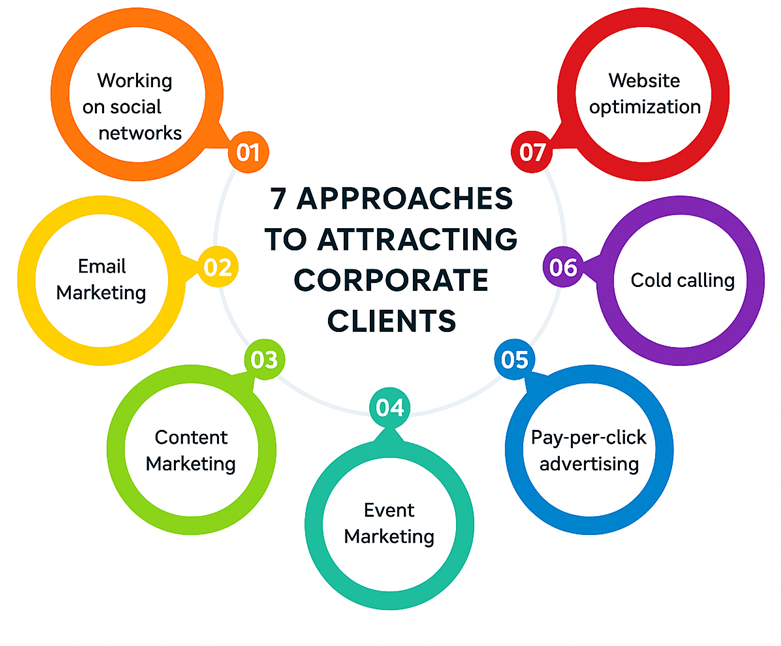
Fig. 1 – Basic approaches for attracting corporate clients [2]
The challenges in providing services to corporate clients in the laundry industry are related to the complex logistics, large volume of processing, and strict quality standards, which make the service chain susceptible to disruptions.
One of the main difficulties is the inconsistency in the quality of washing and finishing, as individual batches of laundry can have different levels of cleanliness, ironing, or damage to fabrics, which is particularly critical for hotels and medical facilities. Difficulties also arise with textiles, where the lack of accurate control systems can lead to losses, discrepancies in inventory, and conflicts between the laundry service and customers.
Logistical issues are compounded by delivery delays, uneven routing, seasonal demand peaks, and reliance on external transportation factors. Corporate clients also face difficulties in ensuring predictable volumes, leading to laundry facilities experiencing overloaded production lines or underloaded lines, which reduces economic efficiency.
High standards of hygiene in medicine and the hospitality industry require strict protocols. However, compliance with these standards is not always perfect due to human factors or outdated equipment.
Another challenge is the lack of digitalization in some aspects of the process. This makes it difficult for corporate clients to have transparent access to information about laundry movement, processing times, losses, and wear. This lack of transparency creates distrust and hinders quality control.
Staff issues are also a challenge. High turnover, lack of training, and insufficient qualifications can lead to errors in sorting, incorrect choice of processing methods, and damage to textiles. Additionally, differences in customer expectations regarding deadlines, cleanliness standards, and service volume can cause conflicts and require constant renegotiations.
All these issues create a complex set of challenges that require laundries to invest in technology, automation, process standardization, and improved communication with corporate clients.
In our opinion, addressing challenges in serving corporate clients in the laundry industry requires a holistic approach that combines equipment modernization, process digitalization, quality control enhancement, and transparent communication with customers.
It's crucial to begin by implementing automated textile tracking systems, such as RFID tags or barcodes, that allow for the monitoring of each piece of laundry. This helps reduce losses, eliminates confusion, and provides customers with accurate information on the movement of their garments.
Additionally, it's essential to upgrade production lines by replacing outdated machines with state-of-the-art, programmable equipment, ensuring consistent washing quality and minimizing the risk of fabric damage.
A significant aspect of this solution is the implementation of standardized process protocols for different types of fabrics, eliminating the human error factor and ensuring a predictable outcome.
To avoid logistical disruptions, it is essential to optimize delivery routes using specialized software. We should also create flexible schedules for collecting and distributing laundry and build backup capacities for peak loads. The conclusion of Service Level Agreements (SLAs) is also crucial. These agreements establish acceptable deadlines, define quality standards, and specify the responsibilities of each party. This makes cooperation more transparent and reduces the risk of conflicts. Staff training is another important aspect. Regular training sessions on sorting, equipment use, hygiene standards, and corporate client requirements help increase accuracy and speed in processing.
Digitalization of processes helps corporate customers feel more in control of the situation. With the introduction of client portals, they can track order statuses, monitor volumes, view loss and wear reports, and quickly interact with managers. This enhances trust and reduces the workload on the support team. Regular maintenance of equipment, implementation of automatic detergent dosing systems, and constant monitoring of washing parameters are essential to meet sanitary standards. Additionally, using an internal quality audit system with random batch verification and the ability to promptly correct errors is beneficial.
These measures contribute to a more stable, predictable, and cost-effective corporate customer service, enhancing customer loyalty and strengthening the competitive advantage of the laundry.
Conclusions
The successful solution of problems that arise in serving corporate clients in the laundry industry requires an integrated and systematic approach. The key factor is the combination of technological modernization, digital control, and sustainable organizational processes that minimize human error and ensure quality stability.
The introduction of automated accounting systems, increased transparency in operations, improved logistics, and standardized production procedures create a solid foundation for reliable, efficient, and safe services. Professional training of staff is also important, as it is skilled employees who can ensure compliance with technical requirements and respond promptly to potential issues.
The result of implementing all these measures is to increase the trust of corporate customers, strengthen long-term partnerships, and significantly increase the competitiveness of the company. This strategy allows the company not only to address current challenges, but also to confidently develop in response to growing market demands.
References:
- Lavrova A. P. Basic methods of assessing customer satisfaction in modern conditions // Humanities, socio-economic and social sciences. – 2024. – No. 5. – pp. 188-193.
- Attracting corporate clients: 15 proven ways [Electronic resource]. – Access mode: https://neiros.ru/blog/marketing/privlechenie-korporativnykh-klientov-15-proverennykh-sposobov
- Sozonov Yu.S. Assessment of the client capital of the company // Bulletin of the Moscow University. Series 6: Economics. - 2014. – No. 6. – pp. 80-96.
- Tretyak O.A. The relational paradigm of modern marketing // Russian Journal of Management. – 2013. – Vol. 11. – No. 1. – pp. 41-62.
Other articles of the issue