

Breed-specific coat characteristics in dogs as a basis for selecting grooming techniques and acceptable methods
Authors
Valeriia Sevriukova

Share
Annotation
This article examines the morphofunctional and breed-specific features of the canine coat that determine the choice of grooming techniques and methods. It analyzes the structure and growth of hair, differences in coat structure among individual breeds, and the main methods of professional coat care. Particular attention is given to the rationale for clipping, hand stripping, brushing, and other procedures according to coat type. The article considers criteria for deciding whether a grooming procedure is acceptable, potential risks of damage to the skin and coat, and factors that affect procedural safety. Drawing on the scientific literature and professional guidelines, it systematizes approaches to choosing grooming methods for the individual dog, with the aim of maintaining skin health, preserving coat structure, and safeguarding animal welfare.
Keywords
Authors
Valeriia Sevriukova
Share
Background
Grooming techniques and methods should be chosen on a scientific basis that takes into account the breed-specific features of the canine coat. The coat provides protection and thermoregulation, and its length, density, structure, and growth pattern vary considerably among breeds. These features shape the care requirements of each dog and limit the use of one-size-fits-all grooming methods.
Research has shown that coat characteristics in dogs are largely determined by genetic factors (Shearin & Ostrander, 2010; Whitaker & Ostrander, 2019). At the same time, poorly chosen coat-handling methods can damage the hair and irritate the skin, whereas insufficient care contributes to matting and poorer skin condition. Clipping, brushing, removal of dead hair, and drying should therefore be chosen according to the morphological features of the coat and the condition of the individual animal.
The topic therefore calls for a systematic review of the evidence on breed-specific coat features in dogs, criteria for deciding which grooming methods are acceptable, and well-grounded recommendations for their use. This work has practical value for maintaining healthy skin, a normal coat, and animal welfare.
Objective
This study aims to provide a scientific rationale for selecting grooming techniques and acceptable grooming methods for dogs on the basis of the morphofunctional and breed-specific features of the coat, while ensuring procedural safety and protecting the animal’s health.
Materials and methods
The study drew on published research in veterinary dermatology and in the morphology and physiology of the canine coat, the breed standards of the Fédération Cynologique Internationale (FCI), and the recommendations of veterinary and kennel organizations.
The methods included analysis and synthesis of the literature, comparative analysis, and classification and systematization of data. Coat features were compared with grooming techniques using the Siberian Husky, the Wire Fox Terrier, and the Poodle as examples. The conditions for applying individual procedures, their potential risks, and the criteria for their acceptability were examined.
Results
The canine coat consists of hairs that grow from hair follicles in the skin. Dogs have compound hair follicles, in which several hairs emerge through a common opening. These follicles contain larger primary hairs, which form the outer coat, and fine secondary hairs, which make up the undercoat. According to the Merck Veterinary Manual, a single primary hair in such a follicle may be surrounded by 3–15 secondary hairs (Moriello, 2018). The ratio between these hairs affects the density, volume, and appearance of the coat.
Figure 1 shows a compound hair follicle in a dog.
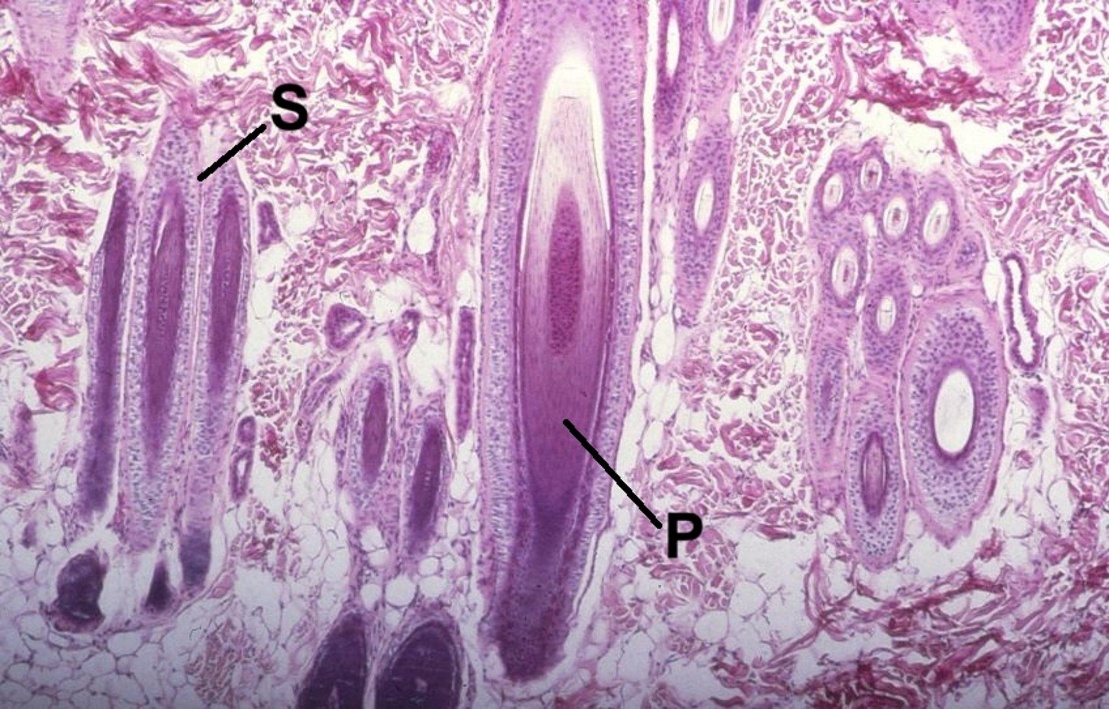
Fig. 1. Compound hair follicle in a dog: P, primary hairs; S, secondary hairs (Moriello, n.d.)
Each hair consists of a root, which lies within the follicle, and a shaft, which projects above the skin surface. The hair shaft comprises the cuticle, the cortex, and the medulla, although the medulla is not present in every hair. The cuticle forms the outer layer, the cortex contains keratin structures and pigment, and the medulla, when present, occupies the center of the hair. Morphological differences in these structures are associated with the thickness, strength, and other physical properties of the coat (Roudebush & Schoenherr, 2010).
Hair grows in cycles comprising anagen (the active growth phase), catagen (the transitional phase), and telogen (the resting phase). The phases differ in duration, which depends on the individual animal. Coat renewal is also influenced by hormonal status, nutrition, season, and day length.
Breed differences are most evident in hair length and shape, coarseness, density, and how well developed the undercoat is. The official breed descriptions set out in breed standards can be used for comparison (Table 1).
Table 1
Coat characteristics of selected dog breeds
|
Breed |
Coat characteristics |
Structure and distribution of the coat |
|
Siberian Husky |
The coat is double and medium in length, consisting of straight guard hairs and a soft, dense undercoat. The guard hairs lie flat against the body and are not excessively harsh. The coat is short enough to preserve the natural outline of the body. |
The undercoat is long enough to support the guard hairs. Seasonal shedding is typical, and the undercoat may be temporarily absent during this period. The hair between the toes and around the feet differs from the body coat in placement and length. |
|
Wire Fox Terrier |
The coat is dense and very wiry, lying close to the body. The undercoat consists of shorter, softer hairs. The guard hairs are distinctly harsh and vary in length over different parts of the body. |
The coat is about 2 cm long on the shoulders and up to 4 cm on the withers, back, ribs, and hindquarters. The coat on the back and hindquarters is harsher than on the sides. The hair on the jaws is fairly long and harsh; on the legs it is dense and crisp. |
|
Poodle |
The coat is dense and profuse, with fine hairs of a characteristic curly texture. There are two coat varieties: curly and corded. The curly coat is springy and dense and forms even curls. |
The curly coat is uniform in length and holds its curls well. The corded variety consists of dense, fine-textured hair that forms distinct cords. Cords must be at least 20 cm long. |
Source: American Fox Terrier Club, 1991; Fédération Cynologique Internationale, 2022, 2024.
Breed-specific features also appear in how the coat is distributed over the body. In the Wire Fox Terrier, the hair on the back and hindquarters is harsher than on the sides. In the Siberian Husky, the undercoat may be temporarily absent during seasonal shedding; the breed standard allows for this, and it is not in itself regarded as a fault. The Poodle standard describes two coat forms: curly, which forms even curls, and corded, which forms characteristic cords. These differences show that coat organization can vary even within a single breed.
The choice of grooming technique depends primarily on how the coat grows and renews itself, how prone it is to matting, and whether its natural structure needs to be preserved. For dogs with continuously growing coats, regular brushing and periodic clipping are important for keeping the coat at an optimal length and preventing mats. In breeds with pronounced seasonal shedding, the focus is on removing dead undercoat in good time while keeping the guard hairs intact and protective.
Table 2 summarizes how grooming techniques are chosen according to coat type.
Table 2
Grooming techniques by coat type
|
Breed |
Main techniques and tools |
Application notes |
|
Siberian Husky |
Brushing out with a metal-toothed brush and a comb; removal of shed undercoat |
More intensive brushing during shedding; guard hairs are preserved; routine clipping of the body is not needed |
|
Wire Fox Terrier |
Hand stripping, stripping knife, comb; clipper for a pet trim |
Ripe hairs are removed in the direction of growth; hand stripping is chosen when the show texture of the coat must be preserved |
|
Poodle |
Slicker brush, metal comb, clipper, straight and thinning shears |
Thorough brushing down to the base of the hair; periodic clipping; coat length chosen according to whether regular maintenance is feasible |
Source: compiled from AKC recommendations (American Kennel Club, n.d.-a, n.d.-b; Kearl, n.d.).
Regardless of breed, the order of procedures should take into account the condition of the coat before bathing. Veterinary professionals recommend dealing with tangles beforehand, because mats can be harder to work out once wet. Small mats may be carefully teased apart with a comb, whereas dense mats require a clipper or professional help. Using scissors close to the skin increases the risk of accidental cuts.
Whether a grooming procedure is acceptable depends on the condition of the animal’s skin, the nature of the intended procedure, and whether it can be performed without injury or marked stress. Before starting, the skin should be examined for redness, scratches, crusts, wounds, and other abnormalities. Any suspicious changes warrant a veterinary consultation, because grooming is no substitute for the diagnosis and treatment of skin disease.
Mechanical injury can result from excessive pulling on the hair, the use of sharp tools, and contact between the skin and hot clipper blades. Grooming products that are not completely rinsed out pose an additional hazard, as they can cause local irritation. Equipment should therefore be checked, sensitive areas handled with care, and cosmetic products rinsed out thoroughly (Dunn, 2011).
Delayed coat regrowth after short clipping deserves particular attention (Welle, 2023). Post-clipping alopecia is a condition in which hair regrowth is delayed after the coat has been clipped (Figure 2). Such cases are reported more often in dogs with a dense undercoat, including Siberian Huskies. However, the mechanism of this condition has not been fully established, and clipping does not always disrupt hair growth.
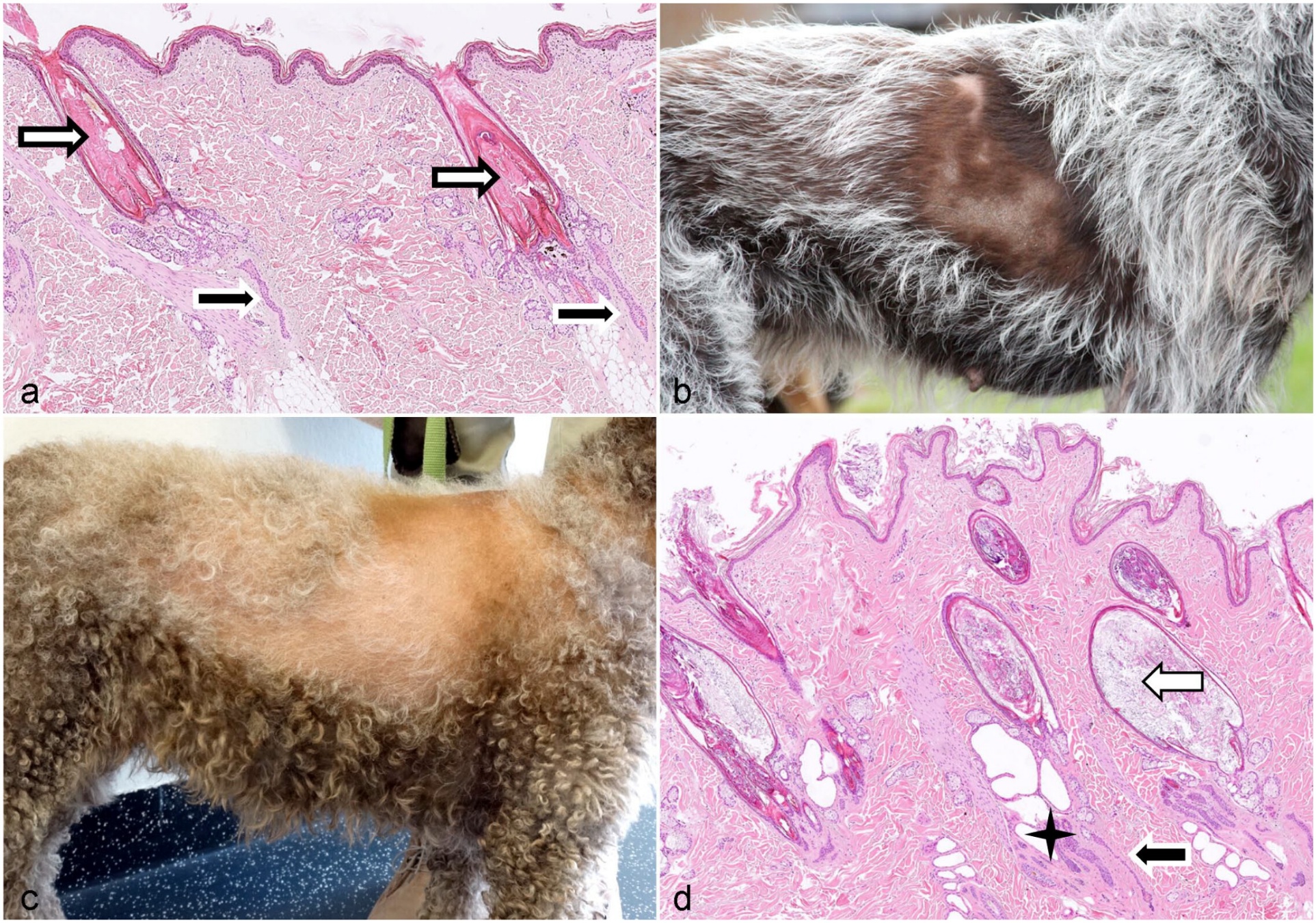
Fig. 2. Example of uneven coat regrowth after clipping (Welle, 2023)
Safety assessment should also take into account how dogs respond behaviorally. Ferreira et al. (2022) analyzed 55 grooming sessions. The most noticeable changes in the animals’ behavior and physiological parameters occurred on arrival at the salon and during drying. These findings indicate that the dog’s reactions to equipment noise, restraint, and the length of the procedure need to be monitored.
Table 3 lists the criteria for the acceptability of grooming procedures and the associated risks.
Table 3
Criteria for the acceptability of grooming procedures and associated risks
|
Assessment criterion |
Potential risk |
Condition for acceptability |
|
Skin condition |
Irritation and aggravation of existing lesions |
Examination before the procedure; referral to a veterinarian if disease is suspected |
|
Mechanical action |
Abrasions, cuts, hair damage |
Well-maintained tools; no excessive pressure or pulling |
|
Equipment temperature |
Overheating and local skin injury |
Monitoring the temperature of cutting blades and exposure to hot air |
|
Use of cosmetic products |
Skin irritation from incomplete rinsing |
Use of products as directed; thorough rinsing |
|
Short clipping |
Possible delayed coat regrowth |
Consideration of breed predisposition and whether the procedure is justified |
|
Behavioral response |
Stress, resistance, risk of injury |
Monitoring the animal; breaks or stopping the procedure if the dog is markedly distressed |
Source: compiled from Ferreira et al. (2022).
In practice, grooming methods should be chosen on the basis of a comprehensive assessment of the animal’s condition, its coat type, and the purpose of the procedure. An individual care plan should take into account the dog’s age, coat condition, living conditions, tolerance of procedures, and whether regular grooming at home is feasible.
Puppies should be gradually accustomed to being touched, brushed, and handled with grooming equipment. In older dogs, general physical condition, mobility, and the ability to hold a position for a long time need to be considered. Dogs with limited mobility require particular attention, because prolonged restraint may cause them discomfort.
The frequency and scope of grooming should be determined individually, taking into account how quickly the coat gets dirty, its tendency to mat, the intensity of shedding, and the dog’s living conditions. If the owner cannot brush a long coat regularly, a simpler care routine suited to the particular dog is advisable. When dense mats are present, the priority is to remove them safely rather than to preserve the original coat length.
Grooming must also take the animal’s behavior into account. If the dog is markedly anxious, individual procedures should be shortened, breaks provided, and excessive restraint avoided. Restraint methods should keep both the dog and the groomer safe.
To make grooming more effective, the outcome of each session should be recorded, noting coat condition, any matted areas, the animal’s response, and any difficulties encountered. Comparing these records over subsequent visits makes it possible to adjust the frequency and content of grooming to the dog’s individual needs.
A differentiated choice of grooming methods thus involves an individual care plan that accounts not only for breed but also for the animal’s age, health, behavior, and living conditions. The main criterion of the plan’s effectiveness is keeping the skin and coat in good condition with minimal risk of discomfort or injury.
Conclusions
The analysis showed that breed-specific coat features are of considerable importance in choosing grooming techniques and methods for dogs. Differences in hair structure, density, length, and growth pattern call for a differentiated approach to coat care. The findings indicate that the choice of procedures should be determined not only by breed but also by the condition of the skin and coat, the dog’s age and individual characteristics, and how well it tolerates handling. Applying grooming methods without regard to these factors increases the risk of damage to the skin and coat. Professional grooming should therefore be based on a prior assessment of the animal, a reasoned selection of procedures, and adherence to safety requirements. This approach helps preserve the natural properties of the coat, prevent adverse effects of grooming, and maintain the welfare of dogs.
References:
American Fox Terrier Club. (1991, February 9). Wire Fox Terrier breed standard. https://aftc.org/wire-fox-terrier-breed-standard/
American Kennel Club. (n.d.-a). Siberian Husky dog breed information. https://www.akc.org/dog-breeds/siberian-husky/
American Kennel Club. (n.d.-b). Wire Fox Terrier dog breed information. https://www.akc.org/dog-breeds/wire-fox-terrier/
Dunn, T. J. (2011, March 23). Proper grooming techniques and examination skills for the professional. PetMD. https://www.petmd.com/dog/grooming_evr_proper_grooming_techniques_and_examination_skills_for_the_professional
Fédération Cynologique Internationale. (2022, November 18). Siberian Husky (FCI-Standard No. 270). https://www.fci.be/nomenclature/Standards/270g05-en.pdf
Fédération Cynologique Internationale. (2024, April 5). Poodle (Caniche) (FCI-Standard No. 172). https://www.fci.be/Nomenclature/Standards/172g09-en.pdf
Ferreira, M., Rodriguez, M. A. P., Oliveira, L. L. S., Maranhão, C. M. A., Oliveira, N. J. F., Carvalho, C. C. S., Afonso, M. V. R., & Madureira, M. R. (2022). Stress in dogs during grooming in a pet shop. Revista Brasileira de Zootecnia, 51, Article e20200154. https://doi.org/10.37496/rbz5120200154
Kearl, M. (n.d.). How to groom a Standard Poodle. American Kennel Club. https://www.akc.org/expert-advice/health/how-to-groom-a-standard-poodle/
Moriello, K. A. (n.d.). Compound hair follicle, photomicrograph, dog [Image]. MSD Veterinary Manual. https://www.msdvetmanual.com/multimedia/image/compound-hair-follicle-photomicrograph-dog
Moriello, K. A. (2018, June). Structure of the skin in dogs. Merck Veterinary Manual. https://www.merckvetmanual.com/dog-owners/skin-disorders-of-dogs/structure-of-the-skin-in-dogs
Roudebush, P., & Schoenherr, W. D. (2010). Skin and hair disorders. In M. S. Hand, C. D. Thatcher, R. L. Remillard, P. Roudebush, & B. J. Novotny (Eds.), Small animal clinical nutrition (5th ed., pp. 637–665). Mark Morris Institute. https://s3.amazonaws.com/mmi_sacn5/2019/SACN5_32.pdf
Shearin, A. L., & Ostrander, E. A. (2010). Canine morphology: Hunting for genes and tracking mutations. PLoS Biology, 8(3), Article e1000310. https://doi.org/10.1371/journal.pbio.1000310
Welle, M. M. (2023). Canine noninflammatory alopecia: An approach to its classification and a diagnostic aid. Veterinary Pathology, 60(6), 748–769. https://doi.org/10.1177/03009858231170295
Whitaker, D. T., & Ostrander, E. A. (2019). Hair of the dog: Identification of a cis-regulatory module predicted to influence canine coat composition. Genes, 10(5), Article 323. https://doi.org/10.3390/genes10050323
Other articles of the issue