

The structure of style: how brands help us express our individuality and show the world who we really are
Authors
Azatian Zakhar
Share
Annotation
This paper provides an in-depth analysis of the relationship between consumer brands and the processes of formation, expression, and transmission of individual identity in modern society. The article considers style not only as a set of aesthetic preferences in clothes, accessories, and everyday objects, but also as a multifaceted semiotic mechanism by which a person creates their inner world and transmits it to others. The author explores how brands transform from commercial objects into symbolic resources that people, consciously or unconsciously, include in their daily practice of self-presentation, endowing them with personal meanings, value associations, and emotional connections. In this article, we will pay special attention to the psychological aspects of brand identification. Branding is considered as a cultural code that allows us to understand social status, belonging to certain subcultures and communities, as well as a person's worldview. The process of choosing a style is consistently revealed: from unconscious impulses and emotional reactions to conscious strategies for managing one's image in a digital and offline environment. The influence of social media and visual culture on strengthening brand-mediated self-presentation will also be considered. Every choice of logo, color palette, or aesthetic becomes a micro-narrative that engages in a constant dialogue with society.
Keywords
Authors
Azatian Zakhar
Share
Relevance of the study. The relevance of this research stems from the fundamental transformations occurring in modern consumer society. The process of selecting goods and services has evolved beyond simply satisfying basic needs and has become a complex semiotic and psychological activity that helps individuals construct their identity.
In today's digital age, with its hypervisibility and transparency of social media, individuals' need for authentic self-expression has increased significantly. Traditional markers of social affiliation, such as class, religion, and geographical origin, are losing their rigidness, giving way to more flexible narratives created through consumption.
In this context, brands have transformed from simple commercial symbols of quality and status into full-fledged cultural archetypes. People actively integrate them into their daily lives to express their values, beliefs, and emotions. The paradoxical nature of modern culture has made this problem particularly acute. Striving for authenticity and individuality, people rely on mass-produced products, which requires a deep understanding of the processes by which brand meaning is integrated into their identity [4].
Studying this complex relationship is essential not only to comprehend the motivations behind modern consumer behavior but also to grasp the formation of a new social reality, where style and brand choice serve as the primary language for interpersonal communication and personal self-expression.
The purpose of the study. The purpose of this study is to conduct a comprehensive analysis and systematic examination of the mechanisms through which consumer brands contribute to the formation, expression, and translation of individual identity. We aim to uncover the hidden "anatomy" behind the stylistic choices that underlie this process, as well as the psychological and sociological factors that influence personal identification with brands.
In order to achieve this goal, we set out a series of interrelated objectives. Firstly, we aim to explore the psychological and sociological underpinnings of personal identification with brand values and to understand how the symbolic capital of brands is transformed into personal capital in terms of authenticity. Additionally, we wish to analyze the influence of the digital environment on these processes, examining how it intensifies and transforms them.
Ultimately, the research aims to create a comprehensive conceptual model that explains how abstract corporate narratives are interpreted by individual consciousness and translated into the material practices of style. This model will help a person not only adapt to society but also express their unique identity.
Materials and research methods. The research materials included a wide range of theoretical literature, such as fundamental works in the fields of consumer sociology, consumer psychology, cultural semiotics, and fashion theory. Additionally, we consulted empirical data collected from various sources, including industry reports on consumer behavior, analytical reviews of branding campaigns, social media profiles, and in-depth interviews with consumers published in specialized media and academic databases.
The methodological foundation of the research was an interdisciplinary approach that combined qualitative and quantitative methods. Specifically, semiotic analysis and visual deconstruction techniques were employed to dissect the semantic layers of brands and uncover their cultural implications. Projective and associative methods were adapted to explore the psychological mechanisms behind brand value assignment and their integration into personal narratives, based on consumer case studies.
This comprehensive application of diverse methods ensured a multifaceted analysis, allowing for a reliable reconstruction of intricate connections between corporate branding strategies and personal identity formation.
The results of the study. In today's world, traditional markers of belonging such as class, religion, and geographical origin have lost their unambiguousness. Instead, consumer culture has become more prominent, with brands acting as creators of complex symbolic systems.
The anatomy of style in this context is a multi-layered process where each element of our wardrobe or home becomes a part of our personal narrative. Brands offer us ready-made symbols and archetypes that help us bridge the gap between our inner selves and the image we wish to present to others (Fig. 1).
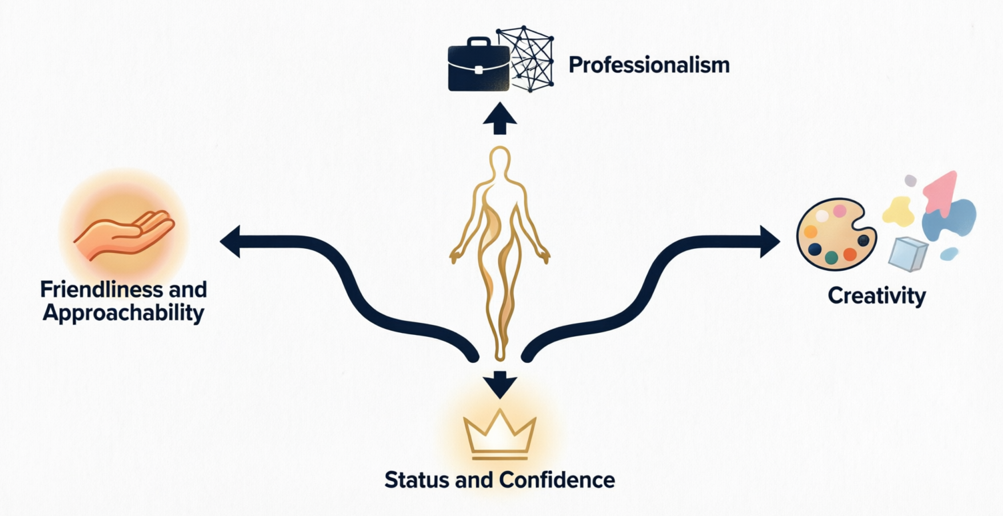 Fig. 1 – The Influence of Style on Human Perception [1]
When a person chooses a particular brand, they are in fact voting for a specific value system. By purchasing products made from recycled materials, they show their environmental responsibility. Choosing minimalistic and "quiet luxury" items signals their intellectual sophistication and self-confidence, which does not need loud confirmation. By giving preference to niche brands with a rich history, they emphasize their uniqueness and unwillingness to become part of mainstream culture.
This transformation of a product into a personal meaning is based on the psychological concept of the "extended self," where our possessions become an integral part of our sense of self-worth and identity.
Brands help us express who we are because they represent our personal qualities in a tangible way. The fabric, cut, logo, or lack thereof, and the history behind the creation of a product all work together to reveal our hidden motivations, ambitions, and fears [2].
The process of creating your own style is similar to the work of a curator in a museum. We carefully select the exhibits that, in our opinion, best reflect our personality, creating a physical space around ourselves that reflects our inner truth. This choice is rarely purely rational; it is driven by emotional connections, nostalgia, a desire to belong to a particular subculture, or a desire for uniqueness. The brand acts as an intermediary, translating our internal states into a visual language understandable to society (Table 1).
Table 1
Social effect of style influence [8]
|
Style element |
Visual associations |
Personality perception |
Social effect |
|
Business |
Strictness, order, professionalism, status |
Competent, reliable, ambitious, organized |
Trust, respect, and authority in the professional environment |
|
Casual |
Relaxation, practicality, comfort, accessibility |
Friendly, open, practical, realistic |
Ease of communication, reduction of social distance |
|
Creative |
Originality, courage, self-expression, art |
Creative, unconventional, free, inspiring |
Attracting like-minded people, standing out from the crowd |
|
Classic |
Elegance, traditions, impeccability, luxury |
Successful, confident, with impeccable taste, status |
Admiration, desire to imitate, and social recognition |
Modern consumer behavior research, conducted by leading analytical centers such as McKinsey & Company, the Business of Fashion, Deloitte, and Bain & Company, provides extensive empirical material that confirms the inextricable link between brand choice and personal identity. The State of Fashion reports, published annually, highlight a fundamental shift in customer motivation. While previously, the dominant factor was the price-quality ratio, today, more than 65% of consumers worldwide choose brands based solely on how their values resonate with their personal beliefs, according to McKinsey [9].
These statistics vividly illustrate how style and brand preferences become a tool for moral and existential self-determination. No longer do people simply buy clothes or accessories, they "buy" a sense of belonging to a particular worldview. This is especially true for Generation Z and Millennials. First Insight research reveals that nearly 75% of young consumers aged 16 to 26 believe their clothing style reflects their personality, and over 60% are willing to boycott brands that contradict their ethical principles. Thus, brands act as mirrors in which consumers see and confirm their own identity [3].
The most significant aspect of modern scientific research is the impact of the digital environment on style anatomy, as social networks have transformed the process of self-expression into a continuous performance. Based on Vogue Business analytics and consumer trend reports from TikTok, algorithm-driven feeds have created the phenomenon of "micro-aesthetics", such as "quiet luxury", "old money", "cottagecore", and "mob wife", which serve as pre-made templates for personal identity construction.
Statistics show that more than 70% of Generation Z users use social media to find inspiration and shape their style. At the same time, 58% of respondents admit that they buy certain brands solely in order to fit into their chosen visual subculture and broadcast this image into their digital environment [6]. This confirms the thesis that in the age of hypervisibility, style is becoming the main language of communication, and brands are the lexical units that make up public statements about themselves.
At the same time, there is a paradoxical trend: despite globalization, consumers are striving for uniqueness.
Another level of modern research focuses on how ethical and environmentally friendly brand practices have become new markers of social status and identity [7]. Deloitte's Generation Z and Millennials study shows that more than half of this generation are willing to pay a higher price for products that demonstrate a genuine commitment to the principles of sustainability and inclusivity.
This willingness to pay more for ethical products is not driven solely by altruistic motivations, but also by a desire for symbolic capital. Wearing clothes made from recycled materials or supporting ethical businesses allows individuals to construct an identity as a conscious citizen, signaling their empathy, education, and social responsibility to others.
Finally, current evidence suggests a radical transformation of the very nature of branding in the fashion industry – a shift from conspicuous consumption to more subtle signals known as "quiet luxury." According to reports by Lyst and The Business of Fashion, the search and sales of brands with a minimum number of logos, such as The Row, Loro Piana and Khaite, have increased by 40-50% over the past few years, while interest in overtly branded items remains at the same level [5].
This combination of research and statistical data provides a strong basis for understanding style as a complex system of symbolic expression, where each choice of brand is a deliberate step in shaping one's identity.
Despite the fact that brands offer powerful tools for self-expression, this process also raises several profound psychological, social, and ethical challenges, the most significant of which is the issue of authenticity.
When we use commercial products to express ourselves, a fundamental question arises: how free is our identity when marketers create it from pre-designed semantic puzzles? This is the commodification of personality, when inner values, spiritual search and existential needs are replaced by purchases. A person risks losing touch with his true inner world when he puts on not just clothes or accessories, but corporate masks imposed by glossy narratives [10]. As a result, style becomes a mechanism of self-alienation, where individuality is just a showcase for other people's ideas, forcing consumers to doubt whether they speak for themselves or whether another brand's marketing strategy is being broadcast through their mouths.
The next acute problem is the dominance of microtrends and algorithmic homogeneity, which paradoxically destroys the very uniqueness that modern people strive for. In the age of social media, where aesthetic trends replace each other at the speed of viral videos, the desire to express one's individuality often leads to the opposite result – total conformity.
People, in an attempt to fit into specific subcultures or follow current trends, begin to copy each other, becoming faceless mannequins displaying brands favored by algorithms. This leads to immense psychological pressure and anxiety, as consumers feel the need to continuously update their wardrobes and visuals to maintain their status within the digital community. This cycle can lead to hedonistic behavior and emotional burnout.
Style becomes less a reflection of an individual's personality and more an obsession with fleeting trends, leading to financial strain and a blurring of one's true self under the pressure to maintain an image.
An equally serious challenge is the ethical dilemma and crisis of trust associated with the practices of greenwashing and hypocritical brand positioning. Modern consumers are increasingly choosing brands based on their desire to convey their social responsibility, empathy, and concern for the environment, making ethics an integral part of their purchasing decisions. However, behind the seemingly noble brand narratives are often cynical marketing tactics that lack real action in supply chains and production. When a person builds their identity around the image of a "conscious consumer" and the brand they trust turns out to be involved in labor exploitation or environmental damage, it causes deep cognitive dissonance and moral distress.
The problem is further compounded by the fact that it becomes nearly impossible to discern the brand's authenticity due to the opaque nature of the industry. This is why any attempt to communicate your high ethical standards through product purchases risks unintentionally becoming complicit in manipulation and deceit.
Moreover, brand-driven style construction inevitably faces issues related to social stratification and exclusion. Access to the most prestigious and exclusive brands is limited by financial means, transforming style from a means of personal expression into a tool for social separation.
Those who cannot afford "high-end" or "prestigious" brands are excluded from the cultural conversation, their identity is undervalued, and they are stigmatized in a society that equates appearance and brand with personal qualities. Even the concept of "quiet luxury", which is supposed to move away from vulgar displays of wealth, actually creates even more exclusive and closed circles that are understood only by a small group of insiders, thus erecting new, invisible but impenetrable barriers between social classes.
Conclusions. Summing up the study of the anatomy of style, we can confidently state that in the modern world, brands have finally solidified their role as the primary language of self-expression and identity formation.
The act of choosing products has evolved from a practical necessity into a profound existential exercise, where each logo, design element, or aesthetic choice serves as a building block for a personal story, allowing individuals to express their values, affiliations, and inner states.
However, this potent toolset is accompanied by a fundamental paradox: while seeking authenticity through consumption, individuals inevitably face the commodification of their own identity, algorithmic homogenization, and the danger of replacing genuine personal qualities with beautiful, but artificial, imitations.
Brands offer us a pre-made vocabulary to communicate with the world, but they cannot write our story for us. True style freedom does not lie in the endless pursuit of micro-trends or blindly adopting other people's styles. It lies in developing critical thinking and the ability to consciously use branding elements, while not letting them dictate our uniqueness.
Ultimately, even the most expensive or innovative brands cannot tell the world who we truly are unless there is real, authentic content behind their facade. Identity is not something that can be bought or appropriated – it is created at the intersection of our inner world and outer forms. The task of each individual is to ensure that their style is not a mask covering emptiness, but a genuine bridge connecting their essence with their surroundings.
References:
- Bozbay Z., Özkan R.A.E. The effect of brand personality on consumers’ brand preference: The mediating role of self-expressive value of brand // International Congress of Management Economy and Policy. – 2016. – Vol. 3. – pp. 3536-3553.
- Byun K. A.K., Jones R.P., Wooldridge B.R. It is not always about brand: Design-driven consumers and their self-expression // Journal of Retailing and Consumer Services. – 2018. – Vol. 43. – pp. 296-303.
- Cătălin M.C., Andreea P. Brands as a mean of consumer self-expression and desired personal lifestyle // Procedia-Social and Behavioral Sciences. – 2014. – Vol. 109. – pp. 103-107.
- Cho E., Fiore A.M., Russell D.W. Validation of a fashion brand image scale capturing cognitive, sensory, and affective associations: Testing its role in an extended brand equity model // Psychology & Marketing. – 2015. – Vol. 32. – No. 1. – pp. 28-48.
- Liyanage U. Consumer Behavior and the Anatomy of a Brand // Strategic Marketing Management in Asia. – Emerald Group Publishing Limited, 2016. – pp. 315-350.
- Ruane L., Wallace E. Brand tribalism and self-expressive brands: social influences and brand outcomes // Journal of Product & Brand Management. – 2015. – Vol. 24. – No. 4. – pp. 333-348.
- Su J., Chang A. Factors affecting college students’ brand loyalty toward fast fashion: A consumer-based brand equity approach // International Journal of Retail & Distribution Management. – 2018. – Vol. 46. –No. 1. – pp. 90-107.
- Van den Bergh J., Behrer M. How cool brands stay hot: Branding to Generations Y and Z. – Kogan Page Publishers, 2016.
- Verwey S. Self-expression and collaborative "pro-sumption" in the digital brandscape // Communicatio. – 2015. – Vol. 41. –No. 3. – pp. 320-339.
- Wallace E., Buil I., De Chernatony L. Consumer engagement with self-expressive brands: brand love and WOM outcomes // Journal of product & brand management. – 2014. – Vol. 23. – No. 1. – pp. 33-42.
Other articles of the issue