

Organizational flexibility management as a factor of successful business development in the hospitality industry
Authors
Skorobogatov Maksim Victorovich
Share
Annotation
The article raises the topical issue of organizational flexibility management, an essential aspect contributing to successful and long-term business development in the highly turbulent modern hospitality industry. The author offers an in-depth analysis of theoretical and practical approaches to understanding organizational flexibility, exploring its structural, operational, and strategic aspects in the context of service enterprises. Special attention is paid to how external macroeconomic challenges, rapid changes in consumer preferences, and digital transformation processes force companies to implement adaptive and flexible management solutions. This paper proves that the development of a company's dynamic capabilities, which includes rapid reallocation of resources, effective interaction between various functions, the introduction of innovative service models, and the continuous development of human capital, is directly related to increasing competitiveness, guest loyalty, and the overall financial stability of hotel and restaurant enterprises. Based on the conducted research, a conceptual model of organizational flexibility management was developed. This model contains practical recommendations for senior management on the formation of an adaptive corporate culture, optimization of business processes, and implementation of flexible systems of motivation and training of personnel. The use of these approaches allows companies in the hospitality industry not only to successfully cope with crisis phenomena but also to actively use new market opportunities for long-term business development.
Keywords
Authors
Skorobogatov Maksim Victorovich
Share
Relevance of the study. The relevance of the study is due to the high level of turbulence and uncertainty that characterize the modern global and national economy. This is especially acute in the hospitality industry.
In the context of geopolitical changes, macroeconomic instability, rapid digital transformation, and radical changes in consumer preferences, traditional rigid and hierarchical management models are losing their effectiveness. In such conditions, organizational flexibility becomes not just a competitive advantage but also a necessary condition for the survival and sustainable development of a business.
Hospitality companies are forced to adapt quickly to new conditions, rebuild value chains, and change corporate culture. This allows them not only to cope with external challenges but also to actively use emerging market opportunities, such as the development of personalized service and the introduction of artificial intelligence in the management of the guest experience [5].
In this regard, a deep scientific understanding of organizational flexibility management mechanisms is of particular importance. This allows us not only to identify hidden reserves for improving efficiency but also to optimize the use of human and material resources, as well as ensure long-term loyalty of guests in highly competitive conditions.
The purpose of the study. The purpose of this study is to theoretically substantiate and practically develop an integrated model for organizational flexibility management, which is seen as a key factor in successful business growth and the creation of sustainable competitive advantages for hospitality industry businesses.
In order to achieve this goal, this work addresses a number of related tasks, including identifying the structural and dynamic components of organizational flexibility, assessing their impact on financial and operational performance, and formulating practical recommendations for top managers to implement adaptive management strategies that reduce risk and accelerate business growth.
Materials and research methods. The research is based on a comprehensive systematic approach that combines theoretical analysis and verification of hypotheses in practice.
The theoretical basis is based on the fundamental works of domestic and foreign scientists in the fields of strategic management, service economics, and organizational behavior. We also used up-to-date analytical reports from leading consulting agencies and industry associations of the hotel and restaurant business.
The empirical base of the study includes statistical data, financial and managerial reports of hospitality industry enterprises of various scales in recent years. In addition, the results of structured expert interviews with senior and middle managers, as well as detailed case studies of companies that have successfully implemented organizational transformation programs, were analyzed.
In the course of the research, we used a variety of general scientific and special methods, such as comparative analysis, systematization, and generalization of data. In addition, correlation and regression analysis methods were used to quantify the impact of organizational flexibility indicators on key business development indicators.
The results of the study. Modern approaches to managing organizational flexibility in the hospitality industry represent a complex combination of innovative digital technologies, flexible management methods, and new models of human capital management. They aim to create a fully adaptive and seamless environment.
A key factor in ensuring this flexibility is the deep digital transformation and integration of systems based on artificial intelligence and big data analysis. Thanks to this, enterprises can move from reactive to predictive management, predicting and preventing problems in advance. For example, the introduction of modern revenue management systems allows hotels and restaurants to quickly respond to fluctuations in demand, weather changes, local events, and even social media sentiment, dynamically adjusting not only pricing but also the structure of services offered.
An illustrative example of the implementation of this mechanism is the experience of international hotel chains. They actively apply machine-learning algorithms to provide personalized guest service. The system automatically analyzes the history of customer preferences and offers them customized services, such as room upgrades, booking spa treatments, or ordering a special menu. This not only contributes to an increase in the average check but also requires flexible restructuring of operational processes at the level of specific departments, as noted in the sources [1, 4].
An equally important mechanism is a change in approaches to personnel management and organizational structure. Teams bringing together specialists from different fields and the concept of a "universal employee" are replacing the traditional hierarchy [10]. To realize this concept, companies are actively implementing continuous cross-training and micro-training programs that are conducted through mobile platforms. Thanks to this, employees can freely switch between different tasks depending on the current workload.
A vivid example of such a system is the experience of some boutique hotels and chain restaurants. During peak workload periods, front office staff can quickly switch to work in the guest support service or distribution. Chefs can also participate in the development of temporary promotional meals using current leftovers. This significantly reduces costs and allows you to maintain a high quality of service [7].
The third important mechanism is the modularity and flexibility of business processes and supply chains. This is especially noticeable in the restaurant business and event management. Modern companies use the concept of a "designer" when creating menus and service packages. They use local outsourcing and cooperate with local farmers, which allows them to avoid global logistical problems (Fig. 1).
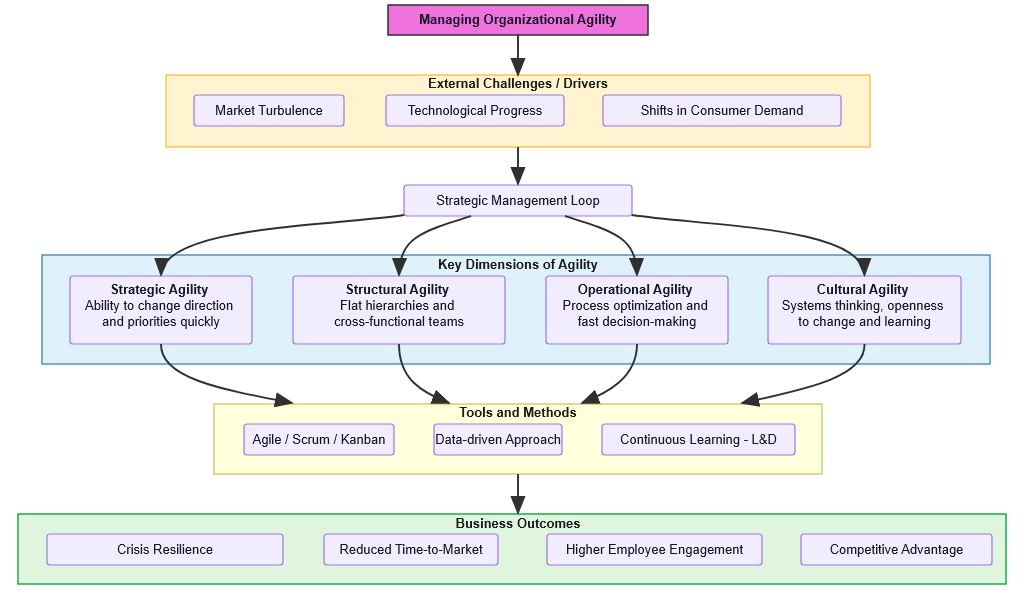
Fig. 1 – Stages of organizational flexibility management [3]
Large restaurant holdings quickly adapt to new conditions in times of crisis. In a matter of weeks, they create cloud kitchen networks and special delivery lines, while using the same production base and staff, but completely changing logistics and points of contact with guests.
In addition, they have the opportunity to receive customer feedback through mobile apps and digital concierge services. This allows guests to independently adjust the parameters of their stay, and companies to flexibly allocate cleaning and maintenance resources at those times when it is necessary [2].
Thus, modern approaches to managing organizational flexibility, supported by examples of successful digital and operational adaptation, convincingly prove that in the hospitality industry, flexibility has ceased to be just a way to respond to problems but has become an important system tool that allows you to actively create additional value, optimize resources, and ensure continuous business development in the face of constant market changes (Table 1).
Table 1 – Modern mechanisms for managing organizational flexibility in the hotel business [6, 8]
|
Mechanism category |
Specific tool/method |
Content and characteristics |
Practical effect |
|
1. Staff flexibility |
Cross-functional learning |
Staff rotation programs, micro training via mobile platforms, and employee multicompetence development. |
The ability to quickly redistribute personnel between departments depending on workload, reducing downtime by 25-30%. |
|
|
Adaptive motivation systems |
Flexible KPIs, bonuses for mastering related skills, and a project-based reward system. |
Increase staff engagement, reduce staff turnover by 15-20%. |
|
|
Flexible work schedules |
Shift schedules, remote work for administrative staff, and outsourcing during peak periods. |
Optimization of the wage fund, compliance of the staffing table with the actual workload. |
|
2. Technological flexibility |
Dynamic Pricing Systems (RMS) |
AI algorithms for forecasting demand and automatic tariff adjustments in real time. |
Increase RevPAR by 10-15%, maximize revenue during peak periods. |
|
|
Integrated PMS platforms |
Cloud-based hotel management systems with modular architecture and API integrations. |
Fast connection of new services, scaling of functionality without stopping operations. |
|
|
Mobile apps and digital concierges |
Self-service solutions for guests (online registration, ordering services, chatbots). |
Reducing the load on the front office, personalizing the service, and increasing guest satisfaction. |
|
|
Big Data and predictive analytics |
Big data analysis for load forecasting, guest preferences, and inventory optimization. |
Proactive resource management, reducing operational risks. |
|
3. Operational flexibility |
Modular business processes |
Standardized but adaptable maintenance protocols, checklists with execution options. |
The ability to quickly customize the service for a specific guest without loss of quality. |
|
|
Dynamic capacity management |
Transformation of spaces (conference rooms → coworking spaces, restaurants → cloud kitchens) |
Maximizing the use of space, creating additional sources of income |
|
|
Agile methodologies in project management |
Sprints, scrum teams to launch new services, and rapid iterations. |
Reducing the time it takes to bring new products to market by 30-40%. |
|
4. Structural flexibility |
Decentralization of decision-making |
Expansion of the powers of the line staff, budget for solving the problems of guests without coordination. |
Speeding up the response to guest requests, improving the quality of service. |
|
|
Cross-functional teams |
Project teams from representatives of different departments to solve complex tasks. |
Elimination of functional barriers, acceleration of communication, innovation. |
|
|
Network partnerships and ecosystems |
Collaborations with local suppliers, aggregators, tour operators, and startups. |
Access to external resources and competencies. |
|
5. Strategic flexibility |
Scenario planning |
Develop multiple scenarios and action plans for each. |
Preparedness for various crises, reduction of uncertainty. |
|
|
Portfolio diversification |
Development of multiple revenue streams (accommodation, F&B, events, spa, and coworking). |
Reducing risks and smoothing out seasonal fluctuations. |
We are convinced that, despite the obvious need and strategic importance of organizational flexibility in the hospitality industry, its implementation and scaling are fraught with many serious systemic, operational, and psychological problems that significantly slow down business development.
One of the most serious problems is staff resistance to change and an acute shortage of qualified personnel with the necessary adaptability and cross-functional skills [9]. In the context of the traditional high staff turnover in the HoReCa field, investments in continuous training and retraining of employees often do not pay off. This forces management to move away from the concept of a "universal employee" and return to a more narrow specialization.
In addition, the constant need to adapt to new conditions, multitasking, and the need to make non-standard decisions on the ground inevitably lead to emotional burnout of line staff. This, in turn, reduces the quality of guest service and negates the positive effect of implementing flexible management practices.
The corporate culture of many companies remains excessively conservative and hierarchical, which prevents free communication between employees, quick decision-making, and initiative. This is especially noticeable in the work of the staff who interact directly with the guests.
One of the main obstacles to organizational flexibility is technological and financial difficulties. To implement modern flexible models based on digital transformation, significant investments are needed in the development and implementation of integrated IT solutions, artificial intelligence systems, and platforms for big data analysis. Many hotels and restaurants, especially independent or middle-class ones, do not have sufficient funds to modernize their outdated IT infrastructure. Because of this, new flexible systems cannot be easily integrated with existing hotel management systems (PMS) or point of sale (POS), which leads to "information gaps."
In this regard, an important contradiction arises, which is especially acute in the hospitality industry: the desire for greater efficiency and flexibility in service, achieved through automation and algorithmization of processes, can lead to a loss of the "human dimension" and empathy in the service. This, in turn, can reduce the perceived value of the guest experience and destroy the emotional connection with the brand.
At the strategic and managerial levels, the issue is compounded by a fierce conflict between the need for local adaptation and corporate standards. In the chain hotel and franchise segment, flexibility is often limited by strict brand standards, which dictate uniform service protocols, design, menus, and even scripts for interacting with guests.
Top management of individual facilities faces a dilemma: how to ensure flexibility and customization in service to meet local demands while maintaining the global identity of the brand without incurring penalties from the parent company.
The situation is further complicated by imperfections in motivation systems and key performance indicators (KPIs). When managers' bonuses are solely tied to short-term financial results and strict compliance with operating budgets, they lack intrinsic motivation to invest time and resources in long-term initiatives that could lead to flexibility, innovation, and cross-functional collaboration. These initiatives may not produce immediate results, but their effects become apparent only in the end and contribute to strategic goals.
Finally, specific industry factors, such as a pronounced seasonality in demand, strict government regulations in the area of sanitary standards and fire safety, and the need for migration registration of employees, objectively limit the room for maneuver and flexibility of businesses. Sharp fluctuations in workloads during peak and off-peak seasons require different approaches to managing capacity and staffing, often in conflict with labor laws and social guarantees. This prevents the use of flexible schedules and outsourcing arrangements.
The challenges of managing organizational flexibility in the hospitality industry are multifaceted and interconnected, encompassing human, technological, financial, cultural, and regulatory aspects. Overcoming these challenges requires more than the targeted implementation of new tools; it requires a fundamental shift in managerial thinking. It requires finding a delicate balance between standardization and individualization, as well as creating an organizational environment that supports flexibility through adequate motivation systems, continuous learning, and the careful treatment of human capital, which is the main asset that generates genuine hospitality.
Conclusions. Summing up the results of the study, it can be concluded that in conditions of constant instability in the market, organizational flexibility has ceased to be just a desirable competitive advantage and has become a fundamental factor in the survival and strategic development of enterprises in the hospitality sector.
The analysis showed that successful flexibility management requires an integrated approach that integrates structural, operational, technological, and human resources aspects into a single adaptive ecosystem. Despite the objective difficulties encountered during implementation, such as staff resistance, high costs of digitalization, and the risk of loss of empathy in the service when it is automated, the company’s dynamic capabilities become the main factor in its long-term sustainability.
The main conclusion is that genuine flexibility in the hospitality industry is achieved not through blind algorithmization, but through the formation of an innovative corporate culture, the development of skills among employees that enable them to perform various functions, and the introduction of modular business models.
The company's ability to actively rebuild resources and anticipate changes in consumer preferences allows it not only to successfully cope with crisis events but also to create deep loyalty among guests. This, in turn, ensures continuous growth of financial stability and business scaling in highly competitive conditions.
References:
- Dukhovnaya L.L., et al. Innovations in the hotel business as a factor in increasing the competitiveness of a hotel enterprise // Service in Russia and abroad. – 2024. – Vol. 18. – No. 1 (110). – pp. 223-238.
- Dyakov S.A. Flexibility of structures, innovations and corporate culture: key aspects of organizational management // Business Bulletin of the entrepreneur. – 2024. – No. 2 (16). – pp. 77-79.
- Korobkina M.A., Klimov N. S. Improving the organizational and managerial structure of a hotel business enterprise based on systemic-functional analysis // Mission of confessions: Foundation for the support of interethnic culture and public international relations. – 2024. – Vol. 13. – No. 7. – pp. 122-128.
- Plotnikov A.V. Conceptual model of organizational flexibility // Creative Economy. – 2021. –Vol. 15. – No. 12. – pp. 4851-4862.
- Romanenko M.A., Apenko S. N. The influence of flexible technologies on human resource management of enterprise projects // Fundamental research. – 2016. – No. 9-2. – pp. 411-418.
- Hasan S. Problems of hotel human resource management in the context of globalization // Bulletin of the Volga University named after V.N. Tatishchev. – 2021. – Vol. 2. – No. 3 (48). – pp. 107-114.
- Shtapova I.S., Romanko I. E., Khokhlov I.Yu. Principles and factors of constructing the organizational management structure of a modern hotel enterprise // Management Accounting. – 2025. – No. 3. – pp. 294-300.
- Knox A., Walsh J. Organizational flexibility and HRM in the hotel industry: evidence from Australia // Human Resource Management Journal. – 2005. – Vol. 15. – No. 1. – pp. 57-75.
- Iorgulescu M.C. et al. The impact of management and organizational culture on creativity in the hotel industry // Amfiteatru Economic Journal. – 2014. – Vol. 16. – No. Special No. 8. – pp. 1205-1221.
- Úbeda-García M. et al. Human resource flexibility and performance in the hotel industry: The role of organizational ambidexterity // Personnel review. – 2017. – Vol. 46. – No. 4. – pp. 824-846.
Other articles of the issue