

Improving the sales staff training program as a way to increase the competitiveness of distributors in the FMCG sector
Authors
Volkova Yana Konstantinovna
Share
Annotation
The article discusses the improvement of the sales team development system as a tool to increase the competitiveness of a distributor in the fast-moving consumer goods (FMCG) sector. It highlights the role of sales representatives in maintaining sustainable interaction with retail outlets, controlling the assortment, meeting visit standards, and maintaining the quality of customer service. Special attention is given to the challenges of the current sales team development process, including the lack of practical training, inadequate onboarding of new hires, weak alignment of training with business objectives, and limited use of digital resources. Based on these findings, the article proposes several strategies to enhance the sales team's development, such as creating a competency framework, implementing mentorship programs, conducting regular applied learning sessions, conducting on-site monitoring, collecting feedback, and assessing performance based on both personal, business, and operational metrics.
Keywords
Authors
Volkova Yana Konstantinovna
Share
Relevance of the study
The relevance of the research topic is because the consumer goods market is one of the most important and competitive segments of trade. In conditions of high market saturation, changes in consumer behavior, the growing popularity of online channels, and increased competition between different trade formats, distribution companies are forced to look for not only pricing but also organizational and managerial ways to strengthen their positions [5, p. 679].
Sales staff is of key importance to an FMCG distributor. They are responsible for regular interaction with retail outlets, ensure that the product range is fully presented, participate in product promotion, maintain business relationships with customers, and contribute to the implementation of sales plans. The effectiveness of sales representatives depends not only on their personal experience but also on how well the company has organized a system of recruitment, adaptation, training, mentoring, and evaluation of results and motivation of employees [3, p. 122].
This topic is of particular importance in the context of modern personnel challenges faced by companies in the labor market. In such circumstances, it is important to retain qualified professionals, develop their skills, and reduce the costs associated with staff turnover. This is especially important for a distribution organization, since the loss of qualified sales staff can lead to a weakening of customer relations, a decrease in the quality of service to outlets, and, as a result, a deterioration in commercial results.
The purpose of the study
The purpose of this study is to identify ways to improve the sales staff development system of a distribution company operating in the FMCG sector as a key factor in increasing its competitiveness.
Materials and research methods
The study analyzed and summarized the provisions of the labor legislation of the Russian Federation, open analytical data on the development of retail trade and the FMCG market, as well as collected practical developments in the management of sales personnel of distribution companies. In the course of the work, such methods as analysis, generalization, systematization, comparison, and logical modeling were used.
The results of the study
The development of sales staff in the FMCG field is a continuous management process aimed at preparing employees to work in conditions of high sales speed, constant updating of the assortment, active price competition, and dependence of results on the quality of daily interaction with outlets. For a distributor, sales staff is not only engaged in sales but also ensures the constant presence of the product in the sales channel. Employees monitor product availability, collect information about demand, monitor competitors' actions, handle orders, accounts receivable, and comply with product design standards, which helps increase sales and maintain the company's competitiveness [4, p. 29].
The legal basis for the professional development of employees is established in the Labor Code of the Russian Federation. The employer independently determines the need for training, vocational training and additional professional education for employees based on their own requirements. Employees, in turn, have the right to receive training and additional professional education.
This means that the system for developing sales staff should be designed as part of a company's human resources (HR) policy, rather than as a one-time event. The goal of this approach is to ensure that employees have the necessary skills and knowledge to perform their jobs effectively. By investing in their professional development, companies can create a more skilled and motivated workforce, which can lead to increased productivity and success.
In the FMCG sector, it is important to link the training of sales staff with several practical areas. These include knowledge of the product range, negotiation skills with retailers, the ability to work with sales plans, understanding of basic merchandising principles, use of digital accounting and control tools, and analysis of customer data.
Adaptation of new employees is particularly important, as sales representatives quickly become involved in regular routes and work with clients, meeting commercial targets. Table 1 presents the main elements of distributor sales staff training in the FMCG industry.
Table 1
The main elements of the distributor's sales staff development in the FMCG sector
|
Element of the development system |
Content |
Practical significance for the distributor |
|
Adaptation |
Familiarization with the assortment, territory, routes, customers and work standards |
Reducing the time required for the adaptation of new employees |
|
Product training |
Study of product characteristics, advantages, and delivery conditions |
Improving the quality of consultations at retail outlets |
|
Sales training |
Negotiations, handling objections, increasing the order |
Impact on the implementation of the sales plan |
|
Merchandising training |
Control of the layout, product availability, price tags, shelf space |
Ensuring the visibility of goods on the shelves |
|
Working with digital tools |
Using CRM, mobile apps, and session reporting |
Increase the level of control and transparency of work |
|
Evaluation of results |
Analysis of sales, customer base, route fulfillment and standards |
The ability to identify weaknesses in the work of the staff |
A source: compiled by the author, based on a generalization of approaches to personnel development in trade organizations and the specifics of the activities of FMCG distributors
To clearly illustrate the relationship between selection, adaptation, training, evaluation, and further development of employees, it would be beneficial to present this process in a visual form, such as a diagram (see Figure 1).
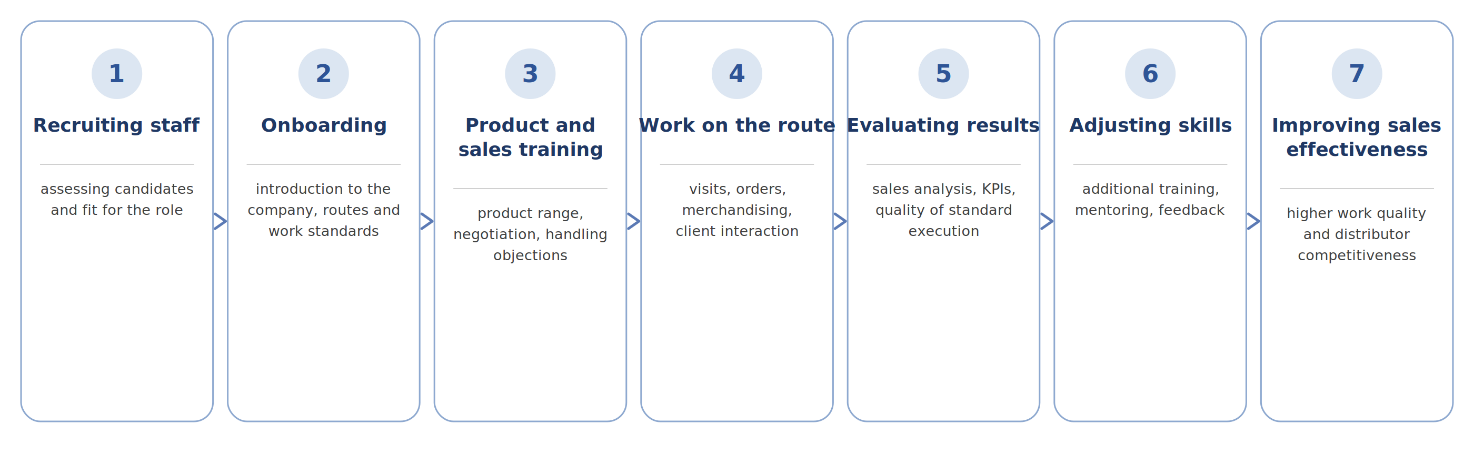
Fig. 1. Logic of the distributor's sales staff development
A source: compiled by the author based on a generalization of approaches to personnel development management in a trade organization
The level of training of sales staff directly affects the competitiveness of a distributor through the quality of its interaction with outlets. In the fast-growing FMCG sector, where the key factors are not only price and assortment but also aspects such as regularity of visits, accuracy of order formation, product availability control, ability to work with shelf space, knowledge of delivery conditions, and maintaining stable business relationships with customers, the sales representative becomes the link between the distributor, the retail network, and the final buyer [1, p. 4].
Figure 2 shows the key factors determining the influence of sales staff on the competitiveness of a distributor.
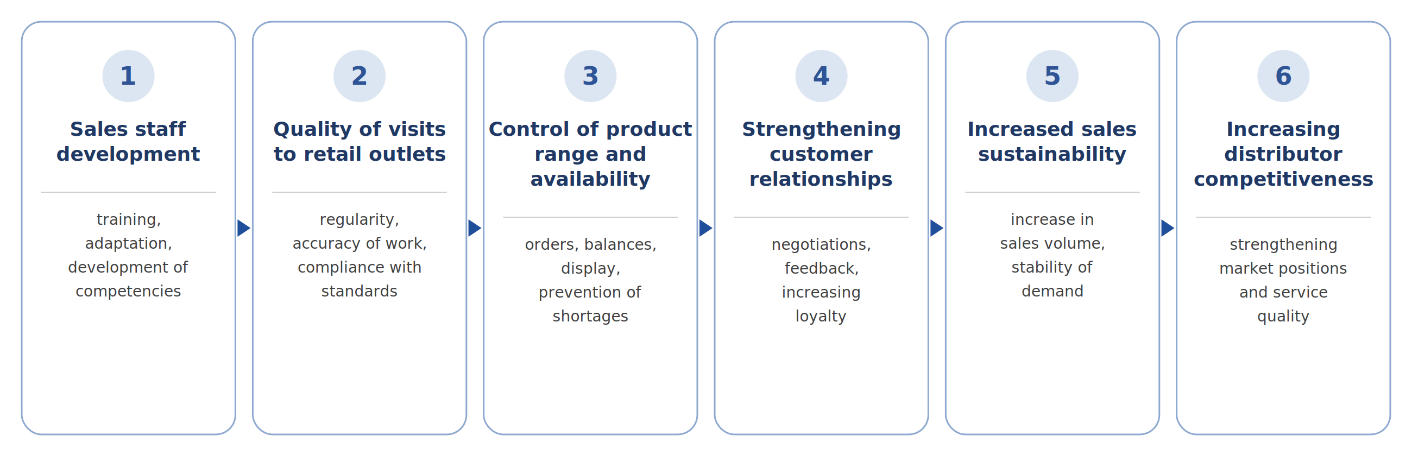
Fig. 2. Factors influencing sales personnel on distributor competitiveness
A source: compiled by the author based on an analysis of the functions of sales staff of a distribution company in the FMCG sector
The influence of sales staff on a distributor's success is primarily reflected in their ability to maintain a strong presence in retail. When a sales representative knows the product well, understands how to negotiate with customers, manages inventory efficiently, and communicates demand information accurately, the company can respond more quickly to market changes. This is particularly important for consumer products, where buyers often have multiple options and a lack of products can lead them to switch to a competitor.
To date, several factors have contributed to the growth in demand for sales personnel in the consumer goods market. These include the growth of online sales, the increasing role of discounters, and the importance of their own brands. In addition, the complexity of the product range has increased. In these circumstances, it is not enough for a sales representative to simply accept orders. He must also understand the specifics of the trade format, monitor the presentation of the product, take into account the buyer's sensitivity to price, and work with sales data [9, p. 125].
Therefore, developing sales staff is crucial for a distributor's competitiveness. The higher the employee training level, the more effectively the company can manage its customer base, assortment, orders, and service standards. This not only leads to increased sales but also strengthens the distributor's position in relationships with retail partners.
The analysis of the current sales staff development system should begin not with a description of individual training activities, but with an assessment of how well the training meets the real sales objectives. For an FMCG distributor, a problem may arise if the training is conducted formally, without taking into account the routes of sales representatives, the structure of the customer base, the standards of the visit, and the specifics of the assortment and the requirements of retail partners. In this case, training will not become an effective tool for improving commercial results, but will remain only a one-time event for employees.
One of the main challenges is the discrepancy between the expectations for sales staff and their actual level of training. The sales representative interacts not only with orders but also with assortments, layouts, balances, customer complaints, accounts receivable, and reporting. If these skills are not integrated into the adaptation and ongoing training systems, the company will experience inconsistent quality of visits, dependence on individual employee experience, and difficulty replacing staff.
The current state of affairs in the labor market adds to the complexity of the situation. The low unemployment rate and high demand for human resources on the part of the economy intensify the competition among employers for qualified employees. For a distribution company, this means not only recruiting sales representatives but also retaining them through effective adaptation, training, mentorship, and clear evaluation of performance [7, p. 82].
Improving the sales staff development system should be based on the practical needs of the distribution company. First and foremost, it is essential to define the list of skills and competencies required for a sales representative. This model should include knowledge of the product range, negotiation skills, and the ability to handle orders, inventory control, and understanding of store layout standards, adherence to routes, reporting, and basic sales analytics.
The second area of focus is the onboarding of new employees. This process should include not only introducing them to the company but also providing training on the company's standards, mobile and accounting systems, customer interaction rules, delivery terms, and accounts receivable management. To minimize errors at the beginning, it is recommended to use mentorship, where a new employee works alongside an experienced sales representative or manager [2, p. 56].
The third area is regular training of existing employees. It should be short, practical, and focused on solving specific tasks: changing the assortment, launching new products, dealing with objections, improving the layout, increasing the accuracy of orders, and working with sales data. Special attention should be paid to digital literacy, as sales staff are increasingly working with CRM systems, mobile applications, electronic routes, and reports [8, p. 49].
Table 2 shows the main directions for improving the sales staff development system.
Table 2
Directions for improving the sales staff development system
|
Direction |
Content |
Expected management result |
|
The competence model |
Consolidating the knowledge and skills required for sales staff |
Common criteria for selection, training, and evaluation |
|
Adaptation |
Introducing the position, route, range, and standards of the work |
Reducing the number of mistakes made by new employees |
|
Mentoring |
Working with an experienced colleague or supervisor as a beginner |
Quick acquisition of practical skills |
|
Regular training |
Short courses on sales, products, layout, and customer service |
Maintaining relevant professional skills |
|
Field control |
Checking visits, working standards, and quality of customer interactions |
Improving discipline and quality of work |
|
Digital tools |
CRM (Customer Relationship Management), mobile reporting, electronic checklists |
Increasing the transparency of sales staff work |
|
Feedback |
Error analysis, individual recommendations, and goal adjustments |
Targeted employee development |
A source: compiled by the author based on an analysis of the functions of the sales staff of a distribution company and the main directions of personnel development of employees
The final effectiveness assessment should be carried out in dynamics: before the start of the events, during their implementation and after the end of the control period. This approach allows you to separate the real results from random fluctuations in sales, seasonal changes, and external market factors. If, after the implementation of the development system, there is a reduction in adaptation time, an increase in route performance, an improvement in the quality of visits, and an increase in the stability of the customer base, then we can talk about the positive impact of events on the competitiveness of the distributor [6, p. 374].
Conclusions
Thus, the development of sales staff becomes a key factor determining the competitiveness of a distributor in the rapidly developing FMCG sector. The effectiveness of sales representatives depends not only on their personal skills and experience but also on a well-structured system of adaptation, regular training, mentoring, field monitoring, and evaluation of results. By improving these elements, distributors can improve the quality of visits to outlets, strengthen customer relationships, optimize assortment management, and ensure more stable sales.
Therefore, the sales staff development system should be an integral part of the overall strategy for managing the competitiveness of a distribution company.
References:
Bratchikova A.A., Sharin V.I. Theoretical and methodological foundations of assessing an organization's personnel // Human Progress. – 2021. – Vol. 7, No. 1. – pp. 1-13. – DOI 10.34709/IM.171.2.
Gurjanyan Sh.A. Improving the organization of labor of personnel of a non-industrial enterprise // Russian Economic Bulletin. – 2021. – Vol. 4, No. 2. – pp. 54-61.
Korobova A.V. Specifics of personnel management of a trading enterprise // YOUNG SCIENTIST: collection of articles from the IV International scientific research competition. – 2021. – pp. 121-124.
Larin V.N. The importance of personnel training for HR policy in new small trading organizations in the B2B sector // E-Scio. – 2021. – No. 2(53). – pp. 27-33.
Litvinyuk A.A., Kosareva E.A. Actual problems of personnel management in retail trade // Economy, entrepreneurship and law. – 2020. – Vol. 10, No. 3. – pp. 677-688. – DOI 10.18334/epp.10.3.100609.
Prozorovsky I.O. Review of methods for assessing personnel performance // Modernization of Russian society and education: new economic guidelines, management strategies, law enforcement and personnel training issues: Proceedings of the XXI national scientific conference (with international participation). – 2020. – pp. 373-375.
Semina A.P. The role of personnel assessment in the personnel management system // Bulletin of the Altai Academy of Economics and Law. – 2020. – No. 1-1. – pp. 80-85. – DOI 10.17513/vaael.942.
Sokolova I.N., Lobanova G.A. Improving the motivation system of employees of a retail enterprise // Socio-economic management: theory and practice. – 2021. – No. 3(46). – pp. 47-53. – DOI 10.22213/2618-9763-2021-3-47-53.
Fokina N.A., Alyadinova M.A. Methodology for forming a motivation system for personnel of a retail enterprise // Scientific Bulletin: finance, banks, investments. – 2019. – No. 4(49). – pp. 120-130.
Shevyakova A.L., Petrenko E.S., Kuttybaeva N.B., Urazbekov A.K. Features of coaching: a case of interaction between supervisors and sales agents // Creative Economy. – 2021. – Vol. 15, No. 3. – pp. 1019-1038. – DOI 10.18334/ce.15.3.111870.
Other articles of the issue