

Makeup features for different skin types and age groups
Authors
Korchynska Alina

Share
Annotation
The article is devoted to the subtleties of creating makeup that will match the characteristics of different skin types and ages. This is necessary to achieve an aesthetically harmonious and safe result. The article discusses the characteristics of dry, oily, combination, and sensitive skin and their impact on the choice of cosmetics, application techniques, and preparation of the skin for makeup. Special attention is paid to age-related changes, such as loss of elasticity, the appearance of wrinkles, changes in pigmentation, and skin texture. Makeup must be adapted to visually rejuvenate and, at the same time, preserve its natural appearance. The work systematizes recommendations for the selection of foundation products, decorative cosmetics, and tools, depending on the individual characteristics of the skin. Typical errors that can lead to a deterioration in appearance are also considered. The importance of an integrated approach is emphasized, which includes skin care, competent color correction, and moderation in the use of decorative accents. The results obtained can be useful for both makeup professionals and anyone who is interested in current trends in appearance care.
Keywords
Authors
Korchynska Alina
Share
Relevance of the study. Modern trends in the field of beauty emphasize the growing interest in an individual approach to makeup. This is due to the variety of skin types and pronounced age-related changes. Incorrectly, selected cosmetics and application techniques can not only spoil the appearance but also harm the skin, causing dryness, inflammation, and premature aging.
With the advent of new types of decorative cosmetics and the improvement of skin care technologies, it becomes especially important to have knowledge about the specifics of makeup for different skin types and age groups. This will help both professionals and makeup enthusiasts to create harmonious images that will not only please the eye but also take care of skin health.
The purpose of the study. The aim of this study is to identify and describe the features of makeup, considering skin type and age-related characteristics, and to develop practical guidelines for the selection of cosmetics and application techniques. Specifically, we aim to investigate the influence of physiological skin traits on the longevity and appearance of makeup. We also aim to analyze age-related changes that affect the visual perception of facial features and establish the most suitable approaches for creating natural and correctional makeup for various user groups.
Materials and research methods. The research examined scientific and educational materials on cosmetology, dermatology, and makeup art, as well as recommendations from modern cosmetics manufacturers. The analysis was based on a comparative study of the characteristics of different skin types and age-related changes that affect the structure and appearance of the skin. In the course of the work, methods of theoretical analysis, generalization, and systematization of information were used, as well as a descriptive method to identify the practical features of makeup. In addition, empirical observations obtained from the professional practice of makeup artists were taken into account. This allowed us to form an integrated approach to the choice of makeup techniques and products that takes into account individual skin characteristics and age.
The results of the study. The history of makeup is inextricably linked with the development of ideas about beauty, medical knowledge about the skin and technological progress in the cosmetics industry. In ancient civilizations such as Egypt, Greece, and Rome, cosmetics were used primarily for decorative and ritual purposes. At the same time, the individual characteristics of the skin were not taken into account. The focus was on the symbolism of color and status, and cosmetics often contained aggressive ingredients that could damage the skin.
In the Middle Ages, the use of cosmetics in Europe was limited, but during the Renaissance, interest in appearance increased again. During this period, the first ideas about skin types began to form, although they were primitive. Women with dry skin tried to use oily, oil-based formulations, while powdered matting products were used for oily skin. However, there was no systematic approach to makeup selection yet.
In the period from the 19th to the 20th century, significant changes took place in the field of dermatology and chemistry. The first classifications of skin types were developed: dry, oily, normal, and combination. This allowed a more conscious approach to the choice of cosmetics. At the same time, cosmetics began to be divided into age categories. It has been found that with age, the skin loses elasticity, becomes drier and more sensitive, which requires a special approach to textures and makeup techniques. For example, lighter and more moisturizing products designed specifically for mature skin have replaced dense powders and matte products.
In the second half of the 20th century, the beauty industry experienced rapid growth. Professional makeup schools appeared where individual appearance characteristics were taken into account. Makeup became seen not only as a way to decorate but also as an effective tool for correcting age-related changes and skin imperfections. Special makeup techniques were developed, designed for both young skin, striving for naturalness, and mature skin, in order to visually rejuvenate it.
In the 21st century, the approach to makeup has become more individual. Now, not only the skin type and age are taken into account, but also its condition, sensitivity, presence of dermatological problems, as well as lifestyle. Modern products often combine decorative and care functions, including protection from ultraviolet rays (SPF), moisturizing, and anti-aging components.
Modern methods of studying makeup features for different skin types and age groups are based on advances in dermatology, cosmetology, and digital technologies.
Clinical studies of the skin play a key role, which include an analysis of the level of moisture, sebum production, elasticity, and sensitivity. With the help of dermatoscopy and computer diagnostics, specialists receive accurate data on the condition of the skin, which allows them to select makeup not only taking into account the basic skin type but also its current condition, for example, dehydration or a tendency to irritation (Fig. 1).
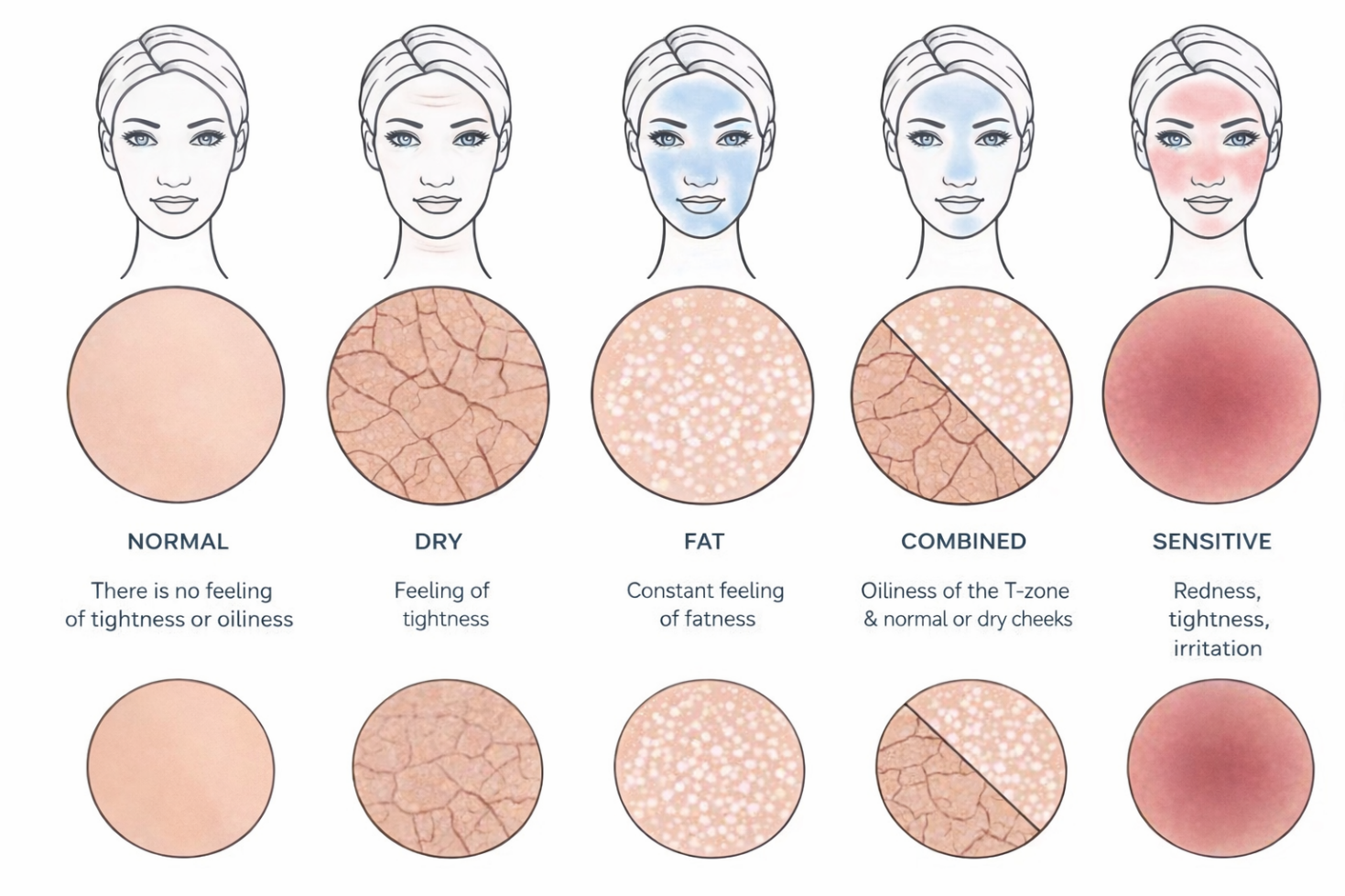
Fig. 1 – Characteristics of the main skin types
One of the key methods is to test cosmetics both in the laboratory and in focus groups of different age categories. Manufacturers are studying how different textures and formulas affect the skin of teenagers, young adults and adults. For example, light gel and water bases are great for oily and young skin, providing its natural radiance [2]. At the same time, creamy and richer textures are ideal for dry and age-related skin, providing additional nutrition and visually smoothing the tone (Table 1).
Table 1 – Testing of cosmetics in laboratory conditions
|
|
Method |
Characteristic |
|
1 |
Microbiological testing |
Analysis for bacteria and other pathogens to ensure product safety. |
|
2 |
Clinical trials |
Human testing conducted to evaluate the effectiveness and skin response to a product. As a rule, testing is carried out under the supervision of dermatologists. |
|
3 |
Animal testing |
Some companies resort to using animals to assess toxicity, but this method is becoming less popular due to ethical considerations. |
|
4 |
Physico-chemical tests |
Assessment of stability, pH, viscosity, flavor, and other characteristics. |
|
5 |
Irritation tests |
Assessment of the risk of allergic reactions and skin irritation. |
|
6 |
Durability testing |
Checking how the product performs over time under various storage conditions. |
Digital technologies are also actively used in the field of makeup. Mobile applications and artificial intelligence systems analyze a photo of a face, determine skin type and age-related changes, and offer individual recommendations on product selection and application techniques. These systems take into account wrinkles, pigmentation, enlarged pores, and skin tone, which makes the selection of products more accurate.
In addition, augmented reality technologies are actively used. They allow you to "try on" makeup in real time without physically applying it. This simplifies the selection of shades and textures, reduces the risk of errors, and saves time. Combined with large databases and user reviews, such solutions form more objective and personalized recommendations, bringing the result closer to a professional level, even at home.
The creation of specialized cosmetics lines can be cited as practical examples. For instance, mattifying foundation products are being developed for oily skin that control sebum production and have a light texture so as not to clog pores [1]. Moisturizing bases with hyaluronic acid and oils have been created for dry skin, providing the necessary care. Age-related cosmetics use reflective particles and soft textures that do not accentuate wrinkles but create an effect of smoothness and radiance.
Furthermore, different makeup techniques have been developed for different age groups. Young girls are recommended to wear minimalistic makeup that adds naturalness. For mature skin, lifting techniques, corrective sculpting, and soft shading are suitable to avoid sharp lines.
Modern techniques combining scientific knowledge, technological achievements, and practical experience of makeup artists offer the most individual approach to makeup creation. They include the analysis of skin type, its condition, and even unique features, such as moisture levels or sensitivity, using digital diagnostic devices and applications. Special attention is paid to moisturizing the skin before applying makeup, as well-prepared skin looks smoother and more radiant. Foundation products are chosen with a light or medium coverage, often with caring components to provide the skin with additional hydration and protection.
Facial features are adjusted with delicate contouring and highlighting, which helps to restore volume and emphasize natural lines. As a result, age-related makeup does not hide, but harmoniously emphasizes natural beauty, creating a fresh and well-groomed image.
This allows you to select cosmetics and techniques more accurately. Not only are external features taken into account, but also the skin's reaction to various components. As a result, makeup not only looks aesthetically pleasing but also helps maintain skin health by adapting to its current needs and environmental conditions [3].
It is important to note that the difficulties in choosing makeup for different skin types and age groups are primarily due to a wide range of skin conditions and the frequent discrepancy between universal cosmetics and individual characteristics.
One of the main problems is the incorrect definition of skin type. For example, dehydrated skin is often mistaken for dry skin, although it requires special care and makeup. As a result, peeling or excessive shine may appear on it. For oily skin, the main problem is the durability of makeup. Excessive sebum production destroys the texture of foundation products, which leads to the effect of a "swollen" face. In addition, using dense products can lead to clogged pores and inflammation.
For people with combination skin, the main challenge is to balance the different areas of the face. Mattifying agents can over-dry dry areas, while moisturizing agents can enhance the shine in the T-zone. If the skin is sensitive, this creates additional difficulties due to the high probability of irritation, allergic reactions, and redness. This limits the choice of remedies and requires the use of the most delicate formulas.
Age plays a significant role in the makeup selection process. In youth, the main difficulty lies in skin imperfections such as acne and post-acne. Dense coatings can exacerbate these problems. With age, the skin, on the contrary, loses elasticity, becomes thinner and drier, wrinkles and pigmentation appear. Many familiar products begin to emphasize the texture, clog into the folds, and visually age the face. In addition, there is often a problem of choosing the wrong shades and textures. Too matte or dense products can make the face "flat" and heavy.
Difficulties also arise due to the lack of an individual approach in mass cosmetics and the lack of knowledge among users about application techniques. Improper product distribution, excess funds, or ignoring skin preparation lead to an unnatural result, regardless of the quality of cosmetics.
In our opinion, to successfully choose makeup for different skin types and age groups, a comprehensive and individual approach is needed. It includes a thorough diagnosis of the skin condition, proper care and adaptation of decorative products.
First, it is necessary to accurately determine not only the type of skin, but also its current condition. This applies to the level of moisture, sensitivity and the presence of inflammation. These factors directly affect the choice of textures and formulations of cosmetics.
Regular basic care is the foundation, as well-prepared skin allows makeup to lie flat and last longer. Therefore, the use of suitable cleansing, moisturizing and protective products should be a mandatory step in the care process.
It is important to keep in mind your skin type in order to choose the most suitable products. For oily skin, light mattifying textures are suitable to help regulate sebum production. Dry skin needs richer and more nutritious formulas. Sensitive skin requires hypoallergenic products with a minimum amount of aggressive ingredients. Combination skin needs balanced care that takes into account the characteristics of different areas of the face.
With age, the skin loses elasticity and moisture, which makes it especially important to use products with moisturizing and anti-aging components such as hyaluronic acid, antioxidants, and peptides. In makeup, this is reflected in the choice of lighter, radiant textures that do not focus on wrinkles and irregularities.
For oily skin, light, non-comedogenic formulas, mattifying primers, and tonal products with sebum control will be the ideal solution. However, it is important to avoid excessive drying so as not to provoke even more sebum production. With dry and dehydrated skin, the emphasis shifts to intensive hydration and the use of creamy textures that do not emphasize peeling and create a more natural coating. Combination skin requires a zonal approach, when different products are applied to different areas of the face, which allows you to create a balanced and harmonious image without overload.
For example, mattifying agents that control sebum production are suitable for the T-zone. But on dry areas, such as cheeks and temples, it is better to use moisturizing and nourishing formulas.
When applying makeup, it is also important to consider this feature: dense textures should be used with caution in areas prone to greasiness to avoid congestion. On dry areas, choose lighter and more radiant products that will not emphasize peeling. This differentiated approach will help achieve a more natural and lasting result, while maintaining a balance between matte and moisturized skin radiance. For sensitive skin, it is recommended to choose hypoallergenic cosmetics with a minimum amount of irritating components. Testing should be carried out before full use of the products.
In age-related makeup, heavy and excessively matte textures should be avoided. It is better to give preference to light, reflective products that visually smooth the skin and do not emphasize wrinkles. Additionally, it is important to adjust the makeup technique. Instead of a dense coating, thin layers should be used, and the products should be gently blended.
Furthermore, a significant improvement in the outcome is provided by training in basic makeup techniques and understanding the principles of product combinations. Even high-quality cosmetics can look unflattering if applied incorrectly, so it's important to learn how to use them properly. Personalization, attention to skin changes as we age, and regular evaluation of the products we use can help minimize common problems and achieve a natural, harmonious look.
Conclusions. The specifics of makeup for different skin types and age categories clearly demonstrate that there is no single universal solution. To achieve an effective result, it is necessary to take into account individual skin characteristics and age-related changes.
Properly selected tools and techniques allow not only to favorably emphasize the advantages of appearance but also to hide flaws, creating a natural and aesthetic image. Skin care is the basis of high-quality makeup, as the condition of the skin directly affects the durability and result of decorative cosmetics. With age, makeup requirements change, which requires the use of textures that are more delicate, proper product distribution, and an emphasis on visual rejuvenation.
Thus, an individual approach, understanding of the specifics of the skin and mastery of modern makeup techniques become key factors in creating a harmonious and professional image.
References:
- Dovzhanyn Y. The impact of makeup on skin health: benefits and risks // Current medicine, pharmacy and psychological health. – 2024. – p. 6.
- Kim B. et al. Method and analysis of color changes of facial skin after applying skin makeup // Vision Research. – 2023. – Vol. 209. – p. 108247.
- Lee M., Han J., Kim E. An evaluation of the effects of makeup on perceived age based on skin color in Korean women // Journal of cosmetic dermatology. – 2019. – Vol. 18. – No. 4. – pp. 1044-1051.
Other articles of the issue