

Diagnostics of personnel's readiness to adapt and implement changes as a basis for organizational stability in the face of external shocks
Authors
Alexey Volvak
Share
Annotation
The article discusses the methodology and practical aspects of diagnosing the staff's ability to adapt and implement organizational changes, which is a key factor in the organization's resilience to external shocks. The importance of the adaptive potential of employees for maintaining the effective functioning and development of an organization in conditions of uncertainty is substantiated, and the main components of adaptability are listed. The article presents a diagnostic model that includes multi-level tools: questionnaires to assess values, tolerance to uncertainty and orientation towards change, situational tests and problem books, 360° feedback, analysis of behavioral indicators, HR analytics, which includes data on staff turnover, the level of absenteeism and the dynamics of key performance indicators. The article discusses the key stages of implementing a diagnostic system: setting goals, selecting appropriate tools, testing, interpreting results, developing individual and collective development programs, and regularly monitoring effectiveness. It also describes how diagnostic results can be used for preventive risk management in the face of external shocks. This includes strategy adjustments, process optimizations, employee training and retraining, and talent pool formation. At the end, practical recommendations are presented on integrating diagnostics into the personnel management system and assessing its contribution to the overall sustainability of the organization.
Keywords
Authors
Alexey Volvak
Share
Relevance of the study. In today's world, where high uncertainty reigns and external shocks often occur, the ability of organizations to quickly adapt and implement changes is a key factor determining their survival and competitiveness.
The main resource for this ability is the staff. The level of psychological flexibility, professional skills, motivation and willingness to change among employees directly affects the speed and quality of the introduction of new practices, the reorganization of processes and the ability to respond to external threats.
Despite the growing need, many companies have difficulty identifying the adaptive potential of their employees. This leads to mistakes in planning changes, the risk of their unsuccessful implementation, and a decrease in the overall sustainability of the organization. In this regard, the development and implementation of a comprehensive methodology for diagnosing staff's ability to adapt and implement organizational changes is becoming increasingly relevant from both a practical and scientific point of view. This methodology will allow you to rank risks, purposefully develop key competencies and increase the organization's readiness for external challenges.
The purpose of the study. The purpose of this study is to create and test a methodically sound and practice-oriented system for diagnosing staff's willingness to adapt and implement organizational changes. We also intend to evaluate its effectiveness in predicting the organization's resilience to external challenges and offer recommendations on the use of diagnostic results in the practice of strategic personnel management.
To achieve this goal, you need to complete several tasks: identify the key elements of adaptability at the individual and team levels; find and test suitable tools for measuring adaptability; identify the relationship between indicators of adaptability and indicators of organizational sustainability, such as staff turnover, productivity, and the speed of change implementation; create an algorithm for interpreting and using the results obtained in the risk management process.
Materials and research methods. The empirical basis for the study was data collected from several organizations from different sectors of the economy: manufacturing, services, and IT. The study involved employees at various levels: operational staff, specialists, and middle managers.
The materials include the results of standardized psychological questionnaires aimed at assessing tolerance to uncertainty, resistance to stress, motivation to learn and orientation towards change. Assessment centers and situational tests simulating decision-making in the face of change were also conducted. In addition, 360° feedback data was obtained; HR metrics such as staff turnover, absenteeism, and KPIs before and after changes were analyzed. High-quality interviews were also conducted with managers and key employees who provided valuable insights into this area.
The research methodology combines both quantitative and qualitative approaches. Using factor analysis and correlation regressions, we have determined the structure of adaptability and its relationship with organizational outcomes. Cluster analysis allowed us to identify different types of adaptive behavior. The content analysis of interviews and observations helped to identify contextual factors and mechanisms contributing to change. The validity of the research tools was verified through comparison with external criteria (behavioral indicators) and repeated measurements (test retest) in pilot samples.
Based on the collected data, a systematic diagnostic protocol was developed. It includes several stages: defining goals and identifying critical competencies; selection and combination of suitable assessment tools; carrying out measurements; multidimensional interpretation of the results; development of recommendations on development and risk management. The results of the testing were evaluated based on forecasts of the success of the implementation of changes and changes in key indicators in the field of personnel management in subsequent periods.
The results of the study. The process of diagnosing the staff's ability to adapt and successfully implement organizational changes, which is a key factor in the organization's resilience to external challenges, can be traced through several important stages in the development of human resources management theory and practice and organizational research.
In the middle of the 20th century, after the Second World War, the first theoretical approaches to changes in organizations appeared. Kurt Levin's work on behavioral change models and his concept of "defrost–change–freeze" laid the foundation for understanding transformation processes and the role of the human factor in them.
At the same time, the classical directions of organizational development and the sociotechnical approach were developing. In these areas, the focus shifted from structural reforms to human interaction with technology and processes. This, in turn, aroused interest in diagnosing employees' readiness for new roles and their ability to adapt.
In the period from 1960 to the 1980s, personnel assessment methods were actively developed, such as assessment centers; situational exercises; 360° feedback tools. These methods have made it possible to effectively record behavioral manifestations of flexibility, leadership in the face of uncertainty and the ability to adapt to changes. During the same period, a psychometric base appeared studies of personal characteristics, including the so-called "Big Five", as well as tolerance to uncertainty and stress tolerance, which began to be considered as key factors determining the ability to adapt.
In the 1990s and later, in the context of globalization and rapid technological progress, the concepts of organizational sustainability and crisis management began to pay special attention to the adaptive potential of personnel as a key factor in the organization's resilience. During this period, there was an increased interest in multilevel research linking individual abilities, group dynamics, and organizational system characteristics.
At this stage of the development of research in this field, there is a combination of quantitative and qualitative methods. Factor analysis is used to identify adaptability patterns, and longitudinal studies help track changes. Case studies and content analysis are used to understand the mechanisms underlying the introduction of new approaches.
Since the beginning of the 21st century, digitalization, the proliferation of flexible and project-based forms of work, as well as the emergence of the concepts of VUCA and antifragility have made tools for the rapid diagnosis of adaptivity especially relevant. These tools include rapid questionnaires, online assessments, decision-making simulators, and analysis of social networks within organizations [2].
At the same time, research on psychological resilience, learning ability and meta-competencies such as self-regulation, proactivity, and learning ability was actively developing. Methods have been developed to predict the impact of these qualities on key HR indicators, including staff turnover, productivity, and the speed of change implementation (Fig. 1).
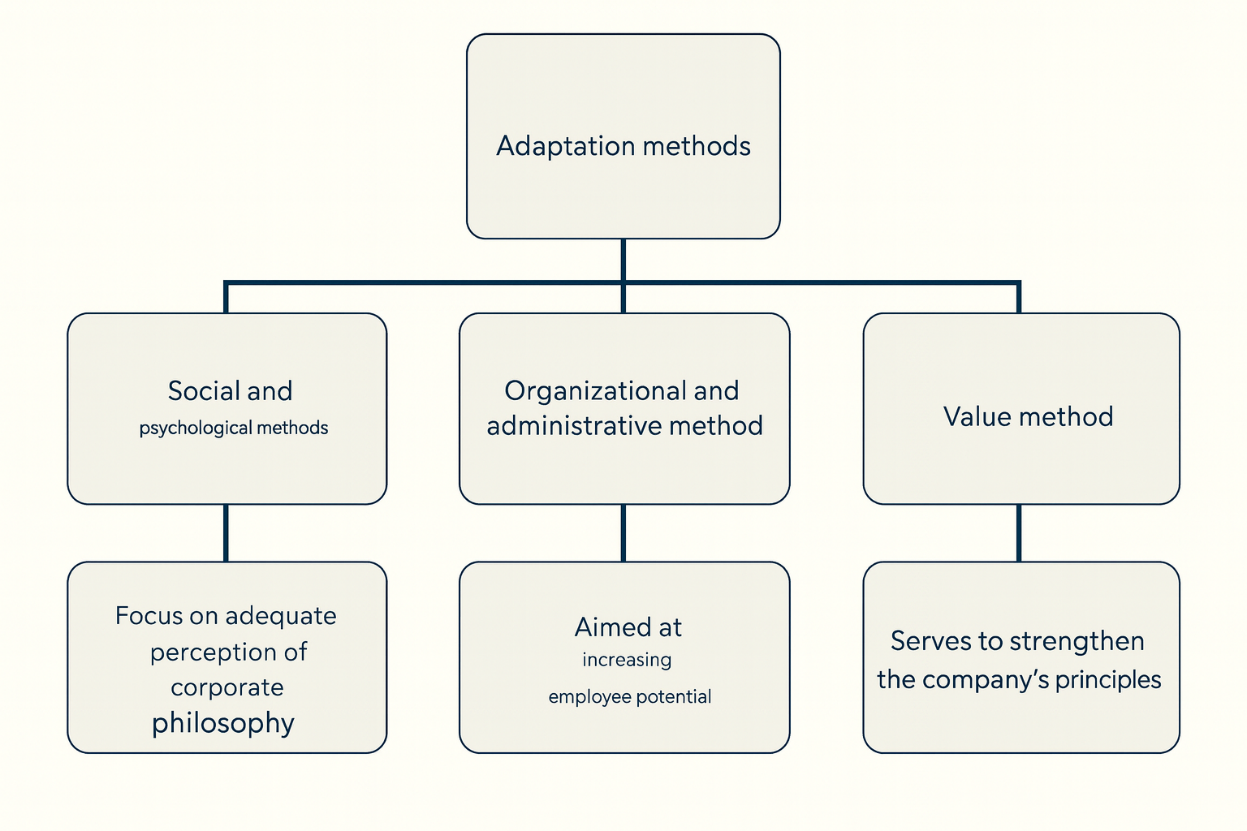
Fig. 1 – Methods of personnel adaptation [1]
The COVID‑19 pandemic has acted as a catalyst for large-scale changes in personnel management: It clearly demonstrated the critical dependence of business survival on the level of adaptability of employees, stimulated the mass introduction of remote diagnostic tools and accelerated the integration of competence assessment results into a risk management strategy and continuous professional development.
Today, we are witnessing a trend towards the creation of complex multidiagnostic systems that include psychometry, behavioral analytics, big data, and adaptive development programs. Special attention is paid to checking the predictive validity of tools and introducing diagnostics into the daily practice of HR specialists and top managers. This allows organizations to become more resilient to external challenges.
It is worth noting that leading international companies are actively implementing digital tools for personnel assessment and platforms for continuous assessment. Companies such as SHL, Hogan, Korn Ferry, as well as the Workday and Visier platforms, use them to regularly measure behavioral competencies such as proactivity, flexibility, stress tolerance, and learning ability. These indicators are closely related to business results, which makes it possible to predict the readiness of teams for various transformations and determine priorities in the development of key groups [4].
Organizational Network Analysis (ONA) is a method used by companies such as Google, Microsoft, and large consulting firms. It helps to identify existing communication channels, "bridges" of knowledge and opinion leaders. With the help of these maps, you can predict where changes may encounter resistance, and direct efforts to accelerate their implementation.
During the COVID-19 pandemic, Microsoft and some major technology companies used daily employee surveys and wellbeing metrics combined with productivity analytics to quickly assess how they were adapting to remote work. Based on this data, they were able to adjust support, training, and task allocation programs, which helped them, maintain operational sustainability. At the same time, retail and logistics companies, such as large delivery chains and supermarkets, have implemented accelerated assessment processes for hiring and retraining staff to cope with peaks in demand. They combined online learning tests, work situation simulations, and short micro-training programs, which reduced the time, required new employees to reach productivity levels and reduced staff turnover during the crisis.
Many banks and insurance companies use scenario modeling and stress testing methods involving key employees. These tests are accompanied by behavioral assessments, which makes it possible to identify those who are able to make effective decisions in conditions of high uncertainty. The results of such studies help to form crisis teams and distribute responsibility within the organization.
Examples of the use of gamified simulations and situational tests can be seen in large companies engaged in the production of consumer goods (FMCG) and pharmaceuticals. In these organizations, training through imitation of market shocks and assessment of the reaction of teams has shown high efficiency in predicting the ability to effectively implement changes [3].
Data integration is actively used in the field of HR analytics. The assessment results are associated with indicators of turnover, satisfaction, NPS (consumer loyalty index) and employee productivity. This allows us to create predictive models of the vulnerability of departments and economically justify investments in the development of so-called resistant competencies (Table 1).
Table 1 – Data integration in HR analytics
|
No |
Indicator |
Characteristic |
|
1 |
Identification of data sources |
HR Management Systems (HRMS). Platforms for performance monitoring. Questionnaires and surveys for employees. Information about salaries and bonuses. Social media and professional platforms such as LinkedIn. |
|
2 |
Selection of integration tools |
ETL processes that include data extraction, transformation, and loading. An API for simplifying data exchange. BI-tools (Business Intelligence) designed for visualization and analysis of information. |
|
3 |
Selection of integration tools |
Cleaning and tidying up the data. Checking for duplicates and errors. Ensuring that information is up-to-date. |
|
4 |
Analysis and visualization |
Create dashboards and reports reflecting key performance indicators (KPIs). Research on staff turnover, productivity, and employee engagement levels. |
|
5 |
Ensuring data security |
Obtaining employees' consent to the processing of their personal data. Compliance with data protection standards, including GDPR requirements. |
|
6 |
Continuous improvement |
Regular updating of analysis methods. Actively receive user feedback to improve tools and processes. |
There are also fast online tools for rapid assessment of readiness for crash scenarios. These include short questionnaires, mobile apps, and automated interviews. These tools allow you to get an idea of staff readiness within 24-72 hours and quickly make management decisions. In some countries, government and public utilities use emergency preparedness assessments and training based on simulations. Such programs help identify risk areas and form interagency teams that are highly adaptable.
There is a steady trend towards integrating diagnostic results into continuing education and career development programs for staff. The introduction of tools such as mentoring, targeted coaching courses and a system of microbages on key meta-competencies makes it possible to transform improving organizational sustainability from a one-time measure into a systematic, embedded process.
An analysis of modern practices shows that operational, multidimensional, and business metrics-based diagnostics of staff adaptability is one of the key factors that enable organizations to successfully cope with external challenges and respond promptly to them.
However, it should be noted that the diagnosis of staff adaptability faces a number of complex and often interrelated problems that may reduce its practical value and accuracy.
Firstly, there is some conceptual ambiguity: the terms "adaptability", "resilience" and "changeability" are used in different studies and practices in different ways. This makes it difficult to choose suitable indicators and tools for their assessment.
Secondly, significant problems remain with the validity and reliability of the assessment tools used. Many questionnaires and assessment centers measure related psychological constructs (such as loyalty and motivation), but demonstrate low predictive ability regarding employee behavior in real‑world crises. In addition, the high validity of the results obtained in laboratory simulations is not always reproduced in the field.
The third problem is the contextual dependence of the indicators. How employees respond to changes largely depends on organizational culture, leadership, resources, and the external situation. Because of this, generalized data often loses its meaning when compared between different divisions or territories.
Then there are the methodological and practical difficulties with data processing. The low proportion of responses, the tendency to socially approved responses, as well as the self-selection of participants for trainings and surveys make forecasting less reliable. Indirect indicators are often used, such as engagement and the number of courses completed, which may be related to adaptability but are not a direct measure of it. This can lead to errors when making decisions about personnel interventions. Another major problem is the system separation of data. Assessment results are stored in separate HR systems and are not integrated with operational metrics. This makes it difficult to prove the business effect and justify investments in the development of competencies.
Organizational and cultural barriers are no less significant. The low level of employee confidence in the use of diagnostic results, fear of possible negative personnel consequences, and confidentiality lead to information distortion and resistance to initiatives. Managers often do not have the necessary skills to interpret the results and translate them into practical plans, which creates a gap between diagnosis and real development. In addition, there are financial and time constraints: high-quality assessments and long-term development programs require significant investment of time and resources, and in times of crisis, organizations may lack such opportunities.
Technical risks include:bias in algorithms and automated assessments; problems with adapting tools to different cultures and languages; vulnerability to manipulation when behavior is adjusted to the test. In addition, simulations and gamified tests can have a significant training impact. People learn to successfully pass tests, but this does not guarantee their real adaptability in an ever-changing environment.
Finally, an excessive focus on diagnostics as the only factor in increasing organizational sustainability is a strategic mistake. Even with improved staff performance, the organization's resilience to external shocks will not be achieved without appropriate changes in organizational structures, business processes, and leadership practices.
Taken together, these problems require careful design of diagnostic programs, a combination of methods, integration of data with business metrics, and attention to ethical and cultural aspects, otherwise diagnostics can create a false sense of readiness and lead to erroneous personnel decisions.
In our opinion, an integrated approach based on a clear conceptual framework, methodological rigor, and organizational transformation is needed to solve the problems of diagnosing staff's ability to adapt and implement changes.
First, it is necessary to standardize definitions of key concepts and create a common model of adaptability that will include behavioral indicators, contextual factors (such as culture, resources, and leadership), as well as expected business results. This will allow us to identify the most appropriate metrics and link them to the goals of the organization.
Secondly, the use of mixed assessment methods allows increasing the validity and reliability of diagnostic tools. To do this, it is necessary: to combine objective behavioral data (obtained through simulations, case studies, and digital trace analysis); to use standardized psychometric scales with proven validity; to include a 360° assessment; to supplement quantitative data with the results of qualitative interviews.
Regular calibration of instruments carried out as part of pilot studies and comparing the results with real key performance indicators (KPIs), can significantly reduce the gap between the predictive power of tests under controlled conditions and their real usefulness in the workplace.
Thirdly, diagnostic programs must be built on a longitudinal basis the base. Regular measurements and systematic tracking of indicators make it possible to: record the dynamics of changes in personnel competencies and behavioral patterns; identify stable trends and patterns; objectively evaluate the effectiveness of implemented interventions and development programs over time. This approach is significantly more informative than one-time diagnostic slices and contributes to making more informed management decisions.
Integration of data with operational and financial indicators should become the norm. The results of assessments and training should be linked to productivity, staff turnover, and the quality of decisions made and the stability of processes. This will allow you to demonstrate business efficiency and justify investments. Technically, integration is carried out through a single HR analysis platform that provides standardized data formats and regular reports to management.
In order to avoid distortion and social desirability, the principles of anonymization, honest communication about diagnostic purposes, confidentiality guarantees, and data usage policies are being implemented. Managers are trained in the correct interpretation of results and constructive feedback, which increases trust and reduces fear of possible consequences.
Overcoming cultural and leadership barriers requires consistent development of leadership and learning culture in the organization. To do this, development programs should: include trainings on the formation of adaptive thinking; provide for the implementation of practical projects to optimize and change business processes; ensure development through mentoring and staff rotation to expand the professional experience of employees; integrate into the KPIs of managers indicators reflecting the effectiveness of change support and team development. Such an integrated approach contributes to the formation of a sustainable culture of continuous learning and increases the adaptability of the organization.
Financial constraints can be overcome if diagnostic activities are properly prioritized. It is recommended to start with the most important departments, and then scale successful practices. In addition, modular and less expensive solutions should be used, such as short online simulations and micro learning. It is also important to evaluate the economic benefits of investments.
Technical risks and possible bias of algorithms are minimized by ensuring transparency of models, regular audits for discrimination, as well as localization of content and testing in various cultural contexts. The opposition between "skill-setting" and actual behavior is overcome by integrating learning into work processes. It evaluates not only the completion of courses, but also the application of skills in projects, as well as the ability to change decisions and behavior in stressful situations.
Finally, the implementation strategy should be iterative. It is necessary to conduct pilot projects with clear hypotheses, promptly collect feedback, adjust tools and scale successful approaches. The goals should be transparent, the participation of all levels of the organization should be active, and HR initiatives should be consistent with the business strategy. This is the only way diagnostics will become a tool that contributes to a real increase in resilience, rather than a formal procedure.
Conclusions. Assessing staff's readiness to adapt and implement organizational changes is a key factor determining an organization's resilience to external influences. A successful response to uncertainty depends on a combination of individual flexibility, collective willingness to change, and the organizational environment in which the team operates.
An integrated approach to diagnosis, including proven psychometric tools, assessment centers, real-life situation simulations, 360° feedback, digital trace analysis, and high-quality interviews, allows you to get the most complete picture. It can be used to identify both potential resources and barriers that hinder adaptation at the level of competence, motivation and context.
The longitudinal design of measurements is more important than single slices, since the dynamics of responses to changes and the learning effect demonstrate real resilience and help assess the impact of interventions; linking diagnostic metrics with operational KPIs and business results transforms conclusions into manageable solutions and evidence of economic impact.
In order to minimize distortions and increase the level of confidence in the results, it is necessary to ensure transparency of the methodology, anonymity of data, as well as train managers to interpret information correctly and implement feedback mechanisms. In addition, cultural characteristics and leadership practices should be taken into account when adapting tools.
Management recommendations include integrating diagnostic results into HR strategy through targeted leadership and team development programs, systematic pilots with clear hypotheses, success metrics, and rapid iterative scaling, as well as enabling change support in managers' KPIs to strengthen accountability. Technical and ethical risks such as algorithm bias and leakage of personal data require regular model audits, local verification of tools, and compliance with strict security and privacy policies.
As a result, comprehensive, scientifically based and manageable diagnostics of personnel's adaptability allows not only identifying weaknesses and growth points, but also serves as an effective tool for actively managing the sustainability of the organization. This increases the chances of the company's survival and competitiveness in an environment where external challenges are becoming more frequent and unpredictable.
References:
- Temiraeva, E.V. "Personnel Adaptation to Change in the Organization" // Vestnik nauki i obrazovaniia [Bulletin of Science and Education], No. 17 (71), 2019, pp. 33–36.
- Tyulkina, Yu.S. "The Essence and Principles of Personnel Adaptation"// Vestnik of Voronezh State University, No. 1, 2018, pp. 109–113.
- Park, S., Park, S. "How Can Employees Adapt to Change? Clarifying the Adaptive Performance Concepts" // Human Resource Development Quarterly, 2021, vol. 32, No. 1, pp. E1–E15.
- Van Den Heuvel, M.H., et al. "How Do Employees Adapt to Organizational Change? The Role of Meaning-Making and Work Engagement" // the Spanish Journal of Psychology. – 2020. – vol. 23. – p. 56.
Other articles of the issue