

The technique of dry aesthetic treatment in manicure and pedicure: safe care through the gentle removal of keratinized skin, without violating the natural protective barrier
Authors
Dyshko Valeriia
Share
Annotation
The article presents the technique of dry aesthetic treatment, which is a gentle method of caring for nails and foot skin. This approach allows you to selectively remove excess keratinized skin, while maintaining a natural protective barrier. The rationale for this technique is based on knowledge about the structure of the "thick skin" of the hands and feet, the physiological role of keratinization, the importance of the acid mantle and the indicators of the barrier function of the skin. By avoiding water maceration and using controlled hardware exposure, it is possible to increase the predictability of the result and reduce the risk of micro-damage. At the same time, it is important to comply with sanitary requirements and use only sterile instruments. Particular attention is paid to a risk-based approach to product processing and the use of validated sterilization modes, which ensures the safety and effectiveness of the procedure. The practical value of dry machinery lies in ensuring the safety of services for customers and reducing occupational risks for specialists. This is achieved through strict standardization of the work algorithm, hand hygiene, dust control, and workspace organization.
Keywords
Authors
Dyshko Valeriia
Share
Relevance of the study
The study in question is particularly relevant because it combines both medical and practical aspects that affect the quality and safety of modern aesthetic procedures. The skin of the hands and feet performs the most important function of protecting the body. The horny layer of the epidermis and surface lipid structures protect the body from mechanical damage, excessive moisture loss and microbial penetration. Therefore, any procedures related to the removal of keratinized tissue require a scientifically based approach. Improper or excessive intervention can lead to microtrauma, disruption of the barrier properties of the skin, increased sensitivity and the risk of inflammatory complications.
In the field of manicure and pedicure, there is still a contradiction between the desire to achieve an impeccable appearance (smooth skin, "perfect" treatment) and the need to preserve natural protective structures. In this regard, gentle technologies based on the principle of minimal and sufficient impact are becoming increasingly relevant. One of the promising directions is dry aesthetic treatment, in which keratinized skin is selectively removed, and the depth and area of exposure are controlled. This allows you to minimize injury and at the same time maintain an aesthetic result.
The importance of this topic increases due to modern requirements for sanitary safety and quality of services. Modern standards for the organization of procedures are aimed at minimizing the risk of skin damage upon contact, strict adherence to hygiene standards and predictability of results. These requirements are directly related to the choice of processing technique and the qualification of a specialist. Under these conditions, a scientific description of the principles of dry aesthetic treatment, criteria for the safe removal of keratinized areas and methods of maintaining the protective barrier becomes necessary for the methodological support of the training of craftsmen. This will enhance the culture of safe care and reduce the risk of complications in the nail service industry.
The purpose of the study
The purpose of this study is to show that dry aesthetic treatment of nails and feet is a safe method that allows you to gently remove excess keratinized skin without violating the natural protective barrier. We will also define the basic requirements for the procedure and evaluate its sanitary safety.
Materials and research methods
The research is based on scientific and regulatory materials devoted to the physiology and barrier function of the skin, the anatomy of the nail apparatus, as well as sanitary requirements for the provision of cosmetic services. Information on the classification of products according to the level of epidemiological risk and sterilization modes was also studied.
In the course of the work, methods of analytical literature review, comparative analysis of various approaches to skin treatment, systematization of safety requirements and generalization of practice-oriented recommendations on the organization of the procedure and processing of tools were used.
The results of the study
The theoretical foundations of dry aesthetic treatment in manicure and pedicure are based on the understanding that the skin of the hands and feet belongs to the category of "thick skin". This means that the epidermis, including the stratum corneum, is adapted to constant mechanical stress and friction. In such areas, the epidermis is well expressed, with the presence of a transparent layer, which is clearly visible in the schematic image of its layers (Figure 1).
It is important to note that the thickness of the epidermis on different parts of the body varies significantly. On average (with the exception of some special areas such as palms and soles) it is about 150 microns. This highlights the need to take into account "regional" features when choosing aesthetic processing techniques.
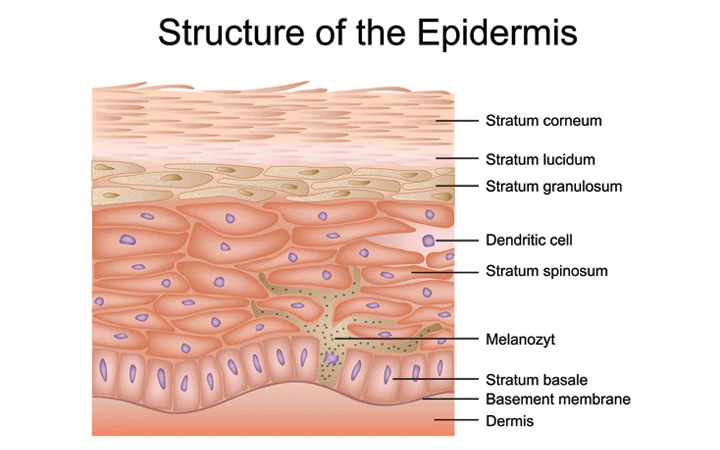
Fig. 1. The structure of the epidermis [8]
Physiological keratinization, or keratinization, is a natural process of maturation of keratinocytes and the formation of a stratum corneum on the surface of the skin. This layer performs several important functions at once: it provides mechanical strength, reduces moisture loss and protects the skin from external influences. In clinical practice, indicators of transepidermal water loss (TEWL) usually assess the barrier effectiveness of the skin. TEWL is the amount of water diffusion through the stratum corneum to the surface of the skin. It is significantly higher on the palms and soles compared to other areas, which is due to the anatomical features of the "thick skin" and the influence of eccrine sweat glands. Scientific publications emphasize that TEWL is a widely used objective marker of the state of skin barrier function in research and clinical practice [4].
Figure 2 shows a tevameter, a device for measuring transepidermal water loss.
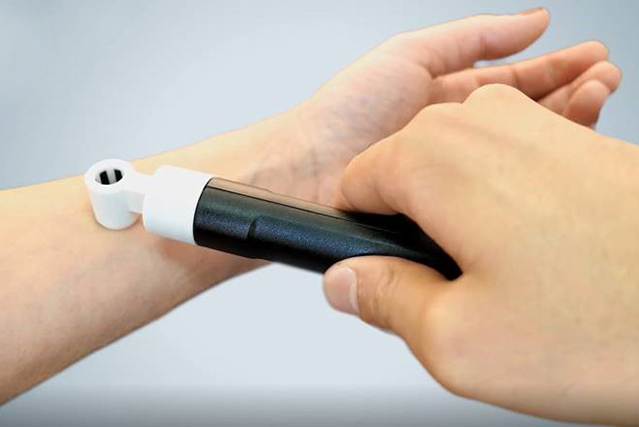
Fig. 2. Instrument for measuring transepidermal water loss (TEWL), tevameter [7]
The main component of the skin's protective barrier is an acidic reaction on its surface, known as the acid mantle. Normally, this layer has a slightly acidic pH, usually from 4.5 to 5.5. At the same time, in the deeper layers of the epidermis, the pH is closer to neutral, which creates an acidity gradient. This gradient is necessary for the proper functioning of the enzyme systems of the stratum corneum, the normal "peeling" of cells, maintaining the integrity of intercellular lipids and preventing the proliferation of pathogenic microorganisms. Theoretically, if during the aesthetic treatment of the skin one tries to completely remove the keratinized tissues, without taking into account the necessary protective layer, this can lead to functional violations of the barrier, even if no damage is visible externally [2].
Special attention should be paid to the area of the nail apparatus, where aesthetic treatment affects not only the skin, but also the structures associated with the nail plate. These include the proximal nail roller, the eponychium (commonly known as the "cuticle"), the nail bed, and the matrix. These elements form an anatomical and functional complex, the main task of which is the mechanical protection of the nail growth zone and the restriction of the penetration of external agents into the proximal part of the nail apparatus. In this regard, a theoretically sound approach is to strive to preserve protective structures and minimize micro-damage. Carefully correcting the surface excess of horny masses and seals, rather than «aggressively» removing tissues in the area of the physiological barrier achieve the aesthetic result.
In the process of manicure and pedicure, dry aesthetic treatment is a procedure that is performed without pre-soaking. Instead, special hardware techniques and attachments are used for controlled exposure to keratinized skin areas and periarticular areas. This technique is based on two key principles. Firstly, wet maceration temporarily alters the mechanical properties of the stratum corneum, making it softer and more vulnerable to shearing or tearing. Secondly, properly selected modes of hardware exposure allow you to control the depth and area of contact, which makes it possible to "selectively" remove areas of hyperkeratosis.
Table 1 shows examples of measured parameters that are often found in the scientific literature to describe the barrier properties of the skin. These parameters explain why the treatment of hands and feet requires a special approach and careful monitoring.
Table 1
Examples of physiological parameters related to the barrier function of the skin
|
Indicator |
Example value |
Site/Condition |
|
Skin surface pH |
4.5–5.5 |
Normal Skin Surface pH Range |
|
TEWL (transepidermal water loss), g/m²•h |
8.6 ± 3.9 |
Forearm (baseline values in the study) |
|
TEWL (transepidermal water loss), g/m²•h |
45.8 ± 12.1 |
Palm (baseline values in the study) |
|
Thickness of viable epidermis (average, excluding palms/soles) |
~150 µm |
Typical Body Sites (not palm/soles) |
A source: author's development based on [1], [5]
Dry technology is especially useful for hardware pedicure. It eliminates the use of water, which reduces the risk of maceration and makes the skin more vulnerable. At the same time, the requirements for workplace equipment remain, including the presence of a sink for hand hygiene, and for the sequence of services provided if the master does both manicure and pedicure.
Table 2 presents Earl H. Spaulding's classification, which allows for the classification of instruments and surfaces by epidemiological risk level. The higher the likelihood of contact with broken skin, biological fluids, or sterile tissue, the more stringent the required treatment regimen, ranging from disinfection to mandatory sterilization.
Table 2
Classification of products according to Earl H. Spaulding and the required level of treatment (disinfection/sterilization) in the practice of manicure and pedicure
|
Product category by risk level |
A typical manicure/pedicure contact |
Required processing level |
|
Critical |
They penetrate into tissues and come into contact with blood, which is unacceptable in aesthetic medicine. |
Sterilization |
|
Semicritical |
Contact with mucous membranes or damaged skin (for example, using a tool that can cause micro-injuries). |
It is preferable to carry out sterilization, but you can limit yourself to a high degree of disinfection. In the practice of nail service, especially when there is a risk of skin damage, they usually focus on sterility. |
|
Uncritical |
For contact with undamaged skin only (on some surfaces and equipment). |
Disinfection according to the material requirements. |
A source: author's development
During "dry" processing, it is important to control three parameters: abrasiveness, machine speed and pressure. The coarser the abrasive and the higher the pressure, the greater the risk of overheating of the fabric, the formation of microcracks and excessive skin removal. Therefore, a safe technique is to sequentially reduce the thickness of hyperkeratosis in several passes. During the procedure, it is necessary to periodically monitor the condition of the skin and stop the treatment if signs of excessive thinning appear uneven pinkness, spot soreness or a sharp increase in sensitivity. During pedicure, it is especially important to maintain the "working" stratum corneum in the support areas. You should not strive for complete "perfect smoothness" in one visit, as this can lead to a violation of the natural barrier.
During the sterilization process, it is important to be guided not only by "traditional" values, but also by officially approved regimes. The clinical guidelines issued by the Center for Disease Control and Prevention (CDC) provide recognized minimum processing times for packaged products by steam sterilization (autoclaving). For gravity sterilizers, these periods are 30 minutes at a temperature of 121 °C, and for pre-vacuum sterilizers - 4 minutes at a temperature of 132 °C. Compliance with all process parameters is a prerequisite for achieving optimal sterilization results [3].
The practical value of dry aesthetic treatment lies primarily in improving the safety and manageability of the result for the client. Avoiding water treatments such as maceration reduces the dependence of the treatment quality on the skin condition and allows for more accurate dosing of the effect on keratinized areas, which is especially important for people with sensitive skin and a tendency to irritation. In the field of pedicure, dry exposure also reduces the risks associated with the use of hot tubs and recirculating "foot spa". The scientific literature describes cases and investigations of outbreaks of skin infections that have been associated with these installations. Mycobacteria were found during the examination of such devices, which underlines the importance of observing strict sanitary standards or choosing technologies that do not require water procedures. If it is necessary to use basins or bathtubs, sanitary services publish detailed protocols for their cleaning and disinfection. These protocols include a requirement for mechanical cleaning and a specific "contact time" with the disinfectant. In practice, this means that the process requires additional control steps and strict rules [6].
For a specialist, dry machinery is of great practical importance, as it allows standardizing the workflow and reducing professional risks. Dry hardware treatment fits more easily into the logged algorithm: the sequence of actions, the choice of attachments and modes, skin condition monitoring and fixation of sanitary procedures – all this is easier to bring to uniformity in the learning process and internal quality control. In addition, the importance of protection from dust and aerosols increases with hardware processing. The relevant recommendations on occupational safety and health of employees indicate that good ventilation and local exhaust in the workplace help to reduce the level of chemicals and dust in the air. These recommendations also describe practical options for local exhaust ventilation, such as work area hoods and ventilated desks. This directly affects the maintenance of the master's working capacity and compliance with the requirements of safe work organization in the salon.
In the future, the development of dry aesthetic technologies will be associated with the further "medicalization" of safety standards. This means that more attention needs to be paid to hand hygiene and proper glove use. Gloves cannot replace hand treatment, so they need to be put on and taken off only after the hands have been thoroughly washed. This will provide more reliable protection against the cross-spread of microbes in various fields of activity, including services. Dry aesthetic treatment is gradually becoming the standard, as it not only improves the quality of service, but also supports safety requirements. This is achieved through standardization of actions, special ventilation solutions in the workplace and compliance with strict hygiene standards.
Conclusions
Thus, dry aesthetic treatment in manicure and pedicure is scientifically justified from the point of view of physiology and sanitary and hygienic standards. This technology allows you to dose the effects on hyperkeratosis and preserve important structures of the skin barrier system. To ensure the effectiveness and safety of the technique, it is necessary to observe the principle of minimal necessary intervention. It is important to pre-assess the condition of the skin and identify risk factors. When manipulating potential skin damage, only sterile instruments should be used. The level of processing of products according to the classification of Earl H. Spaulding should be selected based on a risk assessment. Only proven sterilization modes should be used. Standardization of the algorithm, hand hygiene and dust load control significantly improve the quality of services for customers and reduce professional risks for specialists.
References:
References
- Impacts of Skin Eccrine Glands on the Measured Values of Transepidermal Water Loss [Electronic resource]. – Access mode: https://assets.cureus.com/uploads/review_article/pdf/120755/20240724-319105-wsg1u4.pdf.
- Importance of Stratum Corneum Acidification to Restore Skin Barrier Function in Eczematous Diseases – PMC [Electronic resource]. – Access mode: https://pmc.ncbi.nlm.nih.gov/articles/PMC10861303.
- Recommended Cleaning and Disinfection Procedures for Foot Spa Basins in Salons [Electronic resource]. – Access mode: https://www.epa.gov/pesticides/recommended-cleaning-and-disinfection-procedures-foot-spa-basins-salons.
- Research Techniques Made Simple: Transepidermal Water Loss Measurement as a Research Tool – ScienceDirect [Electronic resource]. – Access mode: https://www.sciencedirect.com/science/article/pii/S0022202X18325764.
- Review of Stratum Corneum Impedance Measurement in Non-Invasive Penetration Application [Electronic resource]. – Access mode: https://pmc.ncbi.nlm.nih.gov/articles/PMC6023082.
- Steam Sterilization | Infection Control | CDC [Electronic resource]. – Access mode: https://www.cdc.gov/infection-control/hcp/disinfection-sterilization/steam-sterilization.html.
- Tewameter – Skin TEWL Measurement Device | Agaram India [Electronic resource]. – Access mode: https://www.agaramindia.com/tewameter-tm-hex.
- Understanding The Different Layers of Skin – SkinKraft [Electronic resource]. – Access mode: https://skinkraft.com/blogs/articles/layers-of-skin.
Other articles of the issue