

Estimating the cost of investor's temporary delay as a factor in improving the efficiency of private capital management processes
Authors
Shumatov Mikhail

Share
Annotation
The article examines the impact of investor procrastination on the financial result of private equity transactions. An analytical approach to estimating the economic cost of such delays is proposed. The behavioral, macroeconomic, and market factors that form the costs of procrastination are analyzed. These factors include opportunity costs, inflation, dividend payments, and market volatility. Based on the synthesis of behavioral finance methods and the theory of the time value of money, a conceptual model has been developed for calculating integral losses that occur when investment decisions are postponed. The practical significance of the work lies in the possibility of using the results obtained to optimize private capital management processes, minimize cognitive distortions, and increase the effectiveness of investment portfolio formation. The proposed recommendations may be useful to asset managers, financial advisors, and private investors in the process of developing decision-making rules, implementing systems for evaluating investment ideas, and automating wealth management.
Keywords
Authors
Shumatov Mikhail
Share
Relevance of the study. The study is particularly relevant in the context of the growing role of behavioral factors in shaping investment results, which is observed against the background of high macroeconomic uncertainty and structural volatility of modern financial markets.
In the practice of private equity management, the problem of investor procrastination in decision-making (investment procrastination, analysis paralysis, or delays in approving transactions) has traditionally been viewed mainly from a psychological point of view, while its direct financial impact has often remained underestimated. Meanwhile, a delay in capital allocation or portfolio rebalancing leads to measurable opportunity costs, including lost returns, loss of purchasing power due to inflation, and loss of compound interest effect.
In an era of rapid development of financial technologies and algorithmic trading, where the speed of operations is measured in milliseconds, the human factor of delay is becoming the main source of inefficiency. The assessment of this value makes it possible not only to discover hidden opportunities for wealth growth, but also to justify the introduction of special procedures, automated scoring systems and behavioral coaching into private capital management processes. This research is important for improving the competitiveness of financial institutions and protecting the interests of private investors.
The purpose of the study. The purpose of this study is to develop and empirically validate a methodological framework for quantifying the cost of time delay for investors, as well as to demonstrate that managing this factor is essential for improving the overall efficiency of private capital management.
In order to achieve this goal, we have identified and classified the components of economic losses caused by delayed investment decisions. We have also built an adaptive mathematical model to calculate the total cost of delay, considering macroeconomic variables and market volatility. Additionally, we have developed practical recommendations for minimizing time lags in the investment cycle of private clients by optimizing communication and technology processes in private banks and family offices.
Materials and research methods. The research materials and methods are based on an interdisciplinary approach that integrates the principles of behavioral finance and the theory of the time value of money. It also incorporates methods of modern portfolio analysis, supported by the works of both domestic and foreign scholars in behavioral economics and asset management.
To conduct the research, we used system analysis and synthesis techniques to identify factors causing delays in investment processes. We also performed comparative and retrospective analyses of historical market data, including stock market indices, inflation, and key interest rates, for the period between 2016 and 2024.
The study was based on aggregated, anonymized data on decision-making timing and private investor portfolio profitability, obtained from publicly available management company reports. Additionally, the study used results from simulated investment strategy modeling with artificially introduced time delays. This methodological approach ensures the reliability of conclusions and allows for transforming the abstract concept of "procrastination" into a specific, manageable financial indicator that can be integrated into risk management systems.
The results of the study. Modern technologies are opening new horizons in identifying, evaluating, and minimizing financial losses associated with investor procrastination. They offer tools previously unavailable in traditional money management approaches.
The achievements of artificial intelligence and machine learning play a key role in this process. These technologies allow us to analyze the digital traces of customer behavior on money management platforms. Predictive analytics algorithms can identify patterns of fluctuations and procrastination by tracking various metrics, such as time spent on investment offer pages, the number of returns to portfolio drafts, or delays in confirming transactions.
Based on this data, systems create personalized behavioral risk profiles, automatically calculating potential financial loss of benefits for each client in near real-time (Table 1).
Table 1 – Artificial intelligence technologies in the financial sector [1, 3]
|
AI Technology |
Main applications |
Usage examples |
Advantages |
|
Machine Learning |
Credit scoring, risk assessment, market forecasting |
Automatic assessment of borrowers' creditworthiness, algorithmic trading |
Improving forecast accuracy, reducing credit losses, automating decision-making |
|
Natural Language Processing (NLP) |
News analysis, Chatbots, contract analysis |
Virtual assistants in banking, automatic analysis of financial statements |
Speeding up document processing, round-the-clock customer support, extracting insights from unstructured data |
|
Neural Networks (Deep Learning) |
Pattern recognition, fraud detection, forecasting |
Detection of abnormal transactions, facial recognition for biometric authentication |
High fraud detection accuracy, reduced false alarms, adaptability to new threats |
|
Robotic Process Automation (RPA) |
Automation of routine operations, document processing |
Automatic data entry, reconciliation of accounts, processing of loan applications |
Reducing operating costs by 40-60%, reducing human error, freeing up staff for complex tasks |
|
Predictive analytics |
Forecasting customer outflow, liquidity management |
Predicting the need for capital, identifying clients prone to leaving |
Proactive risk management, optimizing cash flows, increasing customer retention |
|
Recommendation systems |
Product personalization, cross-selling |
Offering of investment products, selection of insurance policies |
Increased sales conversion, increased customer satisfaction, increased LTV (Customer Lifetime Value) |
|
Computer vision |
Document recognition, identity verification |
Automatic passport verification, scanning and receipt processing |
Accelerating customer onboarding, reducing the risk of document fraud, and improving the user experience |
|
Generative AI (GenAI) |
Report generation, scenario simulation, coding |
Automatic generation of financial reports, stress testing of portfolios |
Reduction of time for preparing analytics, the ability to quickly simulate complex scenarios |
The integration of big data technologies makes it possible to instantly compare individual investor delays with the current market situation, asset volatility, and macroeconomic indicators. This allows you to translate the abstract concept of "delays" into precise monetary metrics that can be displayed in the interfaces of financial advisors and investors themselves [8].
One of the key technological directions contributing to the reduction of time costs is the automation of decision-making and implementation processes, which is achieved through the development of robo-advising and algorithmic trading systems. The introduction of automatic portfolio rebalancing mechanisms, trigger orders, and smart contracts based on distributed ledgers avoids the human factor and administrative delays that previously occurred when agreeing on complex structural products in family offices or during cross-border asset transfers (Fig. 1).
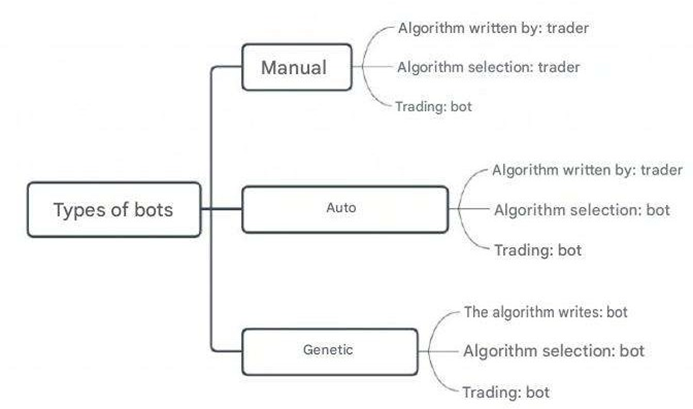
Fig. 1 — Robo-advising and algorithmic trading systems
To enhance the effect, mobile application user interfaces use the principles of behavioral design and "nudging" technology. [10] Real-time data visualization systems create interactive simulations that visually show the client how each day of decision delay affects their final capital, taking into account compound interest and inflation. Personalized notifications generated by neural networks help overcome "analysis paralysis."
In modern examples of private equity management, where the cost of delay can be accurately measured and reduced thanks to special digital solutions, we see impressive results from the use of these technologies.
One striking example is the use by large private banks of "waiting value assessment" modules in the process of attracting clients and approving investment memoranda. [9] In one such case, when an Ultra-High-Net-Worth client hesitated in deciding whether to participate in a commercial real estate financing transaction, an artificial intelligence-based system automatically generated a report. This report clearly demonstrated that each week of delay, in the face of a rising key interest rate, costs the investor a certain amount of missed coupon income and a higher cost of leveraging. This visualization convinced the client to shorten the approval cycle from three weeks to three days. [5]
Another example is the use of "smart cash management" features by algorithmic investment platforms. When an investor receives dividends or interest payments and decides not to reinvest them immediately, the platform automatically directs the funds into short-term investments or fractional shares, minimizing the delay and reducing the opportunity cost to zero. This helps compensate for the investor's behavioral inefficiency and ensures that funds are invested in a timely manner.
Another example showing how effective digital portfolio tools are: a financial advisor uses a simulation model to run a Monte Carlo scenario in a dialogue with a client. They clearly demonstrate that even a small delay in making rebalancing decisions for 48 hours can reduce the final profitability of the strategy by 1.5%-2% per annum due to the effect of slippage and changes in market spreads. This is a convincing argument in favor of transferring routine operations to algorithmic control. Realizing how much one's own procrastination costs can be an incentive to increase the overall effectiveness of wealth management. [6]
Despite the obvious theoretical and practical importance of estimating the cost of temporary delays for investors, implementing this approach in modern private equity practice presents a complex set of serious methodological, behavioral, technological, and regulatory challenges.
One of the primary and most significant challenges is the methodological difficulty of isolating and accurately measuring the "cost of delay" against the backdrop of stochastic market volatility. Unlike in high-frequency trading, where delays are measured in microseconds, wealth management decisions are made over a longer time horizon, making it extremely challenging to construct a reliable counterfactual scenario. It is difficult to conclusively determine what financial outcome would have resulted from immediate execution, as the market could have moved both in favor of and against the delayed position.
Choosing a benchmark for calculating opportunity costs, whether it's a risk-free rate, a broad market index, or a separate asset class, always involves some degree of subjectivity. Due to the non-linearity of market processes, in some situations, procrastination can be not only ineffective but also a protective action. For example, it can help avoid a sudden market collapse. This makes linear mathematical models for estimating lost profits unsuitable for specific situations [7].
The second, equally important group of problems is related to the behavior and psychology of investors. There is a contradiction between the objective financial assessment of the delay and the subjective perception of the investor. Cognitive biases such as loss aversion and status quo bias often lead clients to perceive the estimated "cost of procrastination" not as a useful analytical tool but as a source of psychological pressure or guilt. This can trigger a defensive reaction that undermines the trusting relationship between the client and the financial advisor.
In addition, "analysis paralysis" is often not rooted in laziness but rather in an objective lack of financial knowledge, complex family dynamics (in the case of family offices), or a lack of trust in the tools available. Simply presenting the client with a figure for lost income does not address the root cause of their indecision and can actually exacerbate stress.
Another critical barrier is technological and information constraints. To make an accurate assessment, highly detailed and timestamped information about the entire decision-making process is required, from the initial presentation of an investment idea to the final click on the transaction button.
In the private banking industry, this data is highly fragmented and spread across various systems, such as CRM platforms, trading terminals, and corporate email and messaging services. This makes it difficult to create a comprehensive digital record of customer interactions. The situation is further complicated by the increasing global and local regulations on personal data protection, such as the General Data Protection Regulation (GDPR) and its national equivalents. These regulations impose strict limits on the collection, storage, and algorithmic analysis of behavioral and psychographic information, creating a challenge between the need for in-depth behavioral analytics and compliance with data protection requirements.
The fourth layer of problems is related to ethical risks and regulatory pressure. The introduction of the concept of "the cost of delay" carries with it a serious threat of abuse by financial institutions.
There is a risk that managers or robo-advisors will use artificially inflated or unrealistic calculations of lost profits as a way to put pressure on customers in order to speed up their decision-making. This can lead to deception and the imposition of unsuitable, risky, or high-commission products under the pretext of "the need to avoid losses."
In the 2020s, financial regulators began actively monitoring practices that create a sense of urgency for customers. Financial institutions are required to provide irrefutable evidence that such a feeling truly meets the interests of customers and is not dictated by the bank's liquidity needs or the need to fulfill sales plans.
In addition, organizational and implementation difficulties arise. Private banks and family offices face challenges in integrating complex behavioral and financial models into daily business processes. This is often met with resistance from line staff. Relationship managers, who usually build their relationships with clients on the basis of empathy and trust, may perceive algorithmic assessments of clients' "indecision" as a threat to their professional autonomy. They may feel that such assessments penalize them for factors they cannot control, such as the client's innate conservatism.
Overcoming these organizational challenges requires not just the acquisition of new software but a fundamental shift in the corporate culture of financial management. The transition from aggressive sales tactics to transparent, data-driven, and ethical consultancy is necessary, where technology serves as an assistant rather than a controller in overcoming cognitive biases.
Conclusions. To summarize, it is important to emphasize that quantifying the cost of a temporary delay for an investor transforms this behavioral anomaly from a subjective psychological factor into a measurable financial cost. The integration of this approach into private capital management processes, based on the synthesis of behavioral finance and modern digital technologies, allows us to identify hidden reserves of profitability and minimize opportunity costs systematically. At the same time, successful practical application of these models requires overcoming methodological, technological, and ethical barriers to ensure a strict balance between algorithmic efficiency, regulatory standards, and the psychological comfort of clients.
Thus, managing time delays and overcoming investment procrastination are becoming key strategic directions for the development of the wealth management industry. The transition from intuitive consulting to data-driven management, where the cost of waiting becomes a clear, digital, and controllable parameter, opens the door to a significant increase in the operational efficiency of working with private capital. Reducing the costs associated with procrastination contributes not only to optimizing the business processes of financial institutions but also to strengthening investor confidence. This, in turn, ensures a sustainable and maximum increase in their long-term well-being.
References:
Berezin A.E. The problem of increasing the efficiency of company management in the context of public-private partnership // Production management: theory, methodology, practice. — 2016. — No. 5. — pp. 132-137.
Evdoshenko V.V., Vlasov A.V., Kotenev A.D. Institutional forms of efficiency for innovation management systems // Actual problems of science: from theory to practice. — 2016. — pp. 133-139.
Gryglewicz S., Hartman-Glaser B. Investment timing and incentive costs // The Review of Financial Studies. — 2020. — Vol. 33. — No. 1. — pp. 309-357.
Kosov M.E. Efficiency evaluation of means management pension accruals by private managing companies // Global economy: security issues. — 2017. — No. 4. — pp. 96-110.
Maas C. et al. The role of innovation in venture capital and private equity investments in different investment phases // Venture Capital. — 2020. — Vol. 22. — No. 1. — pp. 105-126.
Mikhailov D.M. Effective corporate governance // Economic strategies. — 2011. — Vol. 13. — No. 3. — pp. 52-61.
Veko R.V. Assessment by potential investors of the cost of business projects in the early stages of development based on a system of methods // Bulletin of the Polotsk State University. Series D. Economic and legal sciences. — 2020. — No. 14. — рp. 35-40.
Saktaganova G.S., Esengeldinova R.J. The main directions of improving the efficiency of innovation management // Bulletin of Turan University. — 2018. — No. 4. — pp. 157-162.
Srithongrung A., Yusuf J.E.W., Kriz K.A. A systematic public capital management and budgeting process // Capital management and budgeting in the public sector. — IGI Global, 2019. — pp. 1-22.
Yin Z., Caldas C., de Oliveira D. Identification of business-project management processes that improve capital efficiency of downstream and chemical projects // International Journal of Construction Management. — 2024. — Vol. 24. — No. 1. — pp. 1-9.
Other articles of the issue