
Code switching in English-language social networks of the Republic of Kazakhstan
Authors
Abenova Aizhan
Share
Annotation
The article discusses the topic of language switching (code-switching) in English-speaking social networks in Kazakhstan. The focus is on the theoretical aspects of the study of this phenomenon, its typology, the sociolinguistic context of Kazakhstan, as well as the functions that language switching performs in online discourse. The article analyzes the communicative, pragmatic, identification, metalanguage, phatic, and poetic functions that code-switching can perform. It is pointed out that social networks create unique conditions for mixing languages, since they combine text, visual elements, hashtags, comments, and audience reactions. In addition, the article examines the methodological difficulties faced by the study of online communication. These difficulties include the heterogeneity of digital material, non-standard spelling, the need to distinguish between code-switching and borrowing, and the importance of ethical standards when working with open user data.
Keywords
Authors
Abenova Aizhan
Share
Relevance of the study
The research is relevant because multilingual communication is actively developing in modern Kazakhstan. Kazakh, Russian, and English languages interact in the country, which creates favorable conditions for bilingualism and multilingualism. This is especially noticeable in the digital environment and on social media.
Social networks are becoming an important space for everyday communication, where users can freely switch from one language to another, depending on the purpose of communication, the subject of the message, the addressee, and the situation. In the English-language online discourse of Kazakhstan, a combination of English with Kazakh and Russian language elements is often found. This reflects the peculiarities of users' linguistic identity, communication culture, and self-presentation.
The study of code-switching allows us to understand how people use language switching to communicate, express emotions, clarify meaning, create a stylistic effect, convey cultural characteristics, and demonstrate their belonging to a particular social group.
The purpose of the study
The purpose of this study is to investigate the features of using code-switching in English-language social networks of the Republic of Kazakhstan. We take into account the linguistic situation in the country, as well as consider the structural models of code-switching, communicative functions, and the specifics of digital discourse.
Materials and research methods
The research is based on scientific approaches to the study of linguistic hybridization, bilingualism, and digital discourse, as well as open data that reflect the linguistic situation and features of digital communication in Kazakhstan.
Various methods are used in the work: descriptive, classificatory, comparative, functional-pragmatic, and discursive.
The results of the study
In sociolinguistics, code-switching, or code-switching, is the process of alternating two or more languages or language variants within a single communicative act. This phenomenon is considered not as an accidental language error, but as a natural aspect of the speech practice of bilinguals and multilinguals. Switching codes is related to various factors: the social situation, the addressee, the topic of communication, and the communicative task of the speaker. In the classical works of John Gumperz, code-switching is interpreted as the use of fragments of different language systems within the framework of a single speech act. In modern research, this phenomenon is also analyzed in the context of identity, communication norms, and digital communication.
In sociolinguistics, there are several main types of code-switching. The most common typology is that of Shana Poplack, which distinguishes three types: inter-sentential, intra-sentential, and insertion switching. Inter-sentential switching occurs between sentences or individual parts of an utterance. Intra-sentential switching takes place within a single sentence. Insertion switching is characterized by the inclusion of short elements of another language, such as addresses, interjections, or stable expressions. This classification is especially useful for analyzing social networks, as it allows you to identify not only complete transitions from one language to another, but also individual foreign language elements in posts, comments, captions, and hashtags.
The main types of code-switching in sociolinguistic analysis.
The main types of code switching in sociolinguistic analysis are presented in Table 1.
Table 1
The main types of code-switching in sociolinguistic analysis
|
Switching type |
Brief description |
What to analyze on social media |
|
Interphrase switching |
Switching to another language between sentences or independent remarks |
Messages and comments in which one sentence is written in English and the next is in Kazakh or Russian. |
|
Intra-time switching |
Changing the language within a single sentence |
Mixed phrases in which the English grammatical basis is combined with Kazakh or Russian words. |
|
Insertion switch |
Inclusion of short elements in another language |
Interjections, addresses, set expressions, hashtags, and quotes. |
|
Situational switching |
Language change due to a change in communication situation |
When switching to another language, it is important to consider the recipient, the topic, and the format of the communication. |
|
Metaphorical switching |
Changing the language to create additional social or stylistic meaning |
Using language to express different feelings: irony, solidarity, distance, status, or cultural affiliation. |
A source: author's development
The theoretical framework of the study is based on several approaches. First, the sociolinguistic theory of John Gumperz is significant, which suggests that code-switching is related to the context of communication and can serve a semantic function. Second, the Carol Myers-Scotton labelling model is important, which considers the choice of language as a way to demonstrate social relations between communication participants. Third, the Myers-Scotton matrix model explains the structure of mixed utterances through the proportion of the main language and the embedded language.
François Grosjean's concept of language regime is also relevant for the study of bilingualism. This approach suggests that a bilingual speaker can be closer to monolingual or bilingual modes, depending on the communication context. This is significant for analyzing social networks, as online communication often permits a more flexible combination of languages compared to formal written speech.
A simplified code-switching analysis scheme is presented in Figure 1.
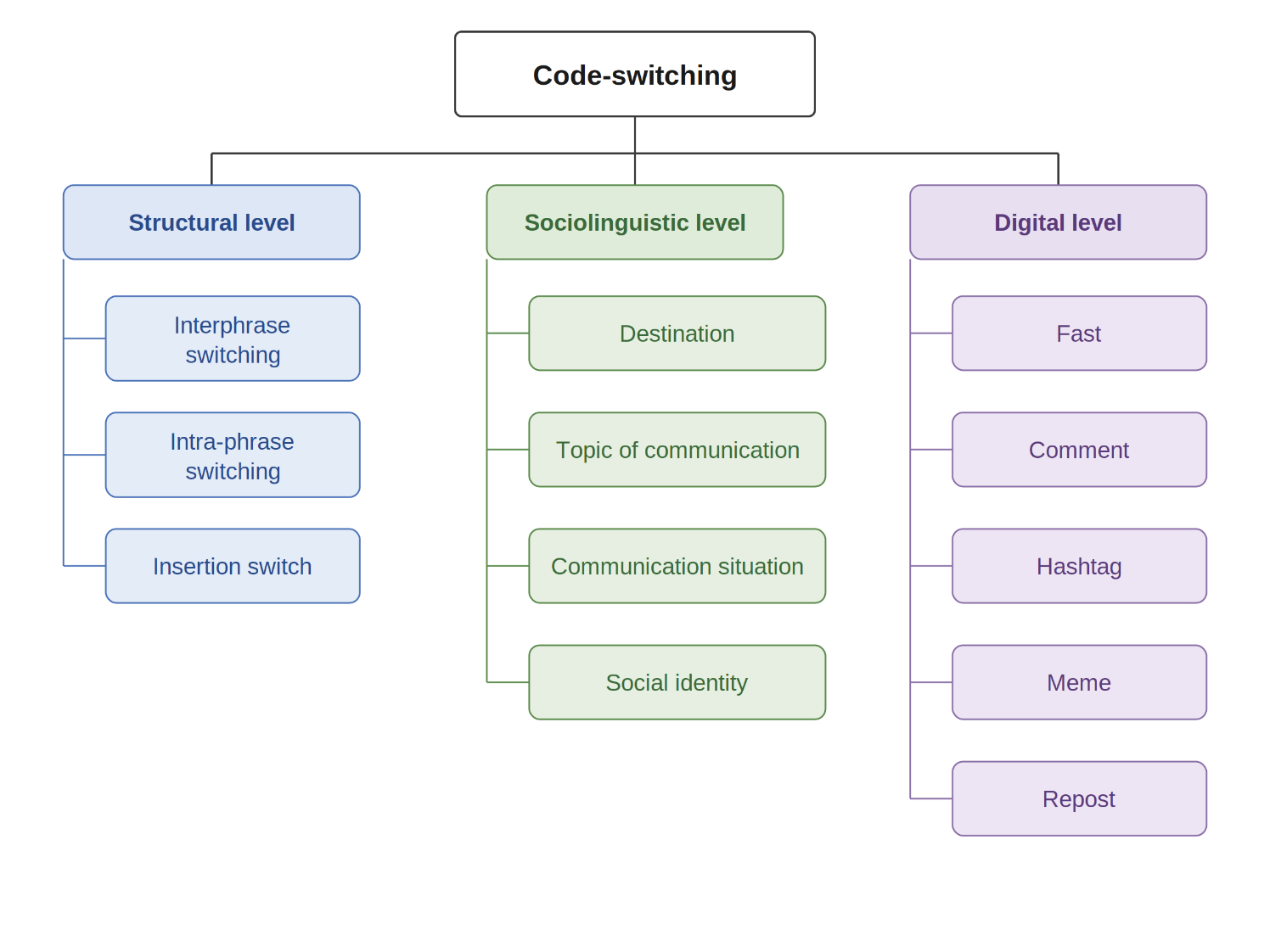
Fig. 1. Simplified code-switching analysis scheme
A source: author's development
The linguistic situation in Kazakhstan is multifaceted. The official language is Kazakh, but Russian also has an official status and is used in state institutions and local governments on an equal basis with Kazakh. The Government strives to create conditions for the study and development of the languages of all peoples living in Kazakhstan [1, p. 83]. Although English has no official status, it plays an important role in education, professional communication, youth culture, and the digital environment. In this regard, the phenomenon of code-switching in Kazakhstan can be considered as the result of the interaction of three main languages: Kazakh, Russian, and English [2, p. 62].
According to the National Population Census of Kazakhstan, multilingual practices are widespread among residents of the country over the age of five. A significant part of the population speaks two or three languages, and English is also one of the languages studied. This is important for studying the phenomenon of code-switching, since code-switching does not occur in an isolated language environment, but in conditions where users already have a real opportunity to choose between several languages depending on the recipient, topic, and communication situation [5].
In the world of digital technologies, bilingualism and multilingualism manifest themselves much more freely than in the framework of formal written communication. Users of social networks can combine English words, Russian-language syntax, Kazakh addresses, national and cultural realities, hashtags, and visual elements in one message. This form of communication is driven not only by convenience but also by the desire to express oneself. Choosing a language helps to identify belonging to a particular group, emphasize modernity, express emotions, or convey a meaning that is difficult to convey in just one language.
The sociolinguistic model of code-switching functioning in Kazakhstan is shown in Figure 2.
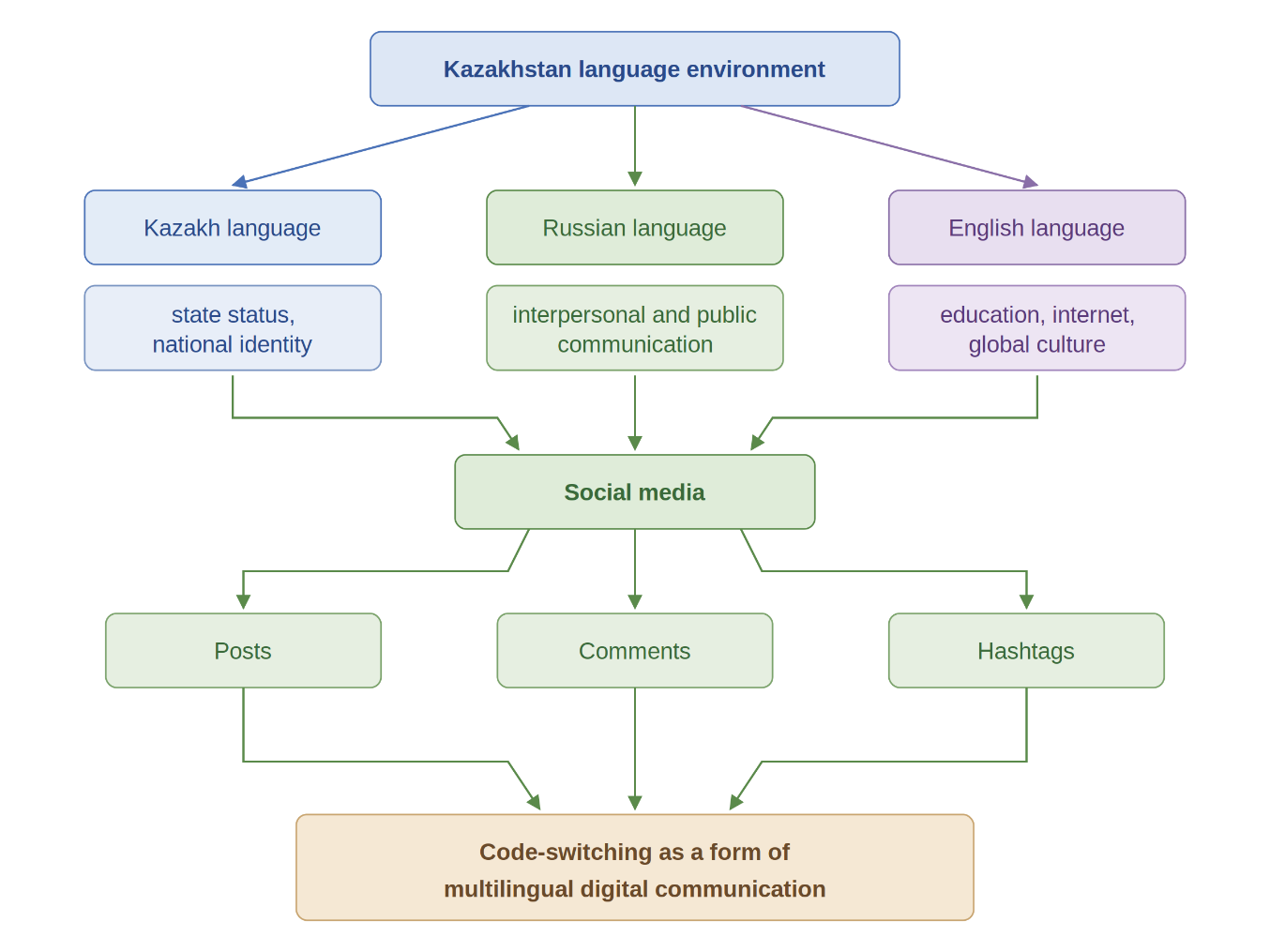
Fig. 2. Sociolinguistic model of code-switching functioning in Kazakhstan
A source: author's development
The role of social networks as a language communication space is especially important in conditions of high digital involvement of the population. There are a huge number of Internet users and active social media accounts in Kazakhstan. However, it is worth noting that social media metrics reflect the number of active users and advertising coverage, rather than the exact number of unique users. For linguistic research, this means that social networks provide extensive material for studying real-world practices of language choice. Nevertheless, the interpretation of platform statistics requires special care [4, p. 74].
In English-speaking social networks, language switching (code-switching) is not just a change of language codes, but a speech strategy that depends on the goals of communication. Scientific literature identifies various functions of this phenomenon: transmission of the exact value; addressing a specific addressee; expression of mixed identity; changing the tone of the message; language game; demonstration of proficiency in several languages. However, it should be noted that code-switching functions are not universal for all communities. The reasons for switching may vary depending on the language environment and the composition of the communication participants. Therefore, when analyzing English-language social networks in Kazakhstan, it is necessary to set switching functions based on a specific corpus of posts, comments, and hashtags, rather than assigning ready-made motives to users in advance.
The main code-switching functions that can be applied to the analysis of social networks are presented in Table 2.
Table 2
The main functions of code-switching, applicable to the analysis of social networks
|
Function |
Function Content |
What to record on English-language social networks |
|
Communicative |
Switching helps to convey the message content more accurately. |
Language change when explaining a topic, clarifying the meaning, and conveying a culturally specific concept |
|
Pragmatic |
Switching is used to influence the addressee |
Addressing a specific audience, increasing emotionality, changing the tone of the message |
|
Identification information |
Switching indicates whether the user belongs to a linguistic, cultural, or social group. |
Combining English with Kazakh or Russian elements as a way of self-presentation |
|
Metalanguage |
Switching involves commenting on the language or demonstrating language competence. |
The deliberate use of different languages to emphasize education, irony, or language play |
|
The fatal |
Switching keeps in touch and changes the tone of communication |
Brief inserts, addresses, reactions, emotional markers in the comments |
|
Poetic |
Switching is used for expressiveness |
Puns, meme formulas, stylistic play, rhyming or quoting elements |
A source: author's development
Digital discourse significantly influences the forms of code-switching, as online communication combines both written text and visual elements, audience reaction, and platform-specific features. Susan Herring suggests considering several aspects in computer-mediated discourse: structure, meaning, interaction, and social behavior. Structural features include spelling, graphics, new word forms, and sentence construction.
This is especially important for analyzing social networks, where code-switching can manifest itself not only in plain text but also in hashtags, nicknames, abbreviations, emojis, memes, and comments. The study of the use of different languages in online communication involves certain methodological difficulties. The main difficulty lies in the variety of materials available on social networks: posts, comments, image captions, short reactions, hashtags, and meme formulas have different structures and are not always amenable to analysis like ordinary written texts. To conduct qualitative research, it is necessary to take into account not only the linguistic form of the message but also its genre, platform, addressee, visual accompaniment, and the context of the publication. Susan Herring emphasizes that in computer-mediated discourse, it is especially important to analyze real records of online interaction rather than artificially created examples.
Identifying the boundaries of language switching in social networks is particularly difficult. The same fragment may contain borrowings, stable expressions, hashtags, transliteration, abbreviations, or complete code-switching. This requires careful classification: the researcher must be able to distinguish between the accidental use of a single word and conscious language switching as a communicative strategy. Another problem is related to informal spelling. Users can write words in both Latin and Cyrillic, with errors, abbreviations, or mix graphics, making it difficult to automatically detect the language. In studies on code-mixing in social media, it is noted that language detectors are worse at handling such texts due to non-standard writing, phonetic notation, and frequent inclusion of English elements [3, p. 23].
The ethical side of research is important. Even if publications are accessible to everyone, this does not always mean that they can be freely used in scientific work. The confidentiality of users, the possibility of identifying the author, the age of the participants in the communication, the sensitivity of the topic, and the risk of harm should be taken into account. The recommendations emphasize that when conducting Internet research, ethical decisions should be made taking into account the specific situation and not only based on the formal status of the data as "open."
The prospects for code-switching research in online communication lie primarily in the creation of more accurate research buildings. For scientific analysis, it is important to collect not just random examples but carefully systematized material. It is necessary to specify the platform, the type of message, the languages, and the form of switching, the topic of publication, and the communicative context. This approach will allow not only to describe individual cases of language confusion but also to identify stable patterns of multilingual digital communication.
The combination of qualitative and quantitative analysis is particularly promising. Qualitative analysis helps to understand the meaning of language switching in a particular message, while quantitative analysis demonstrates the frequency of certain forms, language combinations, and genre features. However, automatic methods can only be useful if there is manual verification, since digital texts often contain non-standard writing forms, emojis, hashtags, and graphic elements.
In the future, the study of the use of various languages in Kazakhstan's social networks may develop in several directions. For example, you can compare the language features of different platforms, analyze the differences between posts and comments, study the role of hashtags and visual content, and explore the language behavior of different age and professional groups. It is especially important to analyze not only textual but also multimodal forms of communication, since in social networks, meaning is often formed not only through words but also through images, emojis, videos, and audience reactions.
Conclusions
The analysis showed that the use of multiple languages in social networks of the Republic of Kazakhstan, especially in English-speaking ones, is commonplace. This process, known as "code-switching," performs not only a linguistic but also a social function. It helps users clarify meaning, express emotions, demonstrate their cultural affiliation, stay in touch with the audience, and form their online identity. In Kazakhstan, where Kazakh, Russian, and English languages are closely intertwined, favorable conditions are being created for the development of such practices. Social networks facilitate their dissemination by allowing users to freely combine various language elements, visual aids, hashtags, and informal forms of communication. Further research in this area may be aimed at creating structured digital text corpora, comparing different platforms, and exploring in-depth the relationship between "code-switching," language identity, and online communication culture.
References:
- Akhmetchina K.E. The linguistic situation of Kazakhstan // Slavic culture: origins, traditions, interaction. XXIII Cyril and Methodius readings: Proceedings of the International scientific-practical conference. – 2022. – pp. 82-88.
- Dyusenbi Zh.E. The trinity of languages in Kazakhstan // Chronos. – 2021. – Vol. 6, No. 3(53). – pp. 61-63.
- Kenjebaeva Zh.E. Code switching: main directions of research // Colloquium-Journal. – 2020. – No. 19-3(71). – pp. 22-25. – DOI 10.24411/2520-6990-2020-12067.
- Kurmanova B.Zh., Utegenova A. Code switching in oral dialogic speech of Kazakhs based on the Russian, Kazakh and English languages // Sociocultural space of Russia and abroad: society, education, language. – 2021. – No. 10. – pp. 70-82.
- The Bureau of National Statistics published a thematic collection on the Ethnic Composition of the Population Based on the Results of the 2021 Census // Official website of the Government of the Republic of Kazakhstan. – URL: https://www.gov.kz/memleket/entities/stat/press/news/details/645964?lang=ru.
Other articles of the issue