

Managing key clients in an international company: balancing personalization and standardization of service
Authors
Bekturganova Saltanat

Share
Annotation
The article describes how an international company manages its key customers, while striving for a single level of service and taking into account the individual needs and expectations of its large customers. In this article, we will look at how key customer management is carried out as a single system combining various functional areas. The factors that exacerbate the contradiction between personalization and standardization will also be analyzed: the geographical remoteness of teams, the diversity of markets, and the growing demands on service predictability and data management. The article discusses approaches that are successfully applied in international practice: fixing basic service standards, compiling a catalog of available options, determining the procedure for approving exceptions, and implementing a system of indicators reflecting quality, customer value, and cost of services. A stable balance between these factors is achieved through the formalization of decisions and their consolidation in documents and corporate information systems. This allows you to avoid inconsistencies in obligations between different departments and improve the manageability of the service.
Keywords
Authors
Bekturganova Saltanat
Share
Relevance of the study
The relevance of the study is due to the fact that in most industries it is key customers who bring in a significant portion of revenue and determine the quality standards of interaction at all stages of cooperation: from initial negotiations and conclusion of contracts to service support, change management and joint development of solutions. In international companies, working with key clients is complicated by the multi-level management structure, the distribution of teams, and differences in national markets and business cultures. It is necessary to provide a single level of service, while adapting to local expectations. In such an environment, key customer management goes beyond the sales function and becomes an inter-functional management system that requires consistent processes, clear responsibilities, and measurable quality standards.
At the same time, there is a growing conflict between two approaches to service provision: personalization and standardization. Personalization significantly increases the value of the service in the eyes of customers, helps to strengthen trust and loyalty, allows you to more accurately take into account the specifics of business processes and risks of each client, and helps to build long-term partnerships. However, excessive individualization can lead to increased maintenance costs, complication of quality management, the emergence of so-called "manual" exceptions, increased dependence on individual managers, and increased risk of non-compliance with corporate and legal norms. Standardization, on the other hand, ensures the reproducibility of the service, comparability of indicators between different countries and departments, allows effective management of resources and costs, and meets the requirements of compliance with regulations and internal control. However, excessive rigidity of standards can reduce flexibility, degrade the customer experience, and limit a company's ability to maintain strategically important accounts in a highly competitive environment.
The problem is becoming particularly relevant in the context of digitalization and the growing demands on data management and the quality of customer processes. International companies are increasingly using unified platforms such as CRM and service systems, as well as common communication standards and service level agreements (SLAs). This leads to an increasing role of unified regulations. However, key customers expect an individual approach, predictable service and quick decision-making, especially when it comes to complex supplies, service contracts, project activities and maintenance in different countries. Therefore, the search for a balance between personalization and standardization is becoming an urgent task for scientific and practical specialists. This balance allows you to simultaneously increase value for key customers, control costs and risks, ensure uniform service quality and the sustainability of the operating model at the international level.
The purpose of the study
The purpose of this study is to substantiate a management model that will combine personalization and standardization of key customer service in an international company and develop a practical logic for implementing this model based on basic standards, a catalog of service options, the procedure for approving exceptions and a system of indicators.
Materials and research methods
The research examined scientific and practical materials on key customer management and service in international companies. In addition, open analytical data on customer requirements for the quality of service and the level of consistency in interaction were analyzed.
The research examined scientific and practical materials on key customer management and service in international companies. In addition, open analytical data on customer requirements for the quality of service and the level of consistency in interaction were analyzed.
The results of the study
Key Account Management (KAM) is considered in the scientific and practical literature as a strategic approach aimed at working with a limited number of the most important clients. The supplier allocates specialized resources and special attention from management to them in order to develop long-term relationships, increase their retention rate and stimulate joint growth. In general, KAM can be described as purposefully establishing and maintaining relationships with "key" customers who make a significant contribution to the company's performance and have high potential for development [3].
In international companies, the concept of KAM is of particular importance. A key client is often present in several countries and business units, which requires the company to coordinate the interests of global and local management levels. It is necessary to ensure comparability of service approaches and a unified decision-making logic, while maintaining sensitivity to the conditions of a particular market. Scientific papers devoted to the international aspect of KAM emphasize that this concept serves as a tool for servicing large clients "on a global level" and is focused on long-term business relationships. This makes the issues of organizational coordination and the development of common principles that should be implemented at all levels of management especially important [4].
The theoretical basis of key customer management in an international company includes the principles of relationship marketing, customer value management, and inter-organizational interaction. The key customer is considered not only as a source of sales, but also as a partner with whom the processes of solution development, integration, quality assurance and risk management are coordinated. Within the framework of an international organization, these relations require formalization, as there is a risk of discrepancies in standards of service, communications and interpretation of obligations between different countries and departments. The ISO 44001:2017 standard is often used as the basis for management, which sets requirements for the identification, development and management of joint business relationships. This approach makes it possible to transfer relations from the field of individual arrangements to a managed system.
McKinsey's research on global B2B behavior demonstrates customers' growing expectations of service quality and consistency across all channels along the way. If basic expectations are not met, many purchasing companies are willing to consider changing suppliers. One McKinsey survey notes that more than 70% of respondents allow switching to alternative suppliers in such situations (Figure 1). These data are important for the KAM theory, as they confirm the need to combine work through relationships with reproducible standards of service and support availability, especially in an international company.
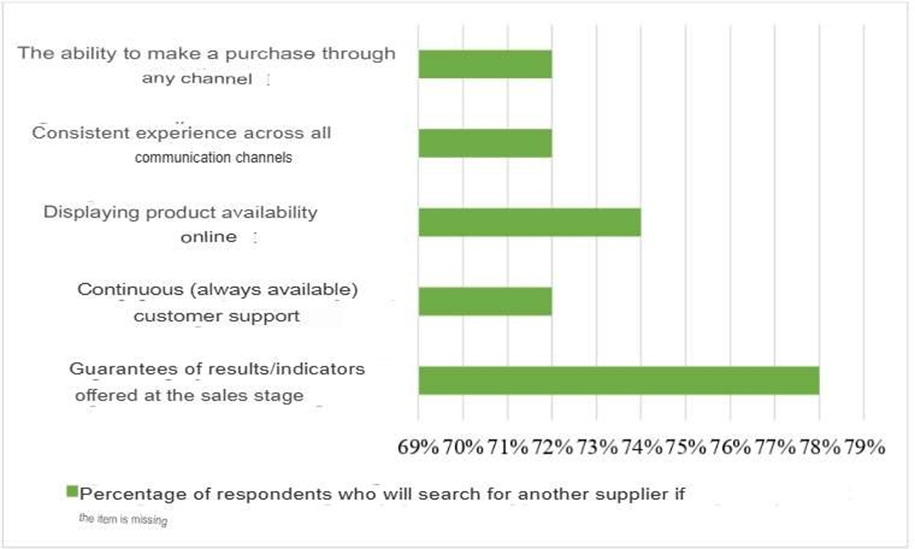
Fig. 1. Expectations of B2B clients for the interaction experience, in the absence of which they will look for another supplier [1]
In addition to B2B expectations, there is a general market trend towards increasing the importance of trust and respect for data in the process of personalized interaction. The Salesforce report "State of the AI Connected Customer" shows how the perception of personalization changes over time (Figure 2).
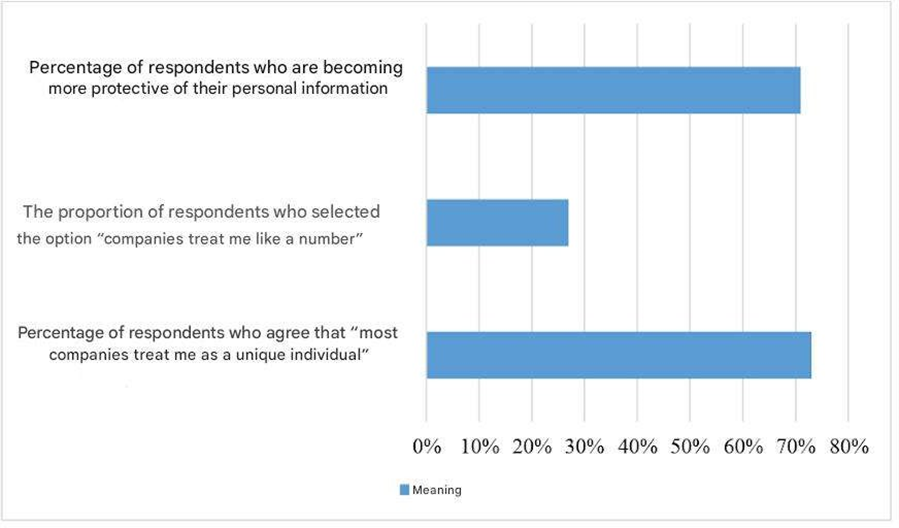
Fig. 2. Indicators of personalization and attitude to data [5]
This means that in an international company, personalization of communication with key customers should be considered not as a "free setup", but as a managed practice. It should be closely linked to the principles of trust, transparency and compliance with data protection requirements, especially if the interaction is carried out through single digital platforms available in different countries.
In managing key clients in an international company, it is important to find a balance between standardization and personalization. To do this, it is necessary to use tools that ensure the same quality of service, but at the same time can be adapted to the specifics of each client. In practice, this means that the company sets a "mandatory minimum" of service, which should be the same for all countries and departments. These minimums include basic levels of support availability, escalation procedures, principles of customer data management, and uniform reporting requirements. Individual solutions are designed not as separate arrangements, but as predefined options that can be enabled according to clear rules. This approach avoids inconsistencies in customer promises between regions, reduces the dependence of the result on individual employees, and makes the service comparable in quality, cost, and risks [2].
One of the key conditions for successful personalization is its formalization. Personalization should fit seamlessly into the standard process through documents, processes, and digital systems. Otherwise, it can turn into a set of exceptions that are difficult to control and scale. In an international company, this is especially important because of the distribution of teams and differences in local practices. The lack of a single language for describing the service leads to confusion in expectations, different interpretations of obligations, and reduced predictability of the service. Therefore, a set of tools occupies a central place in the model of the balance between standardization and personalization. Standardization fixes mandatory elements and rules, while personalization is limited to parameters that can be agreed upon, measured, and tracked in the system (Table).
Table
Managed personalization tools in KAM as a mechanism for balancing personalization and standardization
|
The tool |
Assignment in working with a key client |
What is being standardized |
What is personalized |
Where it is fixed |
|
The Key Client's plan |
Account retention and development through a single action plan |
Document structure, required sections, frequency of updates |
Client's goals and priorities, growth initiatives, risk map |
Approved plan, roadmap, CRM entries |
|
Regular reviews |
Managing expectations, monitoring progress based on results and service |
Report format, basic metrics, preparation procedure |
The agenda for the client, the depth of detail on projects |
Minutes of the meeting, decisions, deadlines, responsible persons |
|
Catalog of service options |
Transparent "menu" of service options and conditions |
List of services, descriptions, standard conditions, SLA framework |
Package selection, set of additional options |
Agreed set of services, connection conditions |
|
SLA/OLA and the escalation matrix |
Measurable quality of service and manageable escalations |
Metric definitions, calculation rules, escalation levels |
Support windows, dedicated channels, account priorities |
SLA/OLA, escalation regulations, contacts |
|
RACI (allocation of responsibility) |
Role alignment between global and local levels |
A single matrix format, a set of key processes |
Specific implementers and owners of solutions |
Matrix of roles, rules of coordination and substitution |
|
Communication and reporting templates |
A single level of quality for client messages |
Required blocks, style, and frequency of reports |
Accents for the industry and the client's tasks |
Templates, communication calendar, report versions |
|
Exclusion rules |
Monitoring of non-standard promises and their cost |
Criteria, approval procedure, limits |
Individual conditions beyond the standard for justification |
Application for exclusion, decision, term, effect |
|
Unified CRM/service system |
Transparency of the history of interactions and commitments |
Required fields, stages, data quality rules |
Client context, account attributes, tags |
Account card, tasks, requests, statuses |
|
The client's stakeholder Card |
Managing contacts, influence and risks of communications |
Map format, and role classification |
Specific individuals, expectations, relationship risks |
Stakeholder map, interaction plan |
|
Standards for working with customer data |
Reducing legal and reputational risks |
Rules for access, storage, consent, list of data |
Customer preferences by channels and contact format |
Consents, restrictions, and customer requirements |
A source: author's development
The above system of tools makes it possible to effectively divide the balance into manageable components. Some of them are standardized and ensure quality stability, comparability of service, and risk control. The other part is personalized and creates direct value for a specific key customer. These aspects can be measured and reconciled. It is important to note that personalization in this model is not arbitrary. It is acceptable only to the extent that it can be documented, reflected in the system, and compared with resources and the expected effect.
The logic of balance in KAM becomes complete only when the tools are complemented by metrics and management control rules. Without uniform metrics, it is impossible to distinguish personalization, which truly adds value and retains key customers, from costly exclusions, which increase the cost of service, create organizational overload and increase the risk of default. Therefore, for further development of the model, it is necessary to switch to a measurement system: to determine service quality indicators, including compliance with SLA and customer experience parameters, financial indicators for the account and the cost of service, as well as procedures for approving and reviewing individual conditions in the international circuit.
It is advisable to build a practical implementation of the balance of personalization and standardization in an international company according to a consistent scheme, which first defines a single "framework" of the service, then introduces managed customization options, establishes rules for non-standard solutions, and completes the model by measuring results. This logic reduces the risk of disparate promises to the customer, ensures comparability of service quality between countries, and makes the service manageable.
At the beginning of the work, basic service standards are established — mandatory requirements that are minimal and uniform for all departments and markets. These standards define the rules for classifying requests, the order of their escalation, and the requirements for support availability, response time, and storage of client information in corporate systems. It is important that the basic standards are measurable and achievable. They serve as a common language of communication between employees and guarantee the predictability of service for customers.
Then a catalog of service options is developed, which allows you to move from "manual arrangements" to pre-defined solutions focused on individual needs. This catalog highlights basic elements and additional options such as enhanced support, more frequent reporting, dedicated communication channels, and regular collaborative reviews of results. For each option, its content, scope, terms of provision and necessary resources are set in advance. This approach provides flexibility without loss of manageability.
Then the procedure for approving exceptions is established — the rules that regulate any deviations from the basic standards and the catalog. Criteria are defined by which such deviations are considered acceptable, responsible persons are appointed, limits and validity periods are set, and mandatory justification is provided in terms of customer value, costs, and possible risks. This approach helps to protect the company from uncontrolled promises and reduce the likelihood of conflicts between global and local management levels.
The model is rounded off by an indicator system that serves as the basis for evaluating the quality of service, its value to the customer, and its cost. These indicators reflect the fulfillment of standards in terms of time and quality, customer feedback, as well as retention and development of cooperation. In addition, they take into account the workload of the team and the proportion of non-standard solutions. Based on the collected data, the basic standards, the catalog of options and the practice of exceptions are adjusted. This allows you to maintain a balance in different countries and market conditions.
Conclusions
Thus, it is important for international companies to find the optimal balance between personalization and standardization in working with key clients. This balance is achieved not by increasing the number of individual agreements, but by making them effective and measurable. The most effective is a consistent implementation strategy that includes the following steps: definition and consolidation of basic service standards as a mandatory minimum; development of a catalog of service options, which will allow you to control the process of customization; introduction of an exception approval procedure for monitoring non-standard obligations; the formation of a system of indicators that will assess the quality of the service, its value to the customer and the cost.
This model provides greater predictability and comparability of service quality between departments and countries. This reduces the risk of default and promotes the long-term development of key customers, allowing them to control costs and minimize risks.
References:
- Future of B2B sales: The big reframe [Electronic resource]. – Access mode: https://www.mckinsey.com/~/media/mckinsey/business%20functions/marketing%20and%20sales/our%20insights/future%20of%20b2b%20sales%20the%20big%20reframe/future-of-b2b-sales-the-big-reframe.pdf.
- ISO – Quality management: The path to continuous improvement [Electronic resource]. – Access mode: https://www.iso.org/quality-management.
- Key Account Management | Research Starters | EBSCO Research [Electronic resource]. – Access mode: https://www.ebsco.com/research-starters/marketing/key-account-management.
- Key Account Management in an International Context [Electronic resource]. – Access mode: https://gupea.ub.gu.se/items/9a4596c1-ac5a-4691-934d-92346178260c.
- State of the Connected Customer [Electronic resource]. – Access mode:
Other articles of the issue