
Development of Performance Max after the introduction of artificial intelligence-based optimization: evaluation of the effectiveness of tCPA and tROAS strategies
Authors
Roh Kateryna

Share
Annotation
This article explores how recent advances in artificial intelligence (AI) optimization in performance marketing and privacy changes in personal data protection legislation affect the accuracy of measurements and the effectiveness of automatic bidding strategies in Google Ads. In particular, the Performance Max format is being considered, which uses targets (conversion signals) and data provided by the advertiser. The success of campaigns in this format depends on the accuracy of optimization goals and the quality of measurements. The article reveals the key factors influencing the transformation of signal data. Special attention is paid to approaches to partial restoration of signal quality using first-party and server-side solutions (Enhanced Conversions). Based on the official principles of Smart Bidding strategies, tCPA and tROAS are compared. Their differences in target functions, data requirements, and sensitivity to signal degradation are revealed. We concluded that the choice between tCPA and tROAS should depend on the reliability of conversion and value data, as well as on the specifics of the current measurement infrastructure and attribution constraints.
Keywords
Authors
Roh Kateryna
Share
Relevance of the study
The research is relevant because the results of performance marketing are becoming increasingly dependent on automatic optimization algorithms and the quality of the data they are trained on.
Performance Max is a format in which key decisions on budget allocation and the number of impressions are mainly made by the system based on conversion signals and the chosen betting strategy. The tCPA and tROAS strategies optimize campaigns for different purposes: the first one is based on the cost of the target action, and the second one is based on the value and payback of conversions. Due to differences in the objective function, strategies react differently to changes in measurement and attribution.
Additional importance is given to the topic due to the recent in privacy changes, including the ATT (Aggregate Tracking Technology) and the use of aggregated measurement models. These changes have reduced the availability and accuracy of certain events, making it more difficult to create stable signals for optimization purposes. In such conditions, the risk of unstable performance and incorrect choice of betting strategy increases. Therefore, a comparative analysis of tCPA and tROAS within the framework of AI-optimized Performance Max is a timely and practically important step towards improving cost management and sustainability of economic results of advertising campaigns.
The purpose of the study
The purpose of this study is to compare the effectiveness of tCPA and tROAS strategies in Performance Max campaigns in the context of signal data changes caused by changes in the field of personal data protection. We will also identify the factors that affect the sustainability and correctness of cost and value optimization.
Materials and research methods
For the research, open and official sources were used, such as reference documentation and public platform materials, as well as generalized analytical conclusions presented in the theoretical part of the work.
Research methods include:
- analysis of normative and methodological sources;
- comparative analysis of optimization strategies based on specified criteria;
- systematization of the factors leading to data loss and their impact on the learning process of models;
- presentation of results in the form of tables.
The results of the study
The theoretical foundations of advertising optimization using AI describe the process of transition from manual campaign management to algorithmic models. These models automatically allocate a budget and adjust rates to achieve certain business goals. The Performance Max format stands out in Google Ads in particular. It refers to goal-based campaigns, in which you can use the entire Google advertising inventory in one campaign. Performance Max uses Google AI to optimize bids, audiences, creatives, and attribution. The key feature of Performance Max is that its work is based on goals and signals that are determined by the advertiser. These can be conversions, assets, audience signals, and, if necessary, a feed. Thus, the result depends not only on the channel selection, but also on the accuracy of the optimization goal and the quality of the data on which the system is trained [1].
In the Performance Max format, various advertising resources are combined into one campaign. This format also includes algorithmic optimization of bids, audiences, and creatives, which significantly improves the effectiveness of advertising. The conceptual diagram of Performance Max is shown in Figure 1.
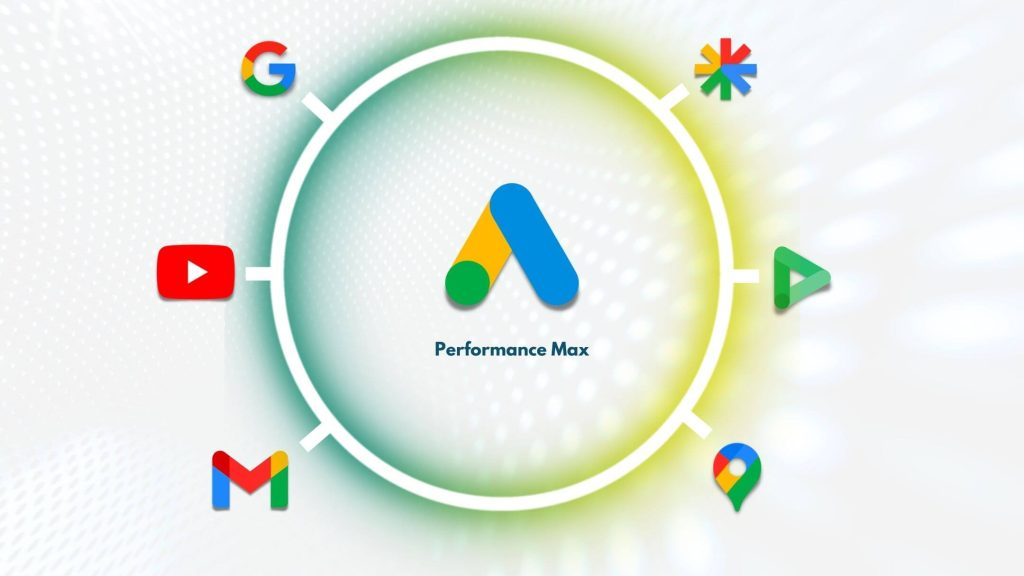
Fig. 1. The concept of Performance Max as a single AI-optimized campaign in the Google Ads ecosystem [3]
Optimization based on artificial intelligence is closely related to Smart Bidding technology, which allows you to automatically calculate bids for each auction, taking into account the likelihood of achieving the desired result. The strategies of tCPA and tROAS differ in their purpose. Target CPA strives to maximize the number of conversions at a given average cost. The system automatically sets the bid for each auction based on historical data and available contextual signals. The documentation also notes that the results can be unpredictable: individual conversions may cost more or less than the target value, and the actual figures depend on external factors such as competition and changes on the site. Thus, the tCPA manages the average cost of a conversion as a whole, but does not set a price for each individual conversion [2].
Target ROAS is a strategy that prioritizes the value of a result and optimizes bids to maximize returns. The system predicts the value of a potential conversion and increases or decreases the bid depending on the expected revenue. The effectiveness of tROAS depends on the accuracy of transmission and interpretation of information about the value of conversions. If the value signal is not stable, the strategy will become less effective. To use tROAS, Google recommends setting up conversion tracking with values. In some cases, for example, for Standard Shopping, a minimum amount of data is required: at least 15 conversions to Merchant Center ID in the last 30 days. This is because optimization for a more complex goal, such as value or payback, becomes less stable when there are not enough observations [5].
The key feature is that some of the user paths are no longer observed at the user level, and aggregated and modeled data is increasingly being used for measurement. In the iOS ecosystem, this is directly related to the implementation of App Tracking Transparency (ATT). To use tracking in the app, you must obtain the user's explicit permission, and in case of refusal, access to data for measuring and optimizing campaigns is reduced. As a result, the proportion of "incomplete" conversion chains increases for advertising systems, which reduces the accuracy of the signals used to train models.
The changes affected not only the availability of identifiers, but also the architecture of mobile attribution in general. In iOS, SKAdNetwork (SKAN) is actively used to track installations and activity after they are completed. In this system, data is transmitted in the postback format, rather than through a "click→user→event" sequence of actions, as it used to be. However, feedback on optimization results becomes slower and not always complete. According to Apple's documentation, the minimum delay in receiving a postback is between 24 and 48 hours, and the device adds extra time in the interests of security and privacy. In addition, SCAN uses levels of detail at which the system can transmit more generalized conversion values instead of more accurate ones if anonymity requirements and thresholds are not met [4].
Figure 2 shows a typical SKAdNetwork path from interacting with ads to receiving feedback, which explains why optimization does not always work instantly and not in full.
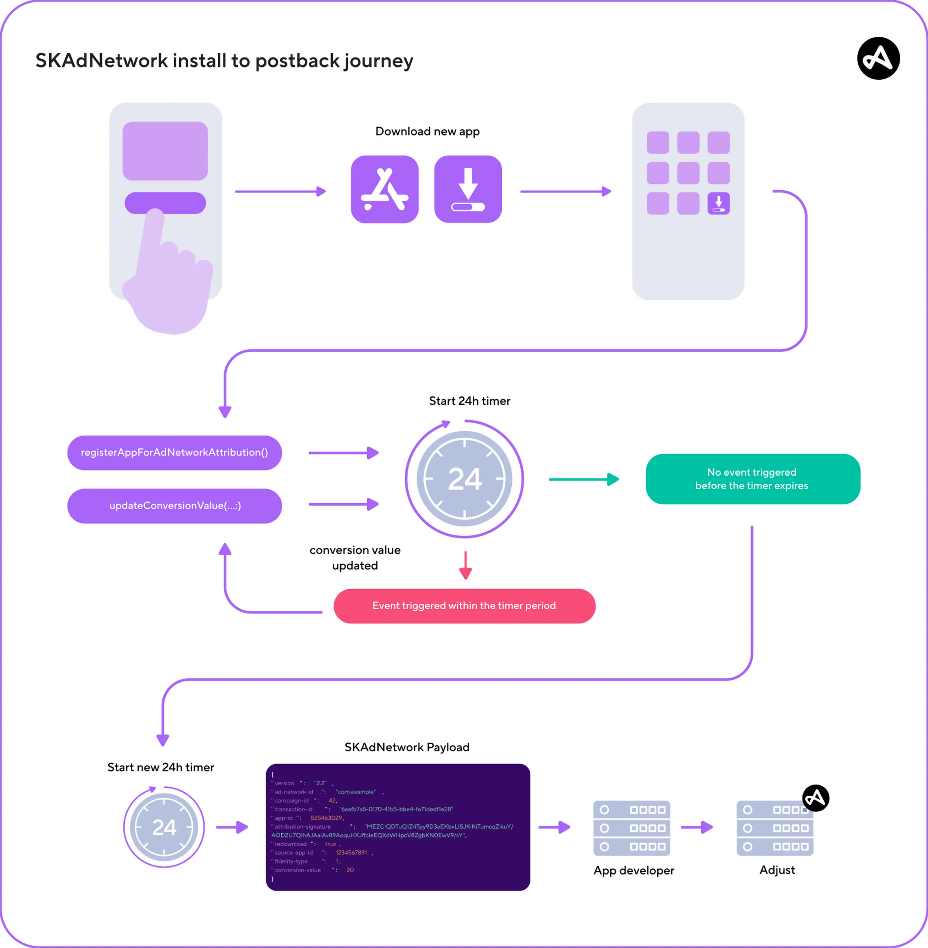
Fig. 2. Diagram of the attribution process for installing and generating a postback in SKAdNetwork [6]
At the same time, the requirements for web measurements and user consent have been tightened. The Google ecosystem uses Consent Mode for this. It transmits to Google the status of the user's consent to certain actions, such as advertising and analytics, so that the tags work according to their choice. In the Consent Mode v2 version, new types of consent have been added, applicable to advertising scenarios. These include ad_storage, analytics_storage, as well as ad_user_data and ad_personalization. However, ad_user_data is considered necessary for some measurement scenarios. If the user does not give consent, some of the data is not collected in the usual way, and the measurement is more often based on modeling.
In conditions where there is some shortage of data for accurate measurement, Google Ads uses a conversion modeling method. With the help of artificial intelligence, Google fills in measurement gaps where it is impossible to directly link advertising interaction with conversion based on available data and historical patterns. As a result, some of the conversions are accounted for as simulated, which makes it especially important to properly configure the consents and the high quality of the observed database.
The response to privacy restrictions was the development of first-party and server-side approaches. Google Ads Enhanced Conversions improves measurement accuracy and supports bid assignment by transmitting hashed first-party conversion data (for example, email), which is hashed by the SHA-256 algorithm before sending. This shifts the optimization focus from third-party identifiers to data controlled by the advertiser while respecting privacy and consent requirements.
Other ecosystems have also seen changes in their approaches to dealing with events. For example, in Meta, the Aggregated Event Measurement system was used in the context of changes in iOS. The latest version of the help indicates that it is no longer necessary to prioritize up to 8 events per domain and enable value sets to optimize value. This is due to the revision of stricter restrictions that were in previous versions of this approach.
How privacy changes change optimization conditions is shown in Table 1.
Table 1
The impact of privacy changes on signaling data and conditions for AI optimization of advertising campaigns
|
Area |
What has changed |
Implications for AI optimization |
|
Mobile Attribution (iOS) |
Delays in sending data and limitations on granularity in the SCAN system. |
Slower learning and higher noise in conversion/user quality data. |
|
Web measurement and consent |
Consent Mode controls data collection and transmission. V 2 adds new consent types for advertising. |
As the bounce rate increases, the role of conversion modeling increases. |
|
Restoring signal quality |
Enhanced Conversions uses hashed first-party data |
The accuracy of the measurement and the stability of the rates increases with the correct adjustment of the consents. |
|
Platform event restrictions |
Aggregated approaches reduce the flexibility of working with multiple events |
The focus shifts to a small set of "most significant" events and their quality. |
A source: author's development based on [4].
It is important to note that the described changes do not mean the abandonment of algorithmic optimization, but only change its foundations. Models are increasingly working in conditions where signals arrive late, in a more generalized form, and are partially compensated by modeling. This directly affects the comparison of cost and value optimization strategies, since the requirements for data accuracy and stability for these approaches are different.
Table 2 provides a comparative analysis of tCPA and tROAS strategies within Performance Max.
Table 2
Comparative characteristics of the effectiveness of tCPA and tROAS strategies in Performance Max
|
Comparison criteria |
tCPA (Target CPA) |
tROAS (Target ROAS) |
|
Optimization goal |
Increase the number of conversions while maintaining the average cost of each one. |
Increase the value of conversions while maintaining the ROAS target. |
|
A key signal for learning |
The fact of the conversion (quantity). |
The value of the conversion and the fact of the conversion. |
|
The main result is "default" |
A more predictable volume of conversions with a steady stream of events. |
The potential of economic management (income/marginality) is higher if the value signal is correct. |
|
Data quality requirements |
It is important that the number of conversions that were recorded correctly is sufficient. |
It is very important that there are enough conversions so that the value is conveyed correctly, and attribution and data quality are stable. |
|
Sensitivity to privacy restrictions and delays |
Usually lower: optimization is based on the fact of the action, not on the accuracy of the value. |
Usually higher: errors, noise in values, and delays reduce the ability to distinguish between expensive and cheap conversions. |
|
The risk of bias towards "simple" conversions |
Above: The strategy may be aimed at achieving easier-to-achieve, but not always the most valuable, conversions if the goal is determined solely by cost. |
Lower if the value indicator is set correctly. The system tends to buy back impressions, focusing on more valuable conversions, but if the value is incorrect, the risk increases. |
|
Typical conditions where the strategy is more effective |
Lead generation, subscription, and registration when conversion value is difficult to measure or unstable. Launch and scale with limited value tracking. |
In e-commerce, when making subscriptions with payments, and in services with a reliable monetization system, the value of each conversion is measured accurately and regularly. |
|
Manageability of the business economy |
Limited: The cost of actions is controlled, but their value is not guaranteed. |
Higher: the payback is controlled if the exact value and goal are known. |
|
Stability of the result |
As a rule, it is higher if the conversion rate remains stable and the CPA goal is fixed. |
It is more volatile when the value is unstable or the data is insufficient. In the case of a good value, it can be comparable. |
|
Typical configuration errors |
The CPA target is set too low, which means that the system artificially limits the number of conversions. This can lead to choosing a low-quality conversion and combining different types of conversions into one goal, which may not be effective. |
Incorrect values of conversion coefficients. Different sources, currencies, VAT and refunds without unification. A large number of "noise" microconversions with assigned values. |
|
Practical selection criteria |
If the priority is the number of planned actions, it is necessary to control the cost. |
If the priority is economic efficiency (revenue/value) and there is a reliable value signal. |
A source: author's development based on the analysis of the official Google Ads reference documentation.
The comparison demonstrates that the effectiveness of tCPA and tROAS in Performance Max depends not only on the chosen goal, but also on the quality of input data, such as completeness of conversions, correctness of cost estimates, delays and modeling. Therefore, in further analysis, it is important to examine how changes in the measurement and attribution processes affect the sustainability of each strategy, as well as to determine the conditions under which the choice of tCPA or tROAS becomes justified from the point of view of methodology.
In an era of rapid development of AI and a decrease for data, approaches to performance marketing have undergone significant changes. Traditional models based on accurate audience identification and detailed attribution have become less effective, which has forced a new look at the role of targeting in advertising systems.
Modern strategies aimed at improving results increasingly involve reaching a wide audience and distributing impressions using algorithms. In such approaches, the key point is not the pre-selection of users, but the ability of models to independently determine potential demand based on generalized data. In this situation, it is especially important to clearly formulate the optimization goal and ensure the stability of conversion rates.
At the same time, creatives have become more important as a source of information for machine learning algorithms. They are used not only to communicate with the user, but also as an element contributing to the training of models and their ability to recognize potentially more effective display scenarios.
At the same time, there is a shift in emphasis towards using self-collected data and server-based measurement methods. This partially compensates for the reduced ability to track user behavior. These changes reflect a shift to a new paradigm: performance targeting relies less on precise user segments and more on data quality, creatives, and algorithmic optimization aimed at broader audiences.
Conclusions
Privacy changes led to a decrease in the completeness and efficiency of signal data and an increase in the share of aggregated and simulated conversions, which changed the working conditions of AI optimization in Performance Max. In such circumstances, as a rule, tCPA demonstrates greater stability if a sufficient number of conversions are recorded. However, in order for tROAS to provide more accurate management of the economic outcome, it is necessary to ensure reliable transmission and stability of value data. Thus, for a methodologically sound choice of betting strategy in Performance Max, the quality of measurement (conversions and their value), the availability of properly configured user consent accounting, and tools that increase the reliability of optimization signals, such as first-party/server-side tools, should be taken into account.
References:
- About Performance Max campaigns – Google Ads Help [Electronic resource]. – Access mode: https://support.google.com/google-ads/answer/10724817?hl=en.
- About Target CPA bidding – Google Ads Help [Electronic resource]. – Access mode: https://support.google.com/google-ads/answer/6268632?hl=en.
- Guide to Performance Max Campaigns in Google Ads | Augurian [Electronic resource]. – Access mode: https://augurian.com/blog/performance-max-campaigns.
- Receiving postbacks in multiple conversion windows | Apple Developer Documentation [Electronic resource]. – Access mode: https://developer.apple.com/documentation/storekit/receiving-postbacks-in-multiple-conversion-windows.
- Set up Target ROAS bidding for Shopping campaigns – Google Ads Help [Electronic resource]. – Access mode: https://support.google.com/google-ads/answer/6309035?hl=en.
- What is SKAdNetwork (SKAN)? | Adjust [Electronic resource]. – Access mode: https://www.adjust.com/glossary/skadnetwork-skan.
Other articles of the issue