

The Leader of the XXI century: key competencies shaping a successful entrepreneur
Authors
Kim Yevgeniy

Share
Annotation
This article examines the topic of leadership in entrepreneurship and identifies what qualities and skills leaders of the XXI century need to succeed in business. The paper examines the evolution of scientific approaches to leadership and their application in the context of entrepreneurship. The leader, according to the authors, plays a dual role: he not only initiates changes, but also ensures the efficient use of resources. In the context of digital transformation and high uncertainty, such competencies as cognitive-strategic, technological, and socio-managerial become especially important. These skills help an entrepreneur navigate effectively in a rapidly changing world. Special attention is paid to the mechanisms of formation and development of leadership competencies. The authors suggest using a combination of training, practice, mentoring, and systematic feedback. This allows you to consolidate skills through the cycle of "experience – reflection – reflection – experimentation", which contributes to the continuous improvement of leadership qualities. The practical significance of the results obtained lies in the fact that the conclusions can be applied to develop programs for the development of entrepreneurial leadership and create tools for assessing competencies.
Keywords
Authors
Kim Yevgeniy
Share
Relevance of the study
In today's world, entrepreneurship faces many challenges: high uncertainty, rapid technological changes and growing competition. Digital transformation, the development of platform-based business models, remote work and the use of data as a key resource have radically changed the approach to managing companies. The speed of decision-making and the quality of strategic choice have become top priorities for managers. In such circumstances, the role of an entrepreneur leader becomes particularly important for the sustainability of the organization. His ability to form a clear vision, manage changes, and coordinate the actions of the team depends on maintaining competitiveness and the ability of the business to adapt to external challenges.
This topic is becoming even more relevant in light of the changing set of skills needed to run a successful business. Previously, the key factors were managerial experience and knowledge of the industry, but today skills of working in a VUCA environment, which is characterized by variability, uncertainty, complexity and ambiguity, are of particular importance. Developed emotional intelligence, the ability to communicate and negotiate effectively, as well as the ability to innovative thinking and risk management become important. At the same time, the importance of the value-ethical aspect of leadership is increasing. Society, partners, and consumers place higher demands on social responsibility, transparency, and business sustainability.
Thus, the study of the competencies of a leader of the XXI century is an important aspect both for the theoretical understanding of modern concepts of entrepreneurial leadership and for practical application. It is necessary to create effective educational programs, as well as tools for assessing and developing entrepreneurial skills, which in turn contributes to increasing the viability and efficiency of a business.
The purpose of the study
The purpose of this study is to provide a theoretical and methodological justification of leadership in entrepreneurial activity. We will identify the key competencies of a XXI century leader that influence business success, as well as analyze how these competencies can be formed and developed in modern conditions.
Materials and research methods
The research used scientific publications and publicly available analytical and methodological materials on various leadership theories, in particular, entrepreneurial leadership, as well as competence models and practices for developing leadership skills.
In the course of the work, methods of theoretical analysis and synthesis were applied, as well as comparative analysis of various approaches to leadership. The results were systematized and summarized. In addition, a classification method was used to group competencies and identify mechanisms for their development.
The results of the study
Leadership as a scientific concept covers a wide range of disciplines such as psychology, sociology and management. In the context of entrepreneurial activity, leadership is considered not as a "character trait in itself," but as a complex set of influences, interactions, and management practices that manifest themselves in specific organizational and market conditions. Research interest in leadership has undergone significant changes throughout history. Early ideas about "leaders" and the dominance of personal qualities were replaced by behavioral patterns. This was followed by situational and integrative theories in which leadership effectiveness is explained by the leader's style matching tasks, work structure, and group relationships. In entrepreneurship, this transition is particularly noticeable, since the entrepreneur simultaneously acts as an initiator of change and as a manager who is forced to organize people and resources in conditions of lack of time and information.
The classic source in this area is the review by R. Stogdill, which summarizes many studies conducted in the middle of the XX century. In his review, he concludes that there is no single "universal set" of traits that would guarantee leadership in any environment. R. Stogdill notes that personality traits are important, but their influence is manifested through a specific situation and role requirements. This conclusion is especially relevant for entrepreneurship, as entrepreneurial roles, industries, and stages of business development can vary greatly. Therefore, the "successful leadership formula" cannot be the same for an early-stage startup and, for example, for a mature company with formalized processes [7].
The next major section is behavioral approaches, which shift the focus from "how a leader is born" to "what a leader does." In this tradition, experiments devoted to the study of social climates and management styles (authoritarian, democratic, and permissive) are often mentioned. The behavioral approach is valuable for entrepreneurial practice because it allows us to describe leadership as a set of observable managerial actions. These actions include the distribution of authority, team participation in decision-making, monitoring, and feedback. These actions can be developed, evaluated, and compared [8].
However, despite the significant contribution of behavioral theory to the understanding of leadership, it turned out to be insufficient. A situational approach has emerged in management, according to which the effectiveness of leadership depends on how well the style of the leader corresponds to a particular situation. One of the most famous examples of the situational approach is the model F. Fiedler's. In this model, leadership effectiveness is determined by a combination of three factors: the relationship between the leader and the group members, the structuring of the task, and the leader's positional authority. The Least preferred colleague (LPC) scale is used in the model to measure the orientation of the supervisor. This approach is especially important for entrepreneurship, since in small businesses, positional power is often inferior to formal corporate power. Tasks may be less structured, and team relationships may be closer and more informal. As a result, the same management style can produce different results depending on the stage of the company's development and the degree of certainty of roles and processes [2].
At the end of the XX century, as organizational changes became more complex, transformational leadership concepts gained popularity. Within the framework of these concepts, leadership is considered as a process of changing the motivation and behavior of followers through the establishment of common values, the search for meaning, trust and support for development. Transformational leadership is characterized by four main elements known as the "four I's": idealized influence, inspirational motivation, intellectual stimulation, and individualized attention. A visual model of these components is shown in Figure 1.
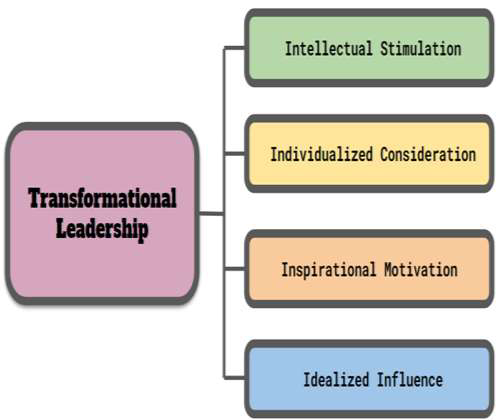
Fig. 1. The model of the components of transformational leadership [5]
In modern scientific circles, when it comes to entrepreneurship, "entrepreneurial leadership" is often mentioned. This is a special type of leadership that aims to form a common vision and mobilize a team to find and realize value creation opportunities. Entrepreneurial leadership is considered as a concept applicable in different cultures, and its features are discussed through the prism of "roles" and "challenges of implementation." This allows us to distinguish it from traditional managerial leadership and analyze its effectiveness in different countries and organizational cultures. This clarification has important methodological significance: entrepreneurial leadership is not limited to "charisma", but is a measurable management practice that is closely related to innovation and value creation [1].
The table below presents verifiable statements regarding the main approaches to leadership and their methodological foundations.
Table
The main theoretical approaches to the study of leadership and their applicability in entrepreneurial activity
|
An approach to leadership |
Which explains (in theory) |
Typical methodological tools/sources |
Applicability to entrepreneurship |
|
Damn it |
The role of personal qualities in the leadership process. The lack of universal traits that would be equally important for all leaders |
Reviews and meta-generalizations of literature |
It is useful for understanding individual characteristics, but requires consideration of context and role |
|
Behavioral |
The leader's styles and actions as visible behavior |
Experimental studies of stylistic differences |
It helps to describe an entrepreneur's management practices as a set of skills that can be mastered |
|
Situational/ contingent |
Effectiveness is the result of choosing the right style according to the situation |
Fiedler's contingent model; LPC measurement and situational factor analysis |
This issue is especially acute for startups and small companies, as their operating conditions can change quite often |
|
Transformational |
Changing the motivation and value system of followers; growth and inspiration |
The Bass and Avoglio model; measurement through MLQ (full range of leadership) |
It is important for innovation and change, which is a distinctive feature of entrepreneurial projects |
A source: author's development based on [2], [4], [6], [7].
In the XXI century, success in entrepreneurship directly depends on the key competencies of a leader. This is due to the fact that the business is developing in an environment of rapid technological change and high competition. In open international sources, in particular, in the analytical materials of the World Economic Forum on future skills, it is noted that one of the main obstacles to the development and transformation of companies is a lack of skills. Therefore, an entrepreneurial leader must not only generate ideas, but also have the skills to quickly form a team, develop employee competencies, and make decisions based on data.
The competencies of a successful business leader can be roughly divided into three interrelated blocks.
- Cognitive and strategic competencies – include analytical thinking, the ability to see opportunities, evaluate ideas, and plan your actions. These skills determine the quality of market, product, and strategy choices, and allow for timely course adjustments when external conditions change.
- Technological competencies – include technological literacy, understanding the role of data and modern digital tools, as well as the ability to manage technology adoption and risks.
- Social and managerial competencies – include leadership and influence, communication, the ability to work with people, develop a team, and maintain customer focus. This block ensures the coherence of the team's actions, trust in partnership and the sustainability of the service.
In the European EntreComp model, entrepreneurial competence is described as a complex system that includes the skills needed to implement ideas, mobilize resources, work in an environment of uncertainty, and learn from experience. Thus, success in entrepreneurship is often determined not by one "strong feature", but by a combination of strategic thinking, technological literacy and advanced managerial skills. These qualities allow a leader to create value and maintain the competitiveness of his business.
In the modern scientific and practical community, the formation and development of an entrepreneur's leadership skills is considered as a continuous process that includes education, practical training, and constant feedback. This is due to the fact that an entrepreneur operates in an ever-changing world, where tasks, team requirements, and management tools are updated much faster than in traditional organizations. Therefore, for the sustainable development of competencies, it is not enough just to attend courses once. It is necessary to regularly test your skills in real conditions and constantly learn throughout your life.
Leadership development in entrepreneurship is usually carried out through a combination of three key factors contributing to the growth of competencies:
- Structured Learning – includes programs, courses, and trainings aimed at developing specific skills.
- On-the-job Development – involves completing project tasks, launching products, negotiating, and managing changes.
- Individual Support – includes mentoring, coaching, decision-making, and external expertise to help participants reach their potential.
Scientific research conducted by professional organizations shows that leadership development programs, as a rule, lead to moderate positive results in many ways. However, their effectiveness largely depends on the specifics of the program and how well the participants can put the acquired skills into practice [4].
David Kolb's theory of experiential learning is often used to explain why entrepreneurial competencies develop better when learning is linked to practice. According to this theory, knowledge is formed through the transformation of experience, and the learning process is described as a cycle of four stages: experiencing experience, reflection, reflection, and active experimentation (Figure 2). In academic and university materials, this model is considered as a practical tool for constructing learning. Each stage of the cycle should be supported by certain actions: practice and cases create experience, reviews and observation diaries stimulate reflection, conceptual models and reading literature contribute to understanding, and new attempts and pilots consolidate knowledge through experimentation.
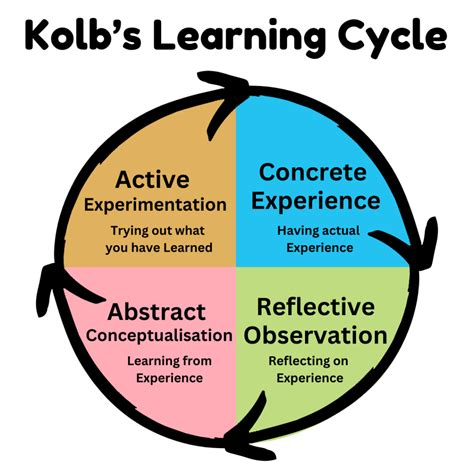
Fig. 2. The cycle of experiential learning: experiencing, reflection, comprehension, experimentation [3]
If we apply this methodology to entrepreneurial activity, then the development of leadership skills will become a manageable process. An entrepreneur can organize "training courses" for himself through participation in accelerators and entrepreneurial communities. He must regularly analyze his management decisions: after negotiations, hiring employees, launching a product, or conflicts in the team. It is also important to receive feedback from the team and customers. In the next cycle of tasks, the entrepreneur can test new management approaches. Feedback tools are especially important, because without them, a leader can reinforce ineffective habits. In practice, 360 percent assessment, regular individual conversations, engagement surveys, error analysis and customer metrics of the service are used. Mentoring is an important supportive element: an entrepreneur can relate his decisions to the experience of more experienced leaders, which reduces the "cost of mistakes" in conditions of limited resources.
Since entrepreneurial skills include strategic thinking, the ability to work with people and make decisions in the face of uncertainty, the most effective development programs usually combine theory with practice. They include short theoretical blocks such as models of communication, negotiation, decision-making, and change management, which are supported by project work and follow-up. This strategy is consistent with the fact that a significant part of the adult education structure is in informal formats, such as employer-provided courses, trainings and practical exercises. Participation in such programs is significantly higher among employed people and those with a higher level of education.
Conclusions
Thus, leadership in entrepreneurial activity is a set of managerial skills and interactions. The effectiveness of these practices and interactions depends not only on the personal qualities of the leader, but also on the specific situation, the stage of business development and the characteristics of the team.
In the field of entrepreneurship, combining different theoretical approaches is the most productive. So, the personal approach allows you to understand the importance of individual qualities, the behavioral approach allows you to see how people behave in management, the situational approach allows you to assess the impact of external factors on effectiveness, and the transformational approach allows you to evaluate the leader's ability to make changes and promote the development of followers. In the XXI century, an entrepreneur's success is determined by a combination of cognitive, strategic, technological, and socio-managerial skills. These include the ability to act in conditions of uncertainty and learn from their own experiences.
Developing an entrepreneur's leadership skills is an ongoing process that becomes especially effective when combined with training, practice, mentoring, and regular feedback. This approach allows you to transform the acquired knowledge into sustainable management skills, which, in turn, makes the business more flexible and adaptable to rapidly changing environmental conditions.
References:
- Entrepreneurial leadership: developing and measuring a cross-cultural construct [Electronic resource]. – Access mode: https://www.sciencedirect.com/science/article/abs/pii/S0883902603000405.
- Fiedler contingency model [Electronic resource]. – Access mode: https://en.wikipedia.org/wiki/Fiedler_contingency_model.
- Kolb’s Learning Styles and Experiential Learning Cycle [Electronic resource]. – Access mode: https://www.simplypsychology.org/learning-kolb.html.
- Leadership development: An evidence review [Electronic resource]. – Access mode: https://www.cipd.org/globalassets/media/knowledge/knowledge-hub/evidence-reviews/2023-pdfs/2023-leadership-development-scientific-summary-8431.pdf.
- Model of Transformational Leadership (Bass, 1985). | Download Scientific Diagram [Electronic resource]. – Access mode: https://www.researchgate.net/figure/Model-of-Transformational-Leadership-Bass-1985_fig1_367390524.
- Multifactor leadership questionnaire [Electronic resource]. – Access mode: https://en.wikipedia.org/wiki/Multifactor_leadership_questionnaire.
- Personal factors associated with leadership; a survey of the literature [Electronic resource]. – Access mode: https://pubmed.ncbi.nlm.nih.gov/18901913/.
- The Lewin, Lippitt and White study of leadership and «social climates» revisited [Electronic resource]. – Access mode: https://pubmed.ncbi.nlm.nih.gov/8181895/.
Other articles of the issue